TITLE: Reviving Mission: Awakening to the Everyday Movement of God
AUTHOR: Linson Daniel, Jon Hietbrink, and Eric Rafferty
PUBLISHER: Downers Grove, IL: InterVarsity Press, 2024, (240 pages).
Are missions outdated? Does God still speak today with signs and wonders? Is there any similar outpouring of the Spirit like the 20th-century Azuza Street revival? Are revivals a thing of the past? Are revivals in general considered anomalies? Inspired by the Asbury revival of 2023 which spread to several campuses in America, the authors of this book excitedly proclaimed that mission can be revived. This book is about reviving: a) our conceptions of mission; b) the impact of mission on the people we are sent to; and c) the impact of mission on the people who are sent. Instead of jettisoning the old ways of mission, the authors urge us to renew our old ways in terms of re-contextualization. Go back to Jesus as the root of all missions. Follow the ways of Jesus in everyday living. Be Christlike to all. Claiming that "The Old Way is an Everyday Way," they encourage us to follow Jesus' ordinary life in an ordinary society. Once we recognize the many similarities of first-century culture and our modern society, we can breathe new life into the ordinary.
"Good books do not make saints, but they can nudge one a little closer." (Conrade Yap)
Showing posts with label God. Show all posts
Wednesday, February 5, 2025
"Reviving Mission" (Linson Daniel, Jon Hietbrink, and Eric Rafferty)
Labels:
Apologetics,
Christian Life,
Christianity,
Culture,
Evangelism,
God,
Holy Spirit,
Inspiration,
IVP,
Marketplace,
Mission,
Netgalley,
Outreach,
Secularism
Thursday, January 23, 2025
"Sacred Attachment" (Michael John Cusick)
TITLE: Sacred Attachment: Escaping Spiritual Exhaustion and Trusting in Divine Love
AUTHOR: Michael John Cusick
PUBLISHER: Downers Grove, IL: InterVarsity Press, 2025, (192 pages).
Embodied living by faith is better than explanations about faith. The experience transcends knowledge. Feeling loved is far better than talking about love. Information does not necessarily lead to spiritual formation. We can try hard to grow spiritually but become frustrated at the lack of progress. The key thesis of this book is that divine growth comes from a combination of feeling loved and trusting God. The former comes from being seen, soothed, feeling safe and secure. The latter flows out from the results of the 4S paradigm. This 4S sequence is the essence of the author's "Sacred Attachment." Beginning with being SEEN, we are reminded that God sees us, either directly or via the communities we are in. Being seen virtually means we are understood as we hear the words "I get you." This stage lays the foundation of being SOOTHED where God or our carer(s) say to us: "I've got you." The third stage is SAFE (I've got this) and the final stage is SECURE (Love has me). Author Michael John Cusick believes that these 4S encapsulate our emotional needs and human longings. It sets out for us the path toward Sacred Attachment. Using attachment theory, Cusick believes that spiritual growth is best cultivated when our "immature infant brain" gets attached to a "mature adult brain," so that we can better organize and regulate the way we learn and grow. Our limitations stem from a false paradigm that as long as we do the right things, we will naturally grow. We often believe lies about ourselves or our capabilities. We trust ourselves more than God. Our self-dependence leads us toward the perfectionism trap while Cusick reminds us about the superiority of Hebrew wisdom over Greek philosophy. Using Brain McLaren's words, he affirms that "Hebrew good is better than Greek perfect." Once we recognize our human limitations, that we are broken but not bad, we are ready to turn the page toward confession. Here, Cusick gives us the 5Ws to show us how these affect the way we attach to God. These 5Ws are:
AUTHOR: Michael John Cusick
PUBLISHER: Downers Grove, IL: InterVarsity Press, 2025, (192 pages).
Embodied living by faith is better than explanations about faith. The experience transcends knowledge. Feeling loved is far better than talking about love. Information does not necessarily lead to spiritual formation. We can try hard to grow spiritually but become frustrated at the lack of progress. The key thesis of this book is that divine growth comes from a combination of feeling loved and trusting God. The former comes from being seen, soothed, feeling safe and secure. The latter flows out from the results of the 4S paradigm. This 4S sequence is the essence of the author's "Sacred Attachment." Beginning with being SEEN, we are reminded that God sees us, either directly or via the communities we are in. Being seen virtually means we are understood as we hear the words "I get you." This stage lays the foundation of being SOOTHED where God or our carer(s) say to us: "I've got you." The third stage is SAFE (I've got this) and the final stage is SECURE (Love has me). Author Michael John Cusick believes that these 4S encapsulate our emotional needs and human longings. It sets out for us the path toward Sacred Attachment. Using attachment theory, Cusick believes that spiritual growth is best cultivated when our "immature infant brain" gets attached to a "mature adult brain," so that we can better organize and regulate the way we learn and grow. Our limitations stem from a false paradigm that as long as we do the right things, we will naturally grow. We often believe lies about ourselves or our capabilities. We trust ourselves more than God. Our self-dependence leads us toward the perfectionism trap while Cusick reminds us about the superiority of Hebrew wisdom over Greek philosophy. Using Brain McLaren's words, he affirms that "Hebrew good is better than Greek perfect." Once we recognize our human limitations, that we are broken but not bad, we are ready to turn the page toward confession. Here, Cusick gives us the 5Ws to show us how these affect the way we attach to God. These 5Ws are:
Labels:
Faith,
God,
IVP,
Love,
Netgalley,
Rest,
Spiritual Guidance,
Spirituality
Monday, May 8, 2023
"Life After God" (Mark Feldmeir)
TITLE: Life After God
AUTHOR: Mark Feldmeir
PUBLISHER: Louisville, KY: Westminster John Knox Press, 2023, (220 pages).
As the spiritual climate in the West becomes more secular and anti-establishment, the Church at large is entering a Post-Christian era. With declining membership in churches and an ever-increasing number of people who call themselves NONES, it is becoming more difficult to see what faith and belief look like. Some Christians even doubt what they believe as they toggle between faith and doubt. Dealing with such situations can be tricky. How does one nuance the historic faith without sweeping contemporary doubts under the carpet? Here lies the challenge that author, pastor, and professor Mark Feldmeir boldly tackles. Starting with a professor using an imaginary gun to challenge a student's faith, he articulates the classic problem that pits the doctrine of God's love against the reality of human pain and suffering. Where does free will come in? If God already knows why certain events are bound to happen, why did He not intervene according to His Goodness? His musings about theodicy take us through history and contemporary times. In the former, he mentions the writings of CS Lewis, Pascal, Nicholas Wolterstorff, and the biblical book of Job.
AUTHOR: Mark Feldmeir
PUBLISHER: Louisville, KY: Westminster John Knox Press, 2023, (220 pages).
As the spiritual climate in the West becomes more secular and anti-establishment, the Church at large is entering a Post-Christian era. With declining membership in churches and an ever-increasing number of people who call themselves NONES, it is becoming more difficult to see what faith and belief look like. Some Christians even doubt what they believe as they toggle between faith and doubt. Dealing with such situations can be tricky. How does one nuance the historic faith without sweeping contemporary doubts under the carpet? Here lies the challenge that author, pastor, and professor Mark Feldmeir boldly tackles. Starting with a professor using an imaginary gun to challenge a student's faith, he articulates the classic problem that pits the doctrine of God's love against the reality of human pain and suffering. Where does free will come in? If God already knows why certain events are bound to happen, why did He not intervene according to His Goodness? His musings about theodicy take us through history and contemporary times. In the former, he mentions the writings of CS Lewis, Pascal, Nicholas Wolterstorff, and the biblical book of Job.
Labels:
Apologetics,
Christian Life,
Christianity,
Culture,
Faith,
God,
Netgalley,
Religion,
Secularism,
Westminster John Knox Press,
World
Friday, May 5, 2023
"Personality and Worldview" (Johan H. Bavinck)
TITLE: Personality and Worldview
AUTHOR: Johan Herman Bavinck (translated by James Eglinton)
PUBLISHER: Wheaton, IL: Crossway, 2023, (208 pages).
When doing studies about comparative religion, one of the most common ways is to use the term worldview. Sometimes, we tend to think that worldview is something objectively understood. That is only half the story. What equally matters is the person holding that worldview, for the subjective and the objective are related in more ways than one. In other words, personality affects worldviews. The condition of the soul affects one's outlook on life. More importantly, any understanding of the world is only as good as one's personality. This is the crux of the book about the relationship between the subjective and the objective. Some people think that worldviews are objective while personalities are subjective. The problem is that such dichotomies are false. Both are linked in some or more ways. The gospel breaks down these false dichotomies to give us a concrete understanding of both the self as well as the worldview. Every philosophy, religion, or spiritual quest is a form of searching for God, so says Bavinck. One might want to argue the Person of God, but it is no denying that one searches for some form of transcendence in the name of Truth. Bavinck goes into the quest in two ways.
AUTHOR: Johan Herman Bavinck (translated by James Eglinton)
PUBLISHER: Wheaton, IL: Crossway, 2023, (208 pages).
When doing studies about comparative religion, one of the most common ways is to use the term worldview. Sometimes, we tend to think that worldview is something objectively understood. That is only half the story. What equally matters is the person holding that worldview, for the subjective and the objective are related in more ways than one. In other words, personality affects worldviews. The condition of the soul affects one's outlook on life. More importantly, any understanding of the world is only as good as one's personality. This is the crux of the book about the relationship between the subjective and the objective. Some people think that worldviews are objective while personalities are subjective. The problem is that such dichotomies are false. Both are linked in some or more ways. The gospel breaks down these false dichotomies to give us a concrete understanding of both the self as well as the worldview. Every philosophy, religion, or spiritual quest is a form of searching for God, so says Bavinck. One might want to argue the Person of God, but it is no denying that one searches for some form of transcendence in the name of Truth. Bavinck goes into the quest in two ways.
Labels:
Apologetics,
Atheism,
Christian Life,
Christianity,
Crossway,
Faith,
God,
History,
Netgalley,
People,
Philosophy,
Secularism,
Spirituality,
Theology,
Truth
Wednesday, March 8, 2023
"Paul, the Spirit, and the People of God" (Gordon D. Fee)
TITLE: Paul, the Spirit, and the People of God
AUTHOR: Gordon D. Fee
PUBLISHER: Grand Rapids, MI: Baker Academic, 2023, (240 pages).
The Holy Spirit is God's Empowering Presence. Paul teaches and lives it. He urges the people of God to do the same. How do we not only learn more about the Holy Spirit? Is it possible to experience the presence of the Holy Spirit, maybe like what the Early Church had experienced? Perhaps, before we move into the actual application, we need to learn more about the continuity and discontinuity gap between the Old and New Covenant. Recognizing the struggles to link these two important truths, well-respected professor, Dr. Gordon Fee has written his Magnus opus on the Holy Spirit from the perspective of Pauline theology. From Paul's window into the Holy Spirit, he draws out the connection between what Paul says and what we experience in our present life in Christ, before extending it to the relevance of the Holy Spirit's work in the lives of the Church. For that to happen, we need to draw a series of connections between the past and the present. This includes relationships between:
AUTHOR: Gordon D. Fee
PUBLISHER: Grand Rapids, MI: Baker Academic, 2023, (240 pages).
The Holy Spirit is God's Empowering Presence. Paul teaches and lives it. He urges the people of God to do the same. How do we not only learn more about the Holy Spirit? Is it possible to experience the presence of the Holy Spirit, maybe like what the Early Church had experienced? Perhaps, before we move into the actual application, we need to learn more about the continuity and discontinuity gap between the Old and New Covenant. Recognizing the struggles to link these two important truths, well-respected professor, Dr. Gordon Fee has written his Magnus opus on the Holy Spirit from the perspective of Pauline theology. From Paul's window into the Holy Spirit, he draws out the connection between what Paul says and what we experience in our present life in Christ, before extending it to the relevance of the Holy Spirit's work in the lives of the Church. For that to happen, we need to draw a series of connections between the past and the present. This includes relationships between:
- Understanding and experiencing the Theology of the Holy Spirit;
- The old covenant and the new;
- The Individual and the Community;
- Present and Future
- Soteriology and Eschatology;
- Conversion to Covenant;
- and more...
Tuesday, February 28, 2023
"Reading For the Love of God" (Jessica Hooten Wilson)
TITLE: Reading for the Love of God: How to Read as a Spiritual Practice
AUTHOR: Jessica Hooten Wilson
PUBLISHER: Grand Rapids, MI: Brazos Press, 2023, (208 pages).
Why do we read? Some read for mere information. Others read for leisure. A few might read for spiritual formation. The latter reason is what this book is about. Spirituality, spiritual disciplines, or spiritual practice all come under spiritual formation. A key question that asks of us is this: Are we reading for the purpose of utility or for enjoyment? With this theme, author Jessica Hooten Wilson takes us through several different ways in which people read before showing us the way forward to better reading. By comparing and contrasting the various forms of readings, she helps us deal with the whys of reading rather than settling merely for the whats. This calls for some paradigm changes in the way we read. Gradually, she turns our attention toward the art of reading well. There are lots of gems in this book that merit not just reading this book, but also reading in general. First, we learn about ourselves and our reading attitude. She invites us to question ourselves on what kind of reader we are, pointing out the many varied reasons people read in the first place. Her hope is that once we recognize what kind of readers we are, we can then see the difference between where we are and Wilson's proposal about where we ought to go.
AUTHOR: Jessica Hooten Wilson
PUBLISHER: Grand Rapids, MI: Brazos Press, 2023, (208 pages).
Why do we read? Some read for mere information. Others read for leisure. A few might read for spiritual formation. The latter reason is what this book is about. Spirituality, spiritual disciplines, or spiritual practice all come under spiritual formation. A key question that asks of us is this: Are we reading for the purpose of utility or for enjoyment? With this theme, author Jessica Hooten Wilson takes us through several different ways in which people read before showing us the way forward to better reading. By comparing and contrasting the various forms of readings, she helps us deal with the whys of reading rather than settling merely for the whats. This calls for some paradigm changes in the way we read. Gradually, she turns our attention toward the art of reading well. There are lots of gems in this book that merit not just reading this book, but also reading in general. First, we learn about ourselves and our reading attitude. She invites us to question ourselves on what kind of reader we are, pointing out the many varied reasons people read in the first place. Her hope is that once we recognize what kind of readers we are, we can then see the difference between where we are and Wilson's proposal about where we ought to go.
Labels:
Baker Books,
Brazos,
Christian Life,
God,
Love,
Netgalley,
Reading,
Spirituality
Thursday, February 16, 2023
"50 Hebrew Words Every Christian Should Know" (Rose Publishing)
TITLE: 50 Hebrew Words Every Christian Should Know
AUTHOR: Rose Publishing Group / Hendrickson Publishing Group
PUBLISHER: Carol Stream, IL: Tyndale House Publishing, 2023.
The Old Testament is written originally in Hebrew while the New Testament is in Aramaic and Greek. Since then, there have been translations into many different languages for the masses. Not only is the Bible the bestselling book in the world, safe to say, but it is also the most translated book in the world. Those of us who have studied Hebrew would know that Hebrew and Greek are a lot more nuanced than the English language. In fact, Hebrew words like "hesed" and "lev" are not easily translated into English. The word has to be considered in the context of the passage, and the passage in the context of the way it is being used. Plus, there are grammatical considerations on how the word is used. While the ordinary layperson might not be expected to learn biblical Hebrew like seminarians, it is beneficial for them to know some. That is where this book comes in. The publisher has chosen 50 words to help us appreciate the beauty of biblical Hebrew. From "Adam" to "YHWH," "Shalom" to "Amen," this book comprises the words, followed by their definitions, where they are found in Scripture, and insights into the word from the way they are used in the Bible. Arranged in a table format, readers can reference each word with ease. The purpose of this book is to give the general readers an appreciation of the beauty of the Hebrew words used in the Bible. We learn how to spell and pronounce it with the help of transliteration. Arranged alphabetically according to the English alphabet, the words are arranged from A-Z, making it an easy reference for English speakers.
AUTHOR: Rose Publishing Group / Hendrickson Publishing Group
PUBLISHER: Carol Stream, IL: Tyndale House Publishing, 2023.
The Old Testament is written originally in Hebrew while the New Testament is in Aramaic and Greek. Since then, there have been translations into many different languages for the masses. Not only is the Bible the bestselling book in the world, safe to say, but it is also the most translated book in the world. Those of us who have studied Hebrew would know that Hebrew and Greek are a lot more nuanced than the English language. In fact, Hebrew words like "hesed" and "lev" are not easily translated into English. The word has to be considered in the context of the passage, and the passage in the context of the way it is being used. Plus, there are grammatical considerations on how the word is used. While the ordinary layperson might not be expected to learn biblical Hebrew like seminarians, it is beneficial for them to know some. That is where this book comes in. The publisher has chosen 50 words to help us appreciate the beauty of biblical Hebrew. From "Adam" to "YHWH," "Shalom" to "Amen," this book comprises the words, followed by their definitions, where they are found in Scripture, and insights into the word from the way they are used in the Bible. Arranged in a table format, readers can reference each word with ease. The purpose of this book is to give the general readers an appreciation of the beauty of the Hebrew words used in the Bible. We learn how to spell and pronounce it with the help of transliteration. Arranged alphabetically according to the English alphabet, the words are arranged from A-Z, making it an easy reference for English speakers.
Labels:
Biblical Studies,
Christian Living,
Christianity,
God,
Hendrickson,
Language,
Netgalley,
Reference,
Tyndale
Saturday, December 24, 2022
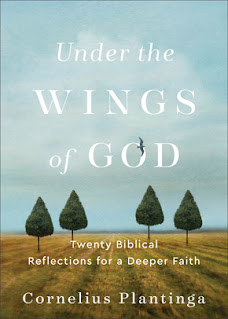
"Under the Wings of God" (Cornelius Plantinga)
TITLE: Under the Wings of God
AUTHOR: Cornelius Plantinga
PUBLISHER: Grand Rapids, MI: Brazos Press, 2023, (192 pages).
Ordinary believers honour the Bible. Church-goers read the Bible. Academics analyze the Bible. Devotees meditate on the Bible. Pastors preach the Bible. Authors write about the Bible. It would seem like the Bible is used in so many different ways. Those seeking a closer walk with God will not be content with any form of superficial reading. They will also meditate and contemplate the Word of God. As purposed in the cover of this book, renowned Professor Cornelius Plantinga shares 20 reflections to help us grow deeper in faith. In each chapter, he begins with the full Bible passage and a brief description. This is followed by a reflection which occupies the bulk of the chapter. Ending each chapter is a prayer. Plantinga starts with Ps 91 where a cursory reading would say it is about security in God. A deeper reading would be an exhortation not to worry. He takes the greatest commandment in Matthew 22:37 and applies it powerfully to the intellectual pursuit of God, something that some ordinary believers tend to dismiss as a mere academic exercise. The key lies in the reason for the study: Loving God more with the mind. We read about Colossians 3's exhortation to patience and how the author connects it with other attributes like anger management. Some of the most powerful reflections happen to be the way conventional beliefs are turned on their heads. For example, in Exodus 32, the text describes how the Israelites turned away from God and worshiped the golden calf. Plantinga describes the episode in such a way that we can all see the dangers and pain of adultery. While most people would dismiss Israel then as the adulterous nation that is only bent on disappointing God, a closer reading reveals that was not the case. They may have worshiped other gods but they still have the desire to worship the True God. They simply are people who practice spiritual polygamy. While the Bible condemns adultery in its strongest terms, there is also grace that overwhelms punishment for sin. Following this thread, in Genesis 4:1-16, there is the story of Cain and Abel where jealousy turned to murder. This led to the banishment of Cain who became cursed to be a restless wanderer. Further reflection points to a man though tarnished by sin still desires a close relationship with God. This is not something that we can pick up unless we observe the way the text was written.
AUTHOR: Cornelius Plantinga
PUBLISHER: Grand Rapids, MI: Brazos Press, 2023, (192 pages).
Ordinary believers honour the Bible. Church-goers read the Bible. Academics analyze the Bible. Devotees meditate on the Bible. Pastors preach the Bible. Authors write about the Bible. It would seem like the Bible is used in so many different ways. Those seeking a closer walk with God will not be content with any form of superficial reading. They will also meditate and contemplate the Word of God. As purposed in the cover of this book, renowned Professor Cornelius Plantinga shares 20 reflections to help us grow deeper in faith. In each chapter, he begins with the full Bible passage and a brief description. This is followed by a reflection which occupies the bulk of the chapter. Ending each chapter is a prayer. Plantinga starts with Ps 91 where a cursory reading would say it is about security in God. A deeper reading would be an exhortation not to worry. He takes the greatest commandment in Matthew 22:37 and applies it powerfully to the intellectual pursuit of God, something that some ordinary believers tend to dismiss as a mere academic exercise. The key lies in the reason for the study: Loving God more with the mind. We read about Colossians 3's exhortation to patience and how the author connects it with other attributes like anger management. Some of the most powerful reflections happen to be the way conventional beliefs are turned on their heads. For example, in Exodus 32, the text describes how the Israelites turned away from God and worshiped the golden calf. Plantinga describes the episode in such a way that we can all see the dangers and pain of adultery. While most people would dismiss Israel then as the adulterous nation that is only bent on disappointing God, a closer reading reveals that was not the case. They may have worshiped other gods but they still have the desire to worship the True God. They simply are people who practice spiritual polygamy. While the Bible condemns adultery in its strongest terms, there is also grace that overwhelms punishment for sin. Following this thread, in Genesis 4:1-16, there is the story of Cain and Abel where jealousy turned to murder. This led to the banishment of Cain who became cursed to be a restless wanderer. Further reflection points to a man though tarnished by sin still desires a close relationship with God. This is not something that we can pick up unless we observe the way the text was written.
Labels:
Brazos,
Christianity,
Devotional,
God,
Netgalley,
Reflections,
Small Groups,
Suffering,
Wisdom
Thursday, December 8, 2022
"Three in One" (William David Spencer)
TITLE: Three in One: Analogies of the Trinity
AUTHOR: William David Spencer
PUBLISHER: Grand Rapids, MI: Kregel Academic, 2022, (248 pages).
One of the most foundational dogmas in the Christian Church is the doctrine of the Trinity. This distinguishes the Christian faith from all other religions, especially unitarians who could not comprehend how God is one but yet three. Through the ages, this has been a challenge which our forefathers had faced and boldly addressed in many creeds to aid our understanding of what we believe. Creeds such as the Apostles Creed; Athanasian Creed; the Nicene Creed; and modern confessions like the Anglican's 39 Articles, Westminster Confession of Faith, or the Lausanne Covenant, all proclaimed God as Father, Son, and Holy Spirit. Statements are one thing. Understanding what they mean is yet another. Who is God in Three Persons? How do we understand the Holy Trinity? How can we possibly believe in something that we cannot understand? These questions can often be a stumbling block in both the teaching as well as the defense of the faith. This book aims to tackle the challenges of trying to describe who the Trinity is. The author acknowledges the impossibility of the taste and hopes to use this book to help us discern the flaws of the human analogies as well as to push the limits of theological application. For author William David Spencer, this book is essentially about pointing out the strengths and weaknesses of some of the most common illustrations used to describe the Trinity. He begins by anchoring the discussion on the "Eternal Trinity Position," which is the Trinity as One God in Three Persons, forever equal, united, and co-existing. Spencer gives a substantial introduction that looks at the theology and historical treatment of the Trinitarian doctrine. This is not to be skipped. He then moves on to discuss the various images and words used throughout history. Words like "perichoresis" and "aseity" describe God as equal dance partners and self-existing Persons. Analogies using images of music, nature, light, water, and other common objects are then put to the test. Generally, there is a pattern that the Eastern mindset prefers to treat the Trinity as a mystery to behold while the Western mindset tries to analyze and deconstruct the theology for clarity. Spencer's model is to adopt Jesus' use of imagery to describe the things of God.
AUTHOR: William David Spencer
PUBLISHER: Grand Rapids, MI: Kregel Academic, 2022, (248 pages).
One of the most foundational dogmas in the Christian Church is the doctrine of the Trinity. This distinguishes the Christian faith from all other religions, especially unitarians who could not comprehend how God is one but yet three. Through the ages, this has been a challenge which our forefathers had faced and boldly addressed in many creeds to aid our understanding of what we believe. Creeds such as the Apostles Creed; Athanasian Creed; the Nicene Creed; and modern confessions like the Anglican's 39 Articles, Westminster Confession of Faith, or the Lausanne Covenant, all proclaimed God as Father, Son, and Holy Spirit. Statements are one thing. Understanding what they mean is yet another. Who is God in Three Persons? How do we understand the Holy Trinity? How can we possibly believe in something that we cannot understand? These questions can often be a stumbling block in both the teaching as well as the defense of the faith. This book aims to tackle the challenges of trying to describe who the Trinity is. The author acknowledges the impossibility of the taste and hopes to use this book to help us discern the flaws of the human analogies as well as to push the limits of theological application. For author William David Spencer, this book is essentially about pointing out the strengths and weaknesses of some of the most common illustrations used to describe the Trinity. He begins by anchoring the discussion on the "Eternal Trinity Position," which is the Trinity as One God in Three Persons, forever equal, united, and co-existing. Spencer gives a substantial introduction that looks at the theology and historical treatment of the Trinitarian doctrine. This is not to be skipped. He then moves on to discuss the various images and words used throughout history. Words like "perichoresis" and "aseity" describe God as equal dance partners and self-existing Persons. Analogies using images of music, nature, light, water, and other common objects are then put to the test. Generally, there is a pattern that the Eastern mindset prefers to treat the Trinity as a mystery to behold while the Western mindset tries to analyze and deconstruct the theology for clarity. Spencer's model is to adopt Jesus' use of imagery to describe the things of God.
Labels:
Bible,
Blogging,
Christian Life,
Christianity,
Doctrine,
God,
Holy Spirit,
Jesus,
Kregel Academic,
Theology,
Trinity
Monday, August 8, 2022
"Fruitful Theology" (Ronni Kurtz)
TITLE: Fruitful Theology: How the Life of the Mind Leads to the Life of the Soul
AUTHOR: Ronni Kurtz
PUBLISHER: Nashville, TN: B and H Publishing, 2022, (192 pages).
Many of us have heard about it. Kids learn it in Sunday School. Sunday school teachers love to do crafts on this topic. They have activities to show their individual attributes. Preachers go through each attribute in their sermon series. Based on Galatians 5:22-23, the fruit of the Spirit is one of the most popular topics in Church and Christian circles. From Bible study materials to popular books, one can easily find resources on how to teach this. However, while many books deal with practical applications, not many have adequately dealt with the theology behind the fruit of the Spirit. This book fills in the gap with a theological treatise that undergirds each attribute. The central thesis of this book is that a fruitful theology underlines the foundation for fruitful spirituality. In other words, without a proper theology, we will not be able to fully understand how to apply and cultivate the fruit of the Spirit in us. For some people, the word "theology" might be quite intimidating. That is why author and professor Ronni Kurtz spends time explaining the critical place of theology. In a way, we are all theologians, albeit to different degrees. When we start to think of God, we are already theologizing. Not only that, he gives several arguments about the importance of a theological underpinning when studying the fruit of the Spirit. He tackles some of the misgivings among some people with regard to theology being "weaponized as an instrument" for division, pride, replacement of wisdom, etc. He then puts forth arguments for why theology is important. The chief reason is that the mind and the Spirit are closely connected. Theology is about the exercise of the mind. Fruitful theology is about the exercising of the mind toward expounding the depth of insight with regard to the fruit of the spirit. It is a means to cultivate Christian virtue. He then gives us some tips on a broad understanding of Galatians 5:19-26 before jumping into each attribute of the Spirit.
AUTHOR: Ronni Kurtz
PUBLISHER: Nashville, TN: B and H Publishing, 2022, (192 pages).
Many of us have heard about it. Kids learn it in Sunday School. Sunday school teachers love to do crafts on this topic. They have activities to show their individual attributes. Preachers go through each attribute in their sermon series. Based on Galatians 5:22-23, the fruit of the Spirit is one of the most popular topics in Church and Christian circles. From Bible study materials to popular books, one can easily find resources on how to teach this. However, while many books deal with practical applications, not many have adequately dealt with the theology behind the fruit of the Spirit. This book fills in the gap with a theological treatise that undergirds each attribute. The central thesis of this book is that a fruitful theology underlines the foundation for fruitful spirituality. In other words, without a proper theology, we will not be able to fully understand how to apply and cultivate the fruit of the Spirit in us. For some people, the word "theology" might be quite intimidating. That is why author and professor Ronni Kurtz spends time explaining the critical place of theology. In a way, we are all theologians, albeit to different degrees. When we start to think of God, we are already theologizing. Not only that, he gives several arguments about the importance of a theological underpinning when studying the fruit of the Spirit. He tackles some of the misgivings among some people with regard to theology being "weaponized as an instrument" for division, pride, replacement of wisdom, etc. He then puts forth arguments for why theology is important. The chief reason is that the mind and the Spirit are closely connected. Theology is about the exercise of the mind. Fruitful theology is about the exercising of the mind toward expounding the depth of insight with regard to the fruit of the spirit. It is a means to cultivate Christian virtue. He then gives us some tips on a broad understanding of Galatians 5:19-26 before jumping into each attribute of the Spirit.
Monday, April 18, 2022
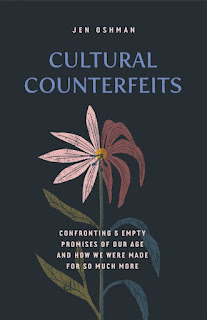
"Cultural Counterfeits" (Jen Oshman)
TITLE: Cultural Counterfeits: Confronting 5 Empty Promises of Our Age and How We Were Made for So Much More
AUTHOR: Jen Oshman
PUBLISHER: Wheaton, IL: Crossway Publishers, 2022, (208 pages).
Since the first sin committed by Adam and Eve, the human race has been living with emptiness in their hearts. Cain was deemed to become a restless wanderer. People become vulnerable to all kinds of temptations. The biggest weapon used by the evil one: Idolatry. As long as people could be led away from the Truth of Jesus, idols are pretty effective ways to stumble all people, especially believers.
AUTHOR: Jen Oshman
PUBLISHER: Wheaton, IL: Crossway Publishers, 2022, (208 pages).
Since the first sin committed by Adam and Eve, the human race has been living with emptiness in their hearts. Cain was deemed to become a restless wanderer. People become vulnerable to all kinds of temptations. The biggest weapon used by the evil one: Idolatry. As long as people could be led away from the Truth of Jesus, idols are pretty effective ways to stumble all people, especially believers.
The author begins by showing us how our modern culture has shaped our perceptions of feminism, liberal sex, free choice, and negative images of Christianity and the Church. Sadly, mainstream media has coloured people's general perception of the Christian faith. "The Handmaid's Tale" TV series caricatures Christianity as some fundamentalist cult that degrades women into mere child-bearing slaves. The "Da Vinci Code" makes people question the Church about hidden "secrets" of the past. For all the well-intentioned beginnings, parts of modern feminism have degenerated into detrimental movements that promoted the Sexual Revolution, of free love, including illicit sex. On the #MeToo movement, Oshman is convinced that this movement would never have happened "without millennia of influence from the Bible." In this book, author Jen Oshman highlights five of the idols that pose extreme dangers to our spiritual lives. With women as her key audience, the author describes the five empty promises of the following idols:
Wednesday, January 19, 2022
"Has God Failed You?" (Michael L. Brown)
TITLE: Has God Failed You?: Finding Faith When You're Not Even Sure God Is Real
AUTHOR: Michael L. Brown
PUBLISHER: Bloomington, MN: Chosen Books, 2021, (192 pages).
Times are increasingly tough for our society. Inflation is rising while incomes are falling. People are becoming more easily irritable and impatient. As far as faith matters are concerned, many are discouraged and disillusioned about Church and various other religious establishments. The daily news reports we get are often more depressing than uplifting, validating the popular maxim, "No news is good news." Statistics on religious communities also give similar negativity. For instance, we have all heard about an aging Church and an exodus of young people. More are abandoning churches, preferring to keep their faith private and confidential. People are asking questions about the relevance of God. Author Michael Brown summarizes this sentiment with this big question: "Has God Failed You?" Almost immediately, he questions the question, that it in itself is an oxymoron because God will never let anyone down. The real complication will happen if God is non-existent in the first place! That would put us in an even worse position of non-meaning, non-significance, and non-purpose. He engages some prominent atheists and takes issue with some of their arguments through a comparison between different worldviews. Even if one does not agree with Brown, one should also be open to question the alternatives, which too have their own flaws. A key pointer is the atheist common assertion that life began randomly. If that is true, then it throws the spanner in the works of life, that life too could also be random. Without meaning and purpose, life would not be necessarily better. After addressing the question of the existence of God, Brown then deals with the book title with associated questions such as:
AUTHOR: Michael L. Brown
PUBLISHER: Bloomington, MN: Chosen Books, 2021, (192 pages).
Times are increasingly tough for our society. Inflation is rising while incomes are falling. People are becoming more easily irritable and impatient. As far as faith matters are concerned, many are discouraged and disillusioned about Church and various other religious establishments. The daily news reports we get are often more depressing than uplifting, validating the popular maxim, "No news is good news." Statistics on religious communities also give similar negativity. For instance, we have all heard about an aging Church and an exodus of young people. More are abandoning churches, preferring to keep their faith private and confidential. People are asking questions about the relevance of God. Author Michael Brown summarizes this sentiment with this big question: "Has God Failed You?" Almost immediately, he questions the question, that it in itself is an oxymoron because God will never let anyone down. The real complication will happen if God is non-existent in the first place! That would put us in an even worse position of non-meaning, non-significance, and non-purpose. He engages some prominent atheists and takes issue with some of their arguments through a comparison between different worldviews. Even if one does not agree with Brown, one should also be open to question the alternatives, which too have their own flaws. A key pointer is the atheist common assertion that life began randomly. If that is true, then it throws the spanner in the works of life, that life too could also be random. Without meaning and purpose, life would not be necessarily better. After addressing the question of the existence of God, Brown then deals with the book title with associated questions such as:
Labels:
Apologetics,
Bible,
Chosen Books,
Christian Life,
Christianity,
Faith,
God,
Jesus,
Netgalley,
Prayer,
Relationships,
Sin,
Theology
Thursday, January 13, 2022
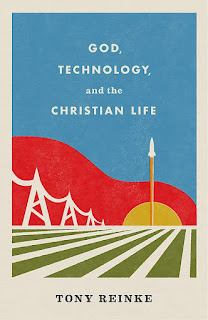
"God, Technology, and the Christian Life" (Tony Reinke)
TITLE: God, Technology, and the Christian Life
AUTHOR: Tony Reinke
PUBLISHER: Wheaton, IL: Crossway Publishers, 2021, (320 pages).
We have a lot of technology around us. We have different types of devices. Many of us use them on a daily basis. We need them. We cannot do without them. If we are to take a moment to ask ourselves, "What is Technology?" we might pause and wonder what kind of a question is that. For many people, the use of technology has become so ubiquitous that it has become an uncritical use of such powerful tools without actually knowing its grand purpose and significance. Fair to say, not many people really know how "technology" is defined. If we go back in history, human progress can be classified under different ages. The Stone Age, the Bronze Age, the Iron Age, the Nuclear Age, the Computer Age, and now the Technology Age. The common thread through all of them is the rising capability and discovery of tools to assist and improve human lives. Hunting tools from bones and stones were invented in the Stone Age. Engraving was introduced during the Bronze Age. The wheel was invented in the Iron Age. Nuclear power and the hydrogen bomb were creations in the Nuclear Age. Then comes the familiar personal computer and cell phones in the Computer and Technology Ages respectively. Even the biblical story of David and Goliath is a powerful story of the kind of technology being used at that time. Author Tony Reinke comes from a family of inventors. Out of his research and reflection, he sees technology as a way to tell the story of the human race. Through innovative skills and creative techniques, technology moves from animate functions like pulleys, to inanimate capabilities such as driving a car. Now we have technologies with automated abilities like self-driving cars and self-learning algorithms. The philosophical question is this: Is technology leading us toward a "dystopia" like Babel or a "heavenly utopia?" Reinke refuses to be drawn to either extreme, choosing the middle path. He enlists the help of nine voices to reveal 12 common myths about technology. These voices are mostly from the Modern Age: John Calvin the Reformer; Charles Spurgeon the Preacher; Abraham Kuyper the Theologian; Herman Bavinck the Calvinist; Jacques Ellul the French Philosopher; Wendell Berry the Conservationist; Kevin Kelly the technologist; Elon Musk the trendsetter; and Yuval Noah Harari, the Jewish Professor of History. All of these voices speak into the purpose and use of technology. He deals with six key questions:
AUTHOR: Tony Reinke
PUBLISHER: Wheaton, IL: Crossway Publishers, 2021, (320 pages).
We have a lot of technology around us. We have different types of devices. Many of us use them on a daily basis. We need them. We cannot do without them. If we are to take a moment to ask ourselves, "What is Technology?" we might pause and wonder what kind of a question is that. For many people, the use of technology has become so ubiquitous that it has become an uncritical use of such powerful tools without actually knowing its grand purpose and significance. Fair to say, not many people really know how "technology" is defined. If we go back in history, human progress can be classified under different ages. The Stone Age, the Bronze Age, the Iron Age, the Nuclear Age, the Computer Age, and now the Technology Age. The common thread through all of them is the rising capability and discovery of tools to assist and improve human lives. Hunting tools from bones and stones were invented in the Stone Age. Engraving was introduced during the Bronze Age. The wheel was invented in the Iron Age. Nuclear power and the hydrogen bomb were creations in the Nuclear Age. Then comes the familiar personal computer and cell phones in the Computer and Technology Ages respectively. Even the biblical story of David and Goliath is a powerful story of the kind of technology being used at that time. Author Tony Reinke comes from a family of inventors. Out of his research and reflection, he sees technology as a way to tell the story of the human race. Through innovative skills and creative techniques, technology moves from animate functions like pulleys, to inanimate capabilities such as driving a car. Now we have technologies with automated abilities like self-driving cars and self-learning algorithms. The philosophical question is this: Is technology leading us toward a "dystopia" like Babel or a "heavenly utopia?" Reinke refuses to be drawn to either extreme, choosing the middle path. He enlists the help of nine voices to reveal 12 common myths about technology. These voices are mostly from the Modern Age: John Calvin the Reformer; Charles Spurgeon the Preacher; Abraham Kuyper the Theologian; Herman Bavinck the Calvinist; Jacques Ellul the French Philosopher; Wendell Berry the Conservationist; Kevin Kelly the technologist; Elon Musk the trendsetter; and Yuval Noah Harari, the Jewish Professor of History. All of these voices speak into the purpose and use of technology. He deals with six key questions:
Labels:
Apologetics,
Christian Life,
Computers,
Crossway,
God,
Netgalley,
Social Media,
Technology
Tuesday, January 4, 2022
"The Good and Beautiful You" (James Bryan Smith)
TITLE: The Good and Beautiful You: Discovering the Person Jesus Created You to Be (The Good and Beautiful Series)
AUTHOR: James Bryan Smith
PUBLISHER: Downers Grove, IL: InterVarsity Press, 2022, (240 pages).
From writing about what is good and beautiful about God, the life we could have, and the community we could cultivate, we have the fourth book in this series about the Good and the Beautiful: You. Many self-help books begin with or are aimed at readers as the first person. The key assertion in this book is about the kind of people we could become rather than mere beliefs and practices. That is not all. In order to become the person we are called to become, we need to shed away false selves. Such false images are created when we link our identity with our jobs or things we do. They are also created when we confuse the self with the soul, that we are "selves" rather than "embodied souls," something that modern psychotherapy and our cultural narratives tell us.
AUTHOR: James Bryan Smith
PUBLISHER: Downers Grove, IL: InterVarsity Press, 2022, (240 pages).
From writing about what is good and beautiful about God, the life we could have, and the community we could cultivate, we have the fourth book in this series about the Good and the Beautiful: You. Many self-help books begin with or are aimed at readers as the first person. The key assertion in this book is about the kind of people we could become rather than mere beliefs and practices. That is not all. In order to become the person we are called to become, we need to shed away false selves. Such false images are created when we link our identity with our jobs or things we do. They are also created when we confuse the self with the soul, that we are "selves" rather than "embodied souls," something that modern psychotherapy and our cultural narratives tell us.
How do we distinguish the differences between the self and the soul? Firstly, recognize our narrative. Smith shows us how the self has become defined in terms of self-reliance; self-dependence; and ultimately; self-idolizing. He pushes back against this type of self which is less about authentic spiritual growth and more about self-absorption, self-accumulation, and self-accomplishment. He lists out several differences between the self and the soul, focusing on the longings within our souls and how only in God can we find true fulfillment. One exercise we can do to distinguish our soul's need from self-needs is an exercise of restraint.
Labels:
Christian Life,
Discipleship,
God,
IVP,
Netgalley,
Spiritual Formation,
Spirituality
Tuesday, September 7, 2021
"Why You Matter" (Michael Sherrard)
TITLE: Why You Matter (Perspectives: A Summit Ministries Series): How Your Quest for Meaning Is Meaningless without God
AUTHOR: Michael Sherrard
PUBLISHER: Grand Rapids, MI: Baker Books, 2021, (194 pages).
For every "what" there needs to be a "why." For some of us, we need more than simply an answer to the latter. For many of us, this is essentially a quest for meaning and significance of our lives. What makes life meaningful? How are we part of the grand plan of significance? The key thesis in this book is that God exists, and that is why we matter. With the ongoing pandemic, many people are dealing with disruptions, loneliness, deaths, sicknesses, health issues, in particular mental and spiritual well-being. These might lead them to question the meaning of life. Then comes racial issues which led to the rise of the "Black Lives Matter" as well as an "All Lives Matter" reaction by some quarters. Even in societies that pride on equality and freedom of expression, many people still go through crises of various types. Author and pastor Michael Sherrard focus on a "crisis of meaning" to probe behind the reasons why people insist their lives matter in the first place. Once we can understand that, the rest will come into place. He helps us go beyond mere feelings as a judge of our worth. For feelings are often too subjective to be reliable. Rather than letting our feelings, our skills, or our subjectivity determine our life's meaning and identity, why not go back to our Creator? How is that meaningful? In the quest for such answers, we start by observing the culture and society we are living in. Can our present situation of secularism and godless society bring everlasting meaning? What are the promises of atheism? What about morality? The author helps us take a critical look at the society we are in, on the emptiness of the "good life" we often assume we are in. Gradually, he switches gear to help us envision a world with God. Sherrard essentially says the following:
AUTHOR: Michael Sherrard
PUBLISHER: Grand Rapids, MI: Baker Books, 2021, (194 pages).
For every "what" there needs to be a "why." For some of us, we need more than simply an answer to the latter. For many of us, this is essentially a quest for meaning and significance of our lives. What makes life meaningful? How are we part of the grand plan of significance? The key thesis in this book is that God exists, and that is why we matter. With the ongoing pandemic, many people are dealing with disruptions, loneliness, deaths, sicknesses, health issues, in particular mental and spiritual well-being. These might lead them to question the meaning of life. Then comes racial issues which led to the rise of the "Black Lives Matter" as well as an "All Lives Matter" reaction by some quarters. Even in societies that pride on equality and freedom of expression, many people still go through crises of various types. Author and pastor Michael Sherrard focus on a "crisis of meaning" to probe behind the reasons why people insist their lives matter in the first place. Once we can understand that, the rest will come into place. He helps us go beyond mere feelings as a judge of our worth. For feelings are often too subjective to be reliable. Rather than letting our feelings, our skills, or our subjectivity determine our life's meaning and identity, why not go back to our Creator? How is that meaningful? In the quest for such answers, we start by observing the culture and society we are living in. Can our present situation of secularism and godless society bring everlasting meaning? What are the promises of atheism? What about morality? The author helps us take a critical look at the society we are in, on the emptiness of the "good life" we often assume we are in. Gradually, he switches gear to help us envision a world with God. Sherrard essentially says the following:
Labels:
Apologetics,
Baker Books,
Calling,
Christian Life,
Church,
Culture,
God,
Joy,
Meaning,
Netgalley,
People,
Young People,
Youth
Thursday, April 29, 2021
"Glimmers of Grace" (Kathryn Butler, MD)
TITLE: Glimmers of Grace: A Doctor's Reflections on Faith, Suffering, and the Goodness of God
AUTHOR: Kathryn Butler, MD
PUBLISHER: Wheaton, IL: Crossway Publishers, 2021, (224 pages).
Faith and Fear; Hope or Despair; Health or Sickness; Life and Death. These are the daily issues that plague hospitals all over the world. As a critical care surgeon who sees patients experiencing struggles of life and death, author Kathryn Butler has seen a wide spectrum of human ups and downs. As a Christian, she has also questioned why God had allowed people to go through pain and suffering. Where is God in all of these? What happens when one does not see the promises of God fulfilled in their lives? How do we locate our feelings in the field of grace? This is what this book is about. Seeing God's grace in the midst of medical calamities. Written in three parts, Part One shows us how medical situations could challenge our faith. Part Two looks to the Bible for insights into who God is and how we can find comfort in God. Part Three moves forward to show us how to live with hope based on the Resurrection Promise.
AUTHOR: Kathryn Butler, MD
PUBLISHER: Wheaton, IL: Crossway Publishers, 2021, (224 pages).
Faith and Fear; Hope or Despair; Health or Sickness; Life and Death. These are the daily issues that plague hospitals all over the world. As a critical care surgeon who sees patients experiencing struggles of life and death, author Kathryn Butler has seen a wide spectrum of human ups and downs. As a Christian, she has also questioned why God had allowed people to go through pain and suffering. Where is God in all of these? What happens when one does not see the promises of God fulfilled in their lives? How do we locate our feelings in the field of grace? This is what this book is about. Seeing God's grace in the midst of medical calamities. Written in three parts, Part One shows us how medical situations could challenge our faith. Part Two looks to the Bible for insights into who God is and how we can find comfort in God. Part Three moves forward to show us how to live with hope based on the Resurrection Promise.
Butler shares many stories about the amazing grace in the hospital room. She sees how a dying man was able to hang on to his very last breath until his wife arrives. She marvels at how one Christian by the name of David continues to minister to his Church members in spite of his health condition. She remembers a strong and independent friend who just needed prayer even in the midst of discouragement. She notices how the best of medical sciences cannot measure up to the miracle of God's design. God heals from the inside out and the outside in when humans can only apply a band-aid. Each chapter comes with reflections about various medical situations and assurances from the Bible. Readers can sense quickly that the author needs the assurances herself too. Recognizing the limits of science and medicine propels her to embrace the mystery of God's assurance and eternal comfort. Science might define life as a beating and death as flatlining. Faith enables one to go beyond these parameters into the mysteries of the afterlife.
Labels:
Crossway,
Death,
Faith,
God,
Grace,
Inspiration,
Life,
Love,
Medicine,
Netgalley,
Pain,
Pastoral Care,
Reflections,
Suffering,
Thanksgiving
Wednesday, March 10, 2021
"An Introduction to Christian Mysticism" (Jason M. Baxter)
TITLE: An Introduction to Christian Mysticism: Recovering the Wildness of Spiritual Life
AUTHOR: Jason M. Baxter
PUBLISHER: Grand Rapids, MI: Baker Academic, 2021, (208 pages).
In the evangelical tradition, many of us yearn to know God more. Whether it is through Bible study or prayer, devotional practices or spiritual disciplines, we try to know God based on our own knowledge or backgrounds. If we are willing to admit, we often do these things on our own strength rather than to wait upon the LORD. We think we can know God more by mining the Bible, forgetting that it is one thing to know the Word of God, but yet another to know the God of the Word. We think we know God's Thoughts by praying according to our needs instead of needing God regardless of our needs. We forget that prayers are less about telling God about how great our problems are, but to tell the problems of the world, how great God is. In trying to master the Bible, we end up forgetting that spirituality is about the Word mastering us in order to know God more deeply and to make God known more widely. For us to grow into this level of spirituality, we need the help of those who have traveled those paths of spirituality. Mysticism is one of these paths. In our world of Do-It-Yourself spirituality, we tend to gravitate toward how-to manuals even in the area of Christian spirituality. There are steps to do this and steps to do that. It takes mystics like Meister Eckhart to remind us a rather controversial thought: that "in created things, ...., there is no truth." It is a reminder that our own perceptions of truth is imperfect or partial at best. Even our interpretations of God's Word is fallible. That is why we need the Holy Spirit to teach and to guide us. Having said that, moving into the mystical world can be a nervous experience. Aren't Eastern religions practicing mysticism too? How do we know when we are treading to an extreme? Is there such a thing as a correct approach? Even great teachers in the past, such as BB Warfield and CS Lewis, have cautioned us on the mystic practices. Author and Professor Jason Baxter assures us that in this book, he is not trying to convince us to accept all of Christian Mysticism but to "make it easier" for readers to be willing to be patient, to listen, and to be open to it. He does this by describing mysticism like what many mystics do: apophatically. Like the classic work, "The Cloud of Unknowing" by an anonymous writer, the deep desire for God is not through our eyes but through God's eyes. It is to let God be God instead of trying to make God into our own image. Baxter asserts that society in spite of its widespread secularism, there is still a hunger for spiritual and religious thought. He seeks to offer the Christian mystical teachings as an alternative in a world of Moralistic Therapeutic Deism (MTD) and a "nice and polite God" we conjured up in our heads. He then shares snippets of spiritual wisdom throughout the centuries. People such as Plato, Plotinus, Gregory of Nyssa, Evagrius, John Cassian, etc, in the first millennium; Bernard of Clairvaux, Hildegard of Bingen, Guigo II, Bonaventure, Meister Eckhart, Julian of Norwich, Thomas Merton, etc in the second millennium.
AUTHOR: Jason M. Baxter
PUBLISHER: Grand Rapids, MI: Baker Academic, 2021, (208 pages).
In the evangelical tradition, many of us yearn to know God more. Whether it is through Bible study or prayer, devotional practices or spiritual disciplines, we try to know God based on our own knowledge or backgrounds. If we are willing to admit, we often do these things on our own strength rather than to wait upon the LORD. We think we can know God more by mining the Bible, forgetting that it is one thing to know the Word of God, but yet another to know the God of the Word. We think we know God's Thoughts by praying according to our needs instead of needing God regardless of our needs. We forget that prayers are less about telling God about how great our problems are, but to tell the problems of the world, how great God is. In trying to master the Bible, we end up forgetting that spirituality is about the Word mastering us in order to know God more deeply and to make God known more widely. For us to grow into this level of spirituality, we need the help of those who have traveled those paths of spirituality. Mysticism is one of these paths. In our world of Do-It-Yourself spirituality, we tend to gravitate toward how-to manuals even in the area of Christian spirituality. There are steps to do this and steps to do that. It takes mystics like Meister Eckhart to remind us a rather controversial thought: that "in created things, ...., there is no truth." It is a reminder that our own perceptions of truth is imperfect or partial at best. Even our interpretations of God's Word is fallible. That is why we need the Holy Spirit to teach and to guide us. Having said that, moving into the mystical world can be a nervous experience. Aren't Eastern religions practicing mysticism too? How do we know when we are treading to an extreme? Is there such a thing as a correct approach? Even great teachers in the past, such as BB Warfield and CS Lewis, have cautioned us on the mystic practices. Author and Professor Jason Baxter assures us that in this book, he is not trying to convince us to accept all of Christian Mysticism but to "make it easier" for readers to be willing to be patient, to listen, and to be open to it. He does this by describing mysticism like what many mystics do: apophatically. Like the classic work, "The Cloud of Unknowing" by an anonymous writer, the deep desire for God is not through our eyes but through God's eyes. It is to let God be God instead of trying to make God into our own image. Baxter asserts that society in spite of its widespread secularism, there is still a hunger for spiritual and religious thought. He seeks to offer the Christian mystical teachings as an alternative in a world of Moralistic Therapeutic Deism (MTD) and a "nice and polite God" we conjured up in our heads. He then shares snippets of spiritual wisdom throughout the centuries. People such as Plato, Plotinus, Gregory of Nyssa, Evagrius, John Cassian, etc, in the first millennium; Bernard of Clairvaux, Hildegard of Bingen, Guigo II, Bonaventure, Meister Eckhart, Julian of Norwich, Thomas Merton, etc in the second millennium.
Labels:
Baker Academic,
Christianity,
Contemplation,
Discipleship,
God,
History,
Netgalley,
Prayer,
Relationships,
Spirituality
Tuesday, December 29, 2020
"Room of Marvels" (James Bryan Smith)
TITLE: Room of Marvels: A Story About Heaven that Heals the Heart
AUTHOR: James Bryan Smith
PUBLISHER: Downers Grove, IL: InterVarsity Press, 2020, (192 pages).
Presented through the eyes of Tim Hudson, the book begins with Tim going on a personal 5-day spiritual retreat in a secluded New England monastery. Tim is an established author. He shares with his spiritual director about the loss of his mother, his friend Wayne, and his young daughter Madison. He was at the point of losing his own faith in God despite previously writing books like "God's On Your Side." He describes the mundane daily activities like eating in silence; sitting in silence for hours in his room; pacing the floors; reading Scripture; eat, sleep; and dream. He asks questions about the efficacy of prayer. He seeks a personal voice from God. He tells of a dream about him even interacting with animals, seeing his barber friend Ernie, and various snippets of heaven. There Tim works through some theological struggles in his interactions. In heaven, he meets his old friend Wayne and continues with questions and curiosity about his life after death. These conversations reveal the deep friendship between Tim and Wayne. In heaven, Tim meets his great-grandmother, his mother, as well as his daughter. At his personal retreat, his spiritual mentor challenges him with snippets of spirituality gleaned through the wisdom of CS Lewis and Dallas Willard. He poses questions many of us would ask. Questions like:
AUTHOR: James Bryan Smith
PUBLISHER: Downers Grove, IL: InterVarsity Press, 2020, (192 pages).
Presented through the eyes of Tim Hudson, the book begins with Tim going on a personal 5-day spiritual retreat in a secluded New England monastery. Tim is an established author. He shares with his spiritual director about the loss of his mother, his friend Wayne, and his young daughter Madison. He was at the point of losing his own faith in God despite previously writing books like "God's On Your Side." He describes the mundane daily activities like eating in silence; sitting in silence for hours in his room; pacing the floors; reading Scripture; eat, sleep; and dream. He asks questions about the efficacy of prayer. He seeks a personal voice from God. He tells of a dream about him even interacting with animals, seeing his barber friend Ernie, and various snippets of heaven. There Tim works through some theological struggles in his interactions. In heaven, he meets his old friend Wayne and continues with questions and curiosity about his life after death. These conversations reveal the deep friendship between Tim and Wayne. In heaven, Tim meets his great-grandmother, his mother, as well as his daughter. At his personal retreat, his spiritual mentor challenges him with snippets of spirituality gleaned through the wisdom of CS Lewis and Dallas Willard. He poses questions many of us would ask. Questions like:
Labels:
Christian Life,
Christianity,
Death,
Fiction,
God,
Grief,
Healing,
Heaven,
IVP,
Life,
Netgalley,
Reflections,
Relationships
Tuesday, October 27, 2020
"Born to Wonder" (Alister McGrath)
TITLE: Born to Wonder: Exploring Our Deepest Questions-- Why Are We Here and Why Does It Matter?
AUTHOR: Alister McGrath
PUBLISHER: Carol Stream, IL: Tyndale Momentum, 2020, (320 pages).
What is life all about? Why are we here? These questions of life and pondering of mysteries are part of our human makeup. Indeed, we learn more about life through questions instead of answers. In this book, author and professor Alister McGrath brings us through a couple of questions to wonder about ourselves, about life, and about our future. He tackles questions like:
AUTHOR: Alister McGrath
PUBLISHER: Carol Stream, IL: Tyndale Momentum, 2020, (320 pages).
What is life all about? Why are we here? These questions of life and pondering of mysteries are part of our human makeup. Indeed, we learn more about life through questions instead of answers. In this book, author and professor Alister McGrath brings us through a couple of questions to wonder about ourselves, about life, and about our future. He tackles questions like:
- Who are we? What are we? What do we mean?
- Why we need more than mere facts?
- Why it is important to consider alternative perspectives?
- Is meaning a discovery or an invention?
- Why is there a loss in wonder in a world of disenchantment?
- Is our existence meaningful or meaningless?
- What's wrong with us?
- What is the fate of humanity?
- What does it mean to be human?
- ...
Labels:
Apologetics,
Christian Living,
Christianity,
God,
Netgalley,
Theology,
Tyndale
Thursday, October 22, 2020
"God and the Pandemic" (N. T. Wright)
TITLE: God and the Pandemic: A Christian Reflection on the Coronavirus and Its Aftermath
AUTHOR: N. T. Wright
PUBLISHER: Grand Rapids, MI: Zondervan, 2020, (96 pages).
The year 2020 will be best remembered as the year of the Covid-19 pandemic. One of the earliest books reflecting on a Christian response is John Piper's "Coronavirus and Christ." In that book, Piper offers six answers; that we should remember God is still at work; that he rules; that we ought to repent while we can; and that we should not lose hope. Our hope is not in odds or in healing but in Christ alone. However, as a reader, I sense that book seems to be written in a hurry to be published at the start of a worldwide lockdown earlier this year.
AUTHOR: N. T. Wright
PUBLISHER: Grand Rapids, MI: Zondervan, 2020, (96 pages).

Instead of asking why, author and theologian NT Wright helps us deal with the question of what we could do. Like how Christ put his own life on the line for us, we ought to find ways to help one another as much as we could. Wright puts it very well that we ought not to be stoics just to fit into the system. Neither should we be like Epicureans who just accept the random things in life and just enjoy whatever we have left. He also cautions us against taking the platonic lifestyle that seems to elevate the afterlife over and above our present world. Worse, some people would even jump to conclusions to play the blame game. The two superpowers are famously at each other's throats with regard to assigning blame regarding the virus origins. Some would even claim the pandemic as the Armageddon. This book is to offer a Christian alternative to such philosophies that many of us practice unwittingly. Like any good biblical scholar, Wright begins with the Word of God.
Labels:
Christian Life,
Christian Living,
Christianity,
Covid-19,
Culture,
God,
Health,
Netgalley,
Society,
Zondervan
Subscribe to:
Posts (Atom)