TITLE: Practices for Embodied Living: Experiencing the Wisdom of Your Body
AUTHOR: Hillary L. McBride
PUBLISHER: Grand Rapids, MI: Brazos Press, 2024, (160 pages).
Our experiences do not define us. Our real selves do. Our bodies are not simply what we have but they are who we are. We are more than mere subjective people. We are valued for who we are and not what we do. All that we encounter in this life, the highs and the lows, can all be experienced in the very bodies we have. Unfortunately, many people still have not learned how to appreciate their bodies. In doing so, they fall victim to lies and myths that throw negativity to their physique or biological selves. Lies such as the need to subdue our bodies because they are inherently evil; that some bodies are better than others, or fat bodies are unhealthy, etc. As our bodies get devalued, we become disembodied beings. Disembodiment separates our physical selves from the rest of our mental and emotional faculties. Embodiment brings all of them together. More importantly, we are called not to learn or relearn what our bodies are or represent. We simply need to remember that. These and many more underline the premise of this book, which is to bring back a healthy appreciation of the bodies we have so that we can live well. This also means we need to see personhood in a holistic manner: Emotionally, Mentally, Physically, Socially, and even Spiritually. Besides helping us address lies we tell ourselves, this book also looks at the violence on our bodies, such as stress and trauma; illnesses, injuries, and pain; oppressive forces; self-esteem; etc.
"Good books do not make saints, but they can nudge one a little closer." (Conrade Yap)
Showing posts with label Brazos. Show all posts
Monday, February 5, 2024
"Practices for Embodied Living: Experiencing the Wisdom of Your Body" (Hilary L. McBride)
Labels:
Brazos,
Christian Life,
Counseling,
Health,
Netgalley,
People,
Religion,
Spiritual Gifts,
Spirituality,
Wisdom
Friday, September 15, 2023
"Wake Up to Wonder" (Karen Wright Marsh)
TITLE: Wake Up to Wonder - 22 Invitations to Amazement in the Everyday
AUTHOR: Karen Wright Marsh
PUBLISHER: Grand Rapids, MI: Brazos Press, 2023, (208 pages).
There is a joke that talks about the three types of people in this world. The first type waits for things to happen. The second type makes things happen. The third type wonders what happened. The first type is the slacker. The second type is the planner. The third type is the ignorant. From a project management perspective, the joke is a fun way to inject urgency into the team. This book does not deal with project management per se. It is about discerning the exercise of faith, the relevance of hope, and the power of love. It might even encourage us to be the fourth type of person, a wakeful person in discernment about a time to wait, a time to work, and also a time to wonder. Instead of going it alone, author Karen Wright Marsh collects wisdom from 22 different sources of spiritual leaders on discernment. From Henri Nouwen, we learn how a man trapped in the cycle of busyness was able to discern his own identity through writing and conscientious reflection. Martin Luther reminds us of the gift of music to learn to sing our faith out loud. Thomas Merton's life of contemplation teaches us about cultivating prayer to become as natural as breathing. Hildegard Von Bingen points us toward personal healthcare to bring the body and soul to be in harmony. That involves deliberate food choices and health awareness. Margery Kempe shows us the simplicity of journeying spiritually by walking and thinking.
AUTHOR: Karen Wright Marsh
PUBLISHER: Grand Rapids, MI: Brazos Press, 2023, (208 pages).
There is a joke that talks about the three types of people in this world. The first type waits for things to happen. The second type makes things happen. The third type wonders what happened. The first type is the slacker. The second type is the planner. The third type is the ignorant. From a project management perspective, the joke is a fun way to inject urgency into the team. This book does not deal with project management per se. It is about discerning the exercise of faith, the relevance of hope, and the power of love. It might even encourage us to be the fourth type of person, a wakeful person in discernment about a time to wait, a time to work, and also a time to wonder. Instead of going it alone, author Karen Wright Marsh collects wisdom from 22 different sources of spiritual leaders on discernment. From Henri Nouwen, we learn how a man trapped in the cycle of busyness was able to discern his own identity through writing and conscientious reflection. Martin Luther reminds us of the gift of music to learn to sing our faith out loud. Thomas Merton's life of contemplation teaches us about cultivating prayer to become as natural as breathing. Hildegard Von Bingen points us toward personal healthcare to bring the body and soul to be in harmony. That involves deliberate food choices and health awareness. Margery Kempe shows us the simplicity of journeying spiritually by walking and thinking.
Labels:
Baker Books,
Brazos,
Christian Living,
Faith,
Netgalley,
Quotes,
Reflections,
Spiritual Growth,
Stories,
Testimony
Monday, May 29, 2023
"Galatians" (Kathryn Greene-McCreight)
TITLE: Galatians (Brazo's Theological Commentary on the Bible)
AUTHOR: Kathryn Greene-McCreight
PUBLISHER: Grand Rapids, MI: Brazos Press, 2023, (204 pages).
If one is asked to summarize what the letter to the Galatians is about, many people might conclude that it is all about justification by faith. Yet, there are many alternative interpretations that range from freedom in Christ to anti-semitic accusations. How do we practice discerning which best approaches the Truth for such a range of interpretations? Humbly speaking, we need help. The commentators in this series of commentaries believe that this help comes from interpreters from the Nicea-Constantinople tradition. They might not give us the full revelation of Truth but they can surely clear the way for us to approach it.
AUTHOR: Kathryn Greene-McCreight
PUBLISHER: Grand Rapids, MI: Brazos Press, 2023, (204 pages).
If one is asked to summarize what the letter to the Galatians is about, many people might conclude that it is all about justification by faith. Yet, there are many alternative interpretations that range from freedom in Christ to anti-semitic accusations. How do we practice discerning which best approaches the Truth for such a range of interpretations? Humbly speaking, we need help. The commentators in this series of commentaries believe that this help comes from interpreters from the Nicea-Constantinople tradition. They might not give us the full revelation of Truth but they can surely clear the way for us to approach it.
Dogmas clarify rather than obscure. This is the conviction behind this series of theological commentaries. Based on the Nicene tradition, the authors in this series affirm the Scriptures amid a tide of modern scholars who insist that ancient doctrinal persuasions are barriers to the "purity" of the biblical text. The intent of these modern interpreters is noble but it masquerades the fact that such modernist thinking is also a form of "doctrinal persuasion" in itself. The underlying belief is that the Nicene tradition "provides the clarifying principles" to guide our understanding of the Scriptures. After all, these ancient fathers are definitely closer to biblical times than we are. If Bible reading is communal, why not include these Nicean fathers in our interpretive process? Adopting a Both-And framework has more benefits compared to an Either-Or option. Preferring to engage theologians instead of biblical scholars, the commentary is essentially one that resembles "systematic theology" style instead of "biblical theology."
Labels:
Bible,
Bible Study,
Brazos,
Commentary,
Netgalley,
New Testament,
Paul,
Theology
Friday, April 28, 2023
"The Evangelical Imagination" (Karen Swallow Prior)
TITLE: The Evangelical Imagination: How Stories, Images, and Metaphors Created a Culture in Crisis
AUTHOR: Karen Swallow Prior
PUBLISHER: Grand Rapids, MI: Brazos Press, 2023, (304 pages).
What has imagination got to do with evangelicalism? How far do stories, myths, and metaphors affect our lives? How connected is modern culture with the evangelical Church? Who influences who more? In a book that uses many types of symbols and metaphors, author and professor Karen Swallow Prior gives us a creative snapshot of the state of the evangelical church. More importantly, she takes us back to how we perceive the Church, the evangelical movement, and the insidious influence the world has on public perception. It is a fresh way of thinking with regard to understanding the struggles of the Church and culture today. Taking away the notion of imagination merely as a "brain function," Prior first shows us the central function of imagination beyond mere perceptions, that it heavily influences our everyday living. The second thing is to show us that the evangelical movement is connected to our "social imaginaries." As our culture changes, so do our perceptions of the evangelical movement. After comparing the academic definitions of evangelicalism from theologians David Bebbington, Timothy Larsen, John Stackhouse, and the National Evangelical Association, Prior goes to the layperson's perspective to remind readers that most people don't see evangelicalism in an academic sense.
AUTHOR: Karen Swallow Prior
PUBLISHER: Grand Rapids, MI: Brazos Press, 2023, (304 pages).
What has imagination got to do with evangelicalism? How far do stories, myths, and metaphors affect our lives? How connected is modern culture with the evangelical Church? Who influences who more? In a book that uses many types of symbols and metaphors, author and professor Karen Swallow Prior gives us a creative snapshot of the state of the evangelical church. More importantly, she takes us back to how we perceive the Church, the evangelical movement, and the insidious influence the world has on public perception. It is a fresh way of thinking with regard to understanding the struggles of the Church and culture today. Taking away the notion of imagination merely as a "brain function," Prior first shows us the central function of imagination beyond mere perceptions, that it heavily influences our everyday living. The second thing is to show us that the evangelical movement is connected to our "social imaginaries." As our culture changes, so do our perceptions of the evangelical movement. After comparing the academic definitions of evangelicalism from theologians David Bebbington, Timothy Larsen, John Stackhouse, and the National Evangelical Association, Prior goes to the layperson's perspective to remind readers that most people don't see evangelicalism in an academic sense.
Labels:
Baker Academic,
Brazos,
Christianity,
Culture,
Evangelicalism,
History,
Literature,
Netgalley,
People,
Stories
Tuesday, February 28, 2023
"Reading For the Love of God" (Jessica Hooten Wilson)
TITLE: Reading for the Love of God: How to Read as a Spiritual Practice
AUTHOR: Jessica Hooten Wilson
PUBLISHER: Grand Rapids, MI: Brazos Press, 2023, (208 pages).
Why do we read? Some read for mere information. Others read for leisure. A few might read for spiritual formation. The latter reason is what this book is about. Spirituality, spiritual disciplines, or spiritual practice all come under spiritual formation. A key question that asks of us is this: Are we reading for the purpose of utility or for enjoyment? With this theme, author Jessica Hooten Wilson takes us through several different ways in which people read before showing us the way forward to better reading. By comparing and contrasting the various forms of readings, she helps us deal with the whys of reading rather than settling merely for the whats. This calls for some paradigm changes in the way we read. Gradually, she turns our attention toward the art of reading well. There are lots of gems in this book that merit not just reading this book, but also reading in general. First, we learn about ourselves and our reading attitude. She invites us to question ourselves on what kind of reader we are, pointing out the many varied reasons people read in the first place. Her hope is that once we recognize what kind of readers we are, we can then see the difference between where we are and Wilson's proposal about where we ought to go.
AUTHOR: Jessica Hooten Wilson
PUBLISHER: Grand Rapids, MI: Brazos Press, 2023, (208 pages).
Why do we read? Some read for mere information. Others read for leisure. A few might read for spiritual formation. The latter reason is what this book is about. Spirituality, spiritual disciplines, or spiritual practice all come under spiritual formation. A key question that asks of us is this: Are we reading for the purpose of utility or for enjoyment? With this theme, author Jessica Hooten Wilson takes us through several different ways in which people read before showing us the way forward to better reading. By comparing and contrasting the various forms of readings, she helps us deal with the whys of reading rather than settling merely for the whats. This calls for some paradigm changes in the way we read. Gradually, she turns our attention toward the art of reading well. There are lots of gems in this book that merit not just reading this book, but also reading in general. First, we learn about ourselves and our reading attitude. She invites us to question ourselves on what kind of reader we are, pointing out the many varied reasons people read in the first place. Her hope is that once we recognize what kind of readers we are, we can then see the difference between where we are and Wilson's proposal about where we ought to go.
Labels:
Baker Books,
Brazos,
Christian Life,
God,
Love,
Netgalley,
Reading,
Spirituality
Saturday, December 24, 2022
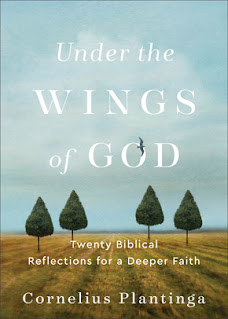
"Under the Wings of God" (Cornelius Plantinga)
TITLE: Under the Wings of God
AUTHOR: Cornelius Plantinga
PUBLISHER: Grand Rapids, MI: Brazos Press, 2023, (192 pages).
Ordinary believers honour the Bible. Church-goers read the Bible. Academics analyze the Bible. Devotees meditate on the Bible. Pastors preach the Bible. Authors write about the Bible. It would seem like the Bible is used in so many different ways. Those seeking a closer walk with God will not be content with any form of superficial reading. They will also meditate and contemplate the Word of God. As purposed in the cover of this book, renowned Professor Cornelius Plantinga shares 20 reflections to help us grow deeper in faith. In each chapter, he begins with the full Bible passage and a brief description. This is followed by a reflection which occupies the bulk of the chapter. Ending each chapter is a prayer. Plantinga starts with Ps 91 where a cursory reading would say it is about security in God. A deeper reading would be an exhortation not to worry. He takes the greatest commandment in Matthew 22:37 and applies it powerfully to the intellectual pursuit of God, something that some ordinary believers tend to dismiss as a mere academic exercise. The key lies in the reason for the study: Loving God more with the mind. We read about Colossians 3's exhortation to patience and how the author connects it with other attributes like anger management. Some of the most powerful reflections happen to be the way conventional beliefs are turned on their heads. For example, in Exodus 32, the text describes how the Israelites turned away from God and worshiped the golden calf. Plantinga describes the episode in such a way that we can all see the dangers and pain of adultery. While most people would dismiss Israel then as the adulterous nation that is only bent on disappointing God, a closer reading reveals that was not the case. They may have worshiped other gods but they still have the desire to worship the True God. They simply are people who practice spiritual polygamy. While the Bible condemns adultery in its strongest terms, there is also grace that overwhelms punishment for sin. Following this thread, in Genesis 4:1-16, there is the story of Cain and Abel where jealousy turned to murder. This led to the banishment of Cain who became cursed to be a restless wanderer. Further reflection points to a man though tarnished by sin still desires a close relationship with God. This is not something that we can pick up unless we observe the way the text was written.
AUTHOR: Cornelius Plantinga
PUBLISHER: Grand Rapids, MI: Brazos Press, 2023, (192 pages).
Ordinary believers honour the Bible. Church-goers read the Bible. Academics analyze the Bible. Devotees meditate on the Bible. Pastors preach the Bible. Authors write about the Bible. It would seem like the Bible is used in so many different ways. Those seeking a closer walk with God will not be content with any form of superficial reading. They will also meditate and contemplate the Word of God. As purposed in the cover of this book, renowned Professor Cornelius Plantinga shares 20 reflections to help us grow deeper in faith. In each chapter, he begins with the full Bible passage and a brief description. This is followed by a reflection which occupies the bulk of the chapter. Ending each chapter is a prayer. Plantinga starts with Ps 91 where a cursory reading would say it is about security in God. A deeper reading would be an exhortation not to worry. He takes the greatest commandment in Matthew 22:37 and applies it powerfully to the intellectual pursuit of God, something that some ordinary believers tend to dismiss as a mere academic exercise. The key lies in the reason for the study: Loving God more with the mind. We read about Colossians 3's exhortation to patience and how the author connects it with other attributes like anger management. Some of the most powerful reflections happen to be the way conventional beliefs are turned on their heads. For example, in Exodus 32, the text describes how the Israelites turned away from God and worshiped the golden calf. Plantinga describes the episode in such a way that we can all see the dangers and pain of adultery. While most people would dismiss Israel then as the adulterous nation that is only bent on disappointing God, a closer reading reveals that was not the case. They may have worshiped other gods but they still have the desire to worship the True God. They simply are people who practice spiritual polygamy. While the Bible condemns adultery in its strongest terms, there is also grace that overwhelms punishment for sin. Following this thread, in Genesis 4:1-16, there is the story of Cain and Abel where jealousy turned to murder. This led to the banishment of Cain who became cursed to be a restless wanderer. Further reflection points to a man though tarnished by sin still desires a close relationship with God. This is not something that we can pick up unless we observe the way the text was written.
Labels:
Brazos,
Christianity,
Devotional,
God,
Netgalley,
Reflections,
Small Groups,
Suffering,
Wisdom
Friday, November 11, 2022
"1 Corinthians" (Kimlyn J. Bender)
TITLE: 1 Corinthians (Brazos Theological Commentary on the Bible)
AUTHOR: Kimlyn J. Bender
PUBLISHER: Grand Rapids, MI: Brazos Press, 2022, (320 pages).
Traditional apostolic interpretation examines scriptures from the mindset of doctrines with the Church leading the way in Bible interpretive matters. Modern interpreters critique the use of tradition and dogma. Postmodern interpreters criticize the critics. A lot of modern scholars understand the Bible from the perspective of a reader-response attitude. By giving us an overview of the broad strokes of biblical interpretation through the ages, we are reminded that there are still many strengths in letting these clarify rather than obstruct our interpretive paradigms. In other words, instead of adopting a hermeneutic of suspicion which many modern and postmodern scholars adopt, believe rather that "dogma clarifies rather than obscures." Recognizing the increasing secularization of Western society, and the rising fragmentation of Christendom, author and professor Kimlyn Bender seeks to bring us back to the importance of Church doctrine in interpretive matters. Instead of jettisoning historical interpretive strategies, this commentary combines the heritage of the Nicene tradition and marries them with modern biblical scholarship. Use the old to understand the new; and to use the new in the old, in the light of Christ. Theologically, Bender shows us the critical need to take every thought captive to Christ. Textually, we are called to harness the best of historical-critical studies in the past and combine them with modern exegesis.
AUTHOR: Kimlyn J. Bender
PUBLISHER: Grand Rapids, MI: Brazos Press, 2022, (320 pages).
Traditional apostolic interpretation examines scriptures from the mindset of doctrines with the Church leading the way in Bible interpretive matters. Modern interpreters critique the use of tradition and dogma. Postmodern interpreters criticize the critics. A lot of modern scholars understand the Bible from the perspective of a reader-response attitude. By giving us an overview of the broad strokes of biblical interpretation through the ages, we are reminded that there are still many strengths in letting these clarify rather than obstruct our interpretive paradigms. In other words, instead of adopting a hermeneutic of suspicion which many modern and postmodern scholars adopt, believe rather that "dogma clarifies rather than obscures." Recognizing the increasing secularization of Western society, and the rising fragmentation of Christendom, author and professor Kimlyn Bender seeks to bring us back to the importance of Church doctrine in interpretive matters. Instead of jettisoning historical interpretive strategies, this commentary combines the heritage of the Nicene tradition and marries them with modern biblical scholarship. Use the old to understand the new; and to use the new in the old, in the light of Christ. Theologically, Bender shows us the critical need to take every thought captive to Christ. Textually, we are called to harness the best of historical-critical studies in the past and combine them with modern exegesis.
Labels:
Bible,
Biblical Studies,
Brazos,
Christianity,
Commentary,
Interpretation,
Netgalley,
New Testament
Wednesday, October 19, 2022
"Beyond Welcome" (Karen González)
TITLE: Beyond Welcome: Centering Immigrants in Our Christian Response to Immigration
AUTHOR: Karen González
PUBLISHER: Grand Rapids, MI: Brazos Press, 2022, (176 pages).
With globalization, immigration and relocations are fast becoming a norm. Many immigrants uproot themselves because of commercial opportunities, jobs, family links, or simply a desire to start life afresh in a new land. Others flee for refuge because of wars and various forms of persecution. Emigrating from their original home countries is just the first part of the story. Immigrating to their new countries of choice is the second. How do they adjust to the new cultural climate? What are the expectations of them from people in their host country? Is adaptation by immigrants and acceptance by native citizens enough for cultural amalgamation? This book takes a critical look at our existing structures of welcoming new immigrants, probing the cultural challenges as well as the role of the Church. Author and professor Karen González deals with the issue of moving beyond superficial acts of welcome that often appears more as lip service. She offers a three-part approach to discuss this issue. Part One looks at "Words and Myths" that many people use, oblivious to any underlying sneaky or subconscious forms of micro-aggression. She asks questions that most people might not even think of. Are assimilation strategies just and fair? Is it right to tell immigrants to forsake their cultural background just for the sake of assimilation? How can words alone become a barrier to true welcome? What about the myth of the "good immigrant?" This book essentially challenges this deeply-held belief. In a passionate pushback against many such "norms," author Karen Gonzalez says that welcoming foreign immigrants needs to go beyond expectations of cultural conformance as well as the myths of the "good immigrant." She makes us ponder on biblical relevance, especially on the distinction between "good" and "bad" immigrants. We cannot depend only on immigrants to change. Hosts and natives need to learn the cross-cultural differences too! One of the key instruments is language. As the saying goes: "It takes two to tango," society will be a lot closer and friendlier if everyone can do their part to build bridges. Gonzalez gives a powerful example of how she connected with Russian speakers by trying to speak using her limited Russian knowledge. Words carry significant meaning, and the author shows us that words can heal as well as hurt.
AUTHOR: Karen González
PUBLISHER: Grand Rapids, MI: Brazos Press, 2022, (176 pages).
With globalization, immigration and relocations are fast becoming a norm. Many immigrants uproot themselves because of commercial opportunities, jobs, family links, or simply a desire to start life afresh in a new land. Others flee for refuge because of wars and various forms of persecution. Emigrating from their original home countries is just the first part of the story. Immigrating to their new countries of choice is the second. How do they adjust to the new cultural climate? What are the expectations of them from people in their host country? Is adaptation by immigrants and acceptance by native citizens enough for cultural amalgamation? This book takes a critical look at our existing structures of welcoming new immigrants, probing the cultural challenges as well as the role of the Church. Author and professor Karen González deals with the issue of moving beyond superficial acts of welcome that often appears more as lip service. She offers a three-part approach to discuss this issue. Part One looks at "Words and Myths" that many people use, oblivious to any underlying sneaky or subconscious forms of micro-aggression. She asks questions that most people might not even think of. Are assimilation strategies just and fair? Is it right to tell immigrants to forsake their cultural background just for the sake of assimilation? How can words alone become a barrier to true welcome? What about the myth of the "good immigrant?" This book essentially challenges this deeply-held belief. In a passionate pushback against many such "norms," author Karen Gonzalez says that welcoming foreign immigrants needs to go beyond expectations of cultural conformance as well as the myths of the "good immigrant." She makes us ponder on biblical relevance, especially on the distinction between "good" and "bad" immigrants. We cannot depend only on immigrants to change. Hosts and natives need to learn the cross-cultural differences too! One of the key instruments is language. As the saying goes: "It takes two to tango," society will be a lot closer and friendlier if everyone can do their part to build bridges. Gonzalez gives a powerful example of how she connected with Russian speakers by trying to speak using her limited Russian knowledge. Words carry significant meaning, and the author shows us that words can heal as well as hurt.
Labels:
Brazos,
Christian Living,
Church,
Netgalley,
People
Tuesday, September 20, 2022
"A Good and True Story" (Paul M. Gould)
TITLE: A Good and True Story: Eleven Clues to Understanding Our Universe and Your Place in It
AUTHOR: Paul M. Gould
PUBLISHER: Grand Rapids, MI: Brazos Press, 2022, (224 pages).
Who am I? What is my calling? What is my purpose in life? What am I supposed to be doing with my life? Where am I supposed to be? These questions about our identity, origin, purpose, and significance, can all be answered via two stories: One nonreligious and the other religious. The latter begins and ends with God. The former depends basically on science and a non-religious explanation of life. This includes the five philosophies of scientism, materialism, reductionism, atheism, and nihilism. With these two angles on life, author and professor Paul Gould then compares and contrasts them via eleven aspects of life. These eleven "clues" to life are:
AUTHOR: Paul M. Gould
PUBLISHER: Grand Rapids, MI: Brazos Press, 2022, (224 pages).
Who am I? What is my calling? What is my purpose in life? What am I supposed to be doing with my life? Where am I supposed to be? These questions about our identity, origin, purpose, and significance, can all be answered via two stories: One nonreligious and the other religious. The latter begins and ends with God. The former depends basically on science and a non-religious explanation of life. This includes the five philosophies of scientism, materialism, reductionism, atheism, and nihilism. With these two angles on life, author and professor Paul Gould then compares and contrasts them via eleven aspects of life. These eleven "clues" to life are:
- The Universe
- Life
- Species
- Humans
- Morality
- Meaning
- Happiness
- Pain
- Love
- Beauty
- Religion
Labels:
Apologetics,
Brazos,
Christian Life,
Christianity,
Culture,
Faith,
Joy,
Life,
Love,
Netgalley,
Philosophy,
Relationships,
Religion
Thursday, August 4, 2022
"Low Anthropology" (David Zahl)
TITLE: Low Anthropology: The Unlikely Key to a Gracious View of Others (and Yourself)
AUTHOR: David Zahl
PUBLISHER: Grand Rapids, MI: Brazos Press, 2022, (208 pages).
Do not let the title of the book fool you. This is not a graduate-level textbook about human nature. It is essentially about how we think about human behavior. The title might seem intimidating at first but the contents are inviting. In order to satisfy the curious, author David Zahl at the onset defines anthropology as the "operative theory of human nature." He then gives us a spectrum of examples of what high and low anthropology is all about. In a nutshell, "high anthropology" covers grand optimism about the goodness of being human, that people are basically good, who tend to be at their best behavior usually, altruistic, and also constantly positive about life. It is a path to achieving success as much as possible. At the other end of the spectrum is low anthropology, where sentiments like brokenness, heartaches, self-doubts, shame, and negative perceptions live. It is a path to avoiding failure at all costs. Then, Zahl gives us a twist. The way to higher anthropology is via the paths of low anthropology. He observes that his most effective sermons over his 20 years of preaching are the ones assuming the audience is suffering in some way, or in some area of need. This spurs the making of this book. With society constantly crying out for help, perhaps, the way forward is to begin from where the people are. The premise of this book is that if we want to grow authentically forward, we need to start where we are, be honest with ourselves, about who we are, and learn to experience life as grace. In other words, the way we see human nature will determine how well we behave and live in this world.
AUTHOR: David Zahl
PUBLISHER: Grand Rapids, MI: Brazos Press, 2022, (208 pages).
Do not let the title of the book fool you. This is not a graduate-level textbook about human nature. It is essentially about how we think about human behavior. The title might seem intimidating at first but the contents are inviting. In order to satisfy the curious, author David Zahl at the onset defines anthropology as the "operative theory of human nature." He then gives us a spectrum of examples of what high and low anthropology is all about. In a nutshell, "high anthropology" covers grand optimism about the goodness of being human, that people are basically good, who tend to be at their best behavior usually, altruistic, and also constantly positive about life. It is a path to achieving success as much as possible. At the other end of the spectrum is low anthropology, where sentiments like brokenness, heartaches, self-doubts, shame, and negative perceptions live. It is a path to avoiding failure at all costs. Then, Zahl gives us a twist. The way to higher anthropology is via the paths of low anthropology. He observes that his most effective sermons over his 20 years of preaching are the ones assuming the audience is suffering in some way, or in some area of need. This spurs the making of this book. With society constantly crying out for help, perhaps, the way forward is to begin from where the people are. The premise of this book is that if we want to grow authentically forward, we need to start where we are, be honest with ourselves, about who we are, and learn to experience life as grace. In other words, the way we see human nature will determine how well we behave and live in this world.
Labels:
Brazos,
Christian Life,
Christianity,
Culture,
Humility,
Netgalley,
People,
Relationships,
Society
Friday, July 8, 2022
"Untrustworthy" (Bonnie Kristian)
TITLE: Untrustworthy: The Knowledge Crisis Breaking Our Brains, Polluting Our Politics, and Corrupting Christian Community
AUTHOR: Bonnie Kristian
PUBLISHER: Grand Rapids, MI: Brazos Press, 2022, (240 pages).
There was a time when many people had to deal with information overload. With technological advancement, the challenges of managing information have not only grown but have also multiplied. No longer can we simply trust the stuff thrown at us, we need to question their authenticity more and more. Questions like: Who is the publisher? What is their agenda? What kind of people are they hiring? What do they stand to gain? What political alliances are they a part of? Who is funding their business? Is it fake news? These are fundamental questions dealing with the tip of the iceberg of published "facts" and gross misinformation trolling the Internet daily. Sometimes, when a piece of news is published, one has to ask why before accepting what was dished out to us. We are in an information crisis. How do we trust news that is presented to us as "facts?" Author Bonnie Kristian goes beyond such mass misinformation by calling this a "knowledge crisis" (technical term: "epistemic crisis") that permeates wide segments of society. For Christians, this is also a faith crisis. Based on her wide experience as a journalist, she notices the incredible amount of half-trust being masqueraded as facts for public consumption. Whether it is the left or the right, moderate or middle-ground, all are guilty of manipulating facts for their own ends. The difference lies in the extent of the manipulation. Unfortunately, those who believe such information wholesale had lept to drastic measures on their own lifestyles. Kristian shares how some folks who feared a Trump loss would lead to an economic disaster stopped buying a house or curtailed their economic activity. From gay marriages to conspiracy theories, politics to Covid-19 matters, and how news media has led to divisions in various communities, misinformation dominates our media. These have driven a wedge that divides societies all over the world, even families. In writing this book, author Bonnie Kristian has three key objectives:
AUTHOR: Bonnie Kristian
PUBLISHER: Grand Rapids, MI: Brazos Press, 2022, (240 pages).
There was a time when many people had to deal with information overload. With technological advancement, the challenges of managing information have not only grown but have also multiplied. No longer can we simply trust the stuff thrown at us, we need to question their authenticity more and more. Questions like: Who is the publisher? What is their agenda? What kind of people are they hiring? What do they stand to gain? What political alliances are they a part of? Who is funding their business? Is it fake news? These are fundamental questions dealing with the tip of the iceberg of published "facts" and gross misinformation trolling the Internet daily. Sometimes, when a piece of news is published, one has to ask why before accepting what was dished out to us. We are in an information crisis. How do we trust news that is presented to us as "facts?" Author Bonnie Kristian goes beyond such mass misinformation by calling this a "knowledge crisis" (technical term: "epistemic crisis") that permeates wide segments of society. For Christians, this is also a faith crisis. Based on her wide experience as a journalist, she notices the incredible amount of half-trust being masqueraded as facts for public consumption. Whether it is the left or the right, moderate or middle-ground, all are guilty of manipulating facts for their own ends. The difference lies in the extent of the manipulation. Unfortunately, those who believe such information wholesale had lept to drastic measures on their own lifestyles. Kristian shares how some folks who feared a Trump loss would lead to an economic disaster stopped buying a house or curtailed their economic activity. From gay marriages to conspiracy theories, politics to Covid-19 matters, and how news media has led to divisions in various communities, misinformation dominates our media. These have driven a wedge that divides societies all over the world, even families. In writing this book, author Bonnie Kristian has three key objectives:
Labels:
Baker Academic,
Brazos,
Christian Living,
Christianity,
Culture,
Ethics,
Netgalley,
Politics,
Society
Wednesday, April 27, 2022
"You're Only Human" (Kelly M. Kapic)
TITLE: You're Only Human: How Your Limits Reflect God's Design and Why That's Good News
AUTHOR: Kelly M. Kapic
PUBLISHER: Grand Rapids, MI: Brazos Press, 2022, (272 pages).
We live in a world that is increasingly used to things that are "unconditional" and "unlimited." They say the sky's the limit. So many people have prime preferences for unlimited cell-phone data plans, unlimited parking privileges, unlimited food on the buffet table, unlimited use of the gyms, unlimited downloads, unlimited streaming of movies, unlimited access to facilities, and so on. The truth is, nothing is unlimited. There are real limits to what we can consume. For one, time is limited to a maximum of 24 hours per day. Lifespan is limited. Earth's resources are incredibly limited. So, the word "unlimited" is more about what we can handle at best. We don't like limitations, but we are not only mortal, we are essentially human. Recognizing our limits honestly will help us live more meaningfully. Not only that, limitations are a gift from God, and they help us discover who we are instead of who we are not. This is the key thesis of this down to earth book about humanity. Learning to live with finite disappointment does not necessarily mean we cannot have infinite hope. The more we can realize our mortality and finitude, the better we can appreciate God's blessings and promises on what He could do for us, instead of us struggling vainly using our own wisdom and strength. Only God is sovereign and in full control. We are not and we are definitely not God.
AUTHOR: Kelly M. Kapic
PUBLISHER: Grand Rapids, MI: Brazos Press, 2022, (272 pages).
We live in a world that is increasingly used to things that are "unconditional" and "unlimited." They say the sky's the limit. So many people have prime preferences for unlimited cell-phone data plans, unlimited parking privileges, unlimited food on the buffet table, unlimited use of the gyms, unlimited downloads, unlimited streaming of movies, unlimited access to facilities, and so on. The truth is, nothing is unlimited. There are real limits to what we can consume. For one, time is limited to a maximum of 24 hours per day. Lifespan is limited. Earth's resources are incredibly limited. So, the word "unlimited" is more about what we can handle at best. We don't like limitations, but we are not only mortal, we are essentially human. Recognizing our limits honestly will help us live more meaningfully. Not only that, limitations are a gift from God, and they help us discover who we are instead of who we are not. This is the key thesis of this down to earth book about humanity. Learning to live with finite disappointment does not necessarily mean we cannot have infinite hope. The more we can realize our mortality and finitude, the better we can appreciate God's blessings and promises on what He could do for us, instead of us struggling vainly using our own wisdom and strength. Only God is sovereign and in full control. We are not and we are definitely not God.
In this remarkable book about human limitations, we learn that to be human is not something that should weigh us down. Instead, it should help us be thankful and free. Free from unhealthy expectations, vain activism, and especially self-inflicted violence on one's soul. Not only that, unhealthy emotional selves could also inflict inner stresses on our physiological makeup and mental health. Limitations bless us in ways we are often oblivious toward. Kelly Kapic helps us look at these questions in a remarkably positive manner. Questions like:
Labels:
Baker Academic,
Brazos,
Christian Life,
Christianity,
Faith,
Health,
Netgalley,
Theology
Wednesday, January 12, 2022
"Choosing us" (Gail Song Bantum and Brian Bantum)
TITLE: Choosing Us: Marriage and Mutual Flourishing in a World of Difference
AUTHOR: Gail Song Bantum and Brian Bantum
PUBLISHER: Grand Rapids, MI: Brazos, 2022, (160 pages).
Cultural Disappointments. Disobedience. Rejection. Expulsion. Disappointment. Ministry Calling. Decisions. Miscarriages. These are some of the events and turbulent stories revealed in this bold book about mixed marriages. Just that one simple proposal followed by a bold choice by two persons from different ethnicities and cultural backgrounds has led to a journey less traveled. Gail is Korean while Brian is Black. If struggling with these issues of identity and cultural challenges are not enough, their children too will experience these struggles too. One choice, many consequences. With deep insight and wise hindsight, authors Gail and Brian have come together to share with readers their story of faith, hope, and love in a world that in theory believes in equality and justice, but in practice are doing the very opposite. Married for over 25 years, the couple has three adult children who live in Seattle. Both of them experience first-hand what it means to be shunned by their own friends and families. They share about their mentoring of other couples, what it means to live in an inter-racial relationship, and the journey toward acceptance in a world fraught with all kinds of differences and expectations. Even the institution of marriage has been tarnished by sin. While biblically, marriage was supposed to be a symbol of love, marriage tainted by sin has become a tool for power, sexism, discrimination, and control. In seven chapters, Gail and Brian share their story. Chapter One begins with their personal plans. Gail wanted to be a female conductor for the New York Philharmonic while Brian wants to coach soccer. Both had their plans disrupted due to the loss of a parent. For all their struggles with the different cultural differences and expectations, they married and found love that defies common understanding. Without any models to follow, they had to carve out their own version of what it means to live out their uncommon marriage. Eventually, they had to depend on each other, to learn as they journey along. Chapter Two reveals this journey of learning about individual idiosyncrasies. Different situations also mean learning about the other person more. Whether it is career changes or family gatherings, snapshots of personality profiles, or behavioural changes among friends, even one's waking up hours could be an unexpected revelation. They share a powerful tip: "Continually choosing each other means relearning the one we've committed to."
AUTHOR: Gail Song Bantum and Brian Bantum
PUBLISHER: Grand Rapids, MI: Brazos, 2022, (160 pages).
Cultural Disappointments. Disobedience. Rejection. Expulsion. Disappointment. Ministry Calling. Decisions. Miscarriages. These are some of the events and turbulent stories revealed in this bold book about mixed marriages. Just that one simple proposal followed by a bold choice by two persons from different ethnicities and cultural backgrounds has led to a journey less traveled. Gail is Korean while Brian is Black. If struggling with these issues of identity and cultural challenges are not enough, their children too will experience these struggles too. One choice, many consequences. With deep insight and wise hindsight, authors Gail and Brian have come together to share with readers their story of faith, hope, and love in a world that in theory believes in equality and justice, but in practice are doing the very opposite. Married for over 25 years, the couple has three adult children who live in Seattle. Both of them experience first-hand what it means to be shunned by their own friends and families. They share about their mentoring of other couples, what it means to live in an inter-racial relationship, and the journey toward acceptance in a world fraught with all kinds of differences and expectations. Even the institution of marriage has been tarnished by sin. While biblically, marriage was supposed to be a symbol of love, marriage tainted by sin has become a tool for power, sexism, discrimination, and control. In seven chapters, Gail and Brian share their story. Chapter One begins with their personal plans. Gail wanted to be a female conductor for the New York Philharmonic while Brian wants to coach soccer. Both had their plans disrupted due to the loss of a parent. For all their struggles with the different cultural differences and expectations, they married and found love that defies common understanding. Without any models to follow, they had to carve out their own version of what it means to live out their uncommon marriage. Eventually, they had to depend on each other, to learn as they journey along. Chapter Two reveals this journey of learning about individual idiosyncrasies. Different situations also mean learning about the other person more. Whether it is career changes or family gatherings, snapshots of personality profiles, or behavioural changes among friends, even one's waking up hours could be an unexpected revelation. They share a powerful tip: "Continually choosing each other means relearning the one we've committed to."
Labels:
Baker Academic,
Brazos,
Christian Life,
Christianity,
Communications,
Community,
Culture,
Family,
Life,
Marriage,
Netgalley,
People,
Relationships
Tuesday, November 9, 2021
"The Loneliness Epidemic" (Susan Mettes)
TITLE: The Loneliness Epidemic: Why So Many of Us Feel Alone--and How Leaders Can Respond
AUTHOR: Susan Mettes
PUBLISHER: Grand Rapids, MI: Brazos Press, 2021, (224 pages).
AUTHOR: Susan Mettes
PUBLISHER: Grand Rapids, MI: Brazos Press, 2021, (224 pages).
Is loneliness a problem? Consider the research data. A third of American adults admit they are frequently lonely. Within the past two decades, feelings of loneliness have more than doubled. Nearly half of all practicing Christian Millennials have experienced it too. Moreover, the problem is growing, not just in North America but globally. Come Winter, the problem deepens. Rates of depression and suicide continue to rise. Why is this happening? In short, it is due to a lack of meaningful relationships. In pre-pandemic days, loneliness has been a rising concern. In 2020 when the world goes into lockdown, everyone starts to talk about the challenges of loneliness and mental health. Research from the Barna group offers compelling evidence on the extent of the problem. This leads to several other problems such as the lack of intimacy, fewer trust relationships, isolated lives, and other crises pertaining to human relationships. So widespread is the problem that even churches are full of lonely people. So why are people lonely? How is it that even people of faith who go to Church can be lonely? What can we learn from the statistics gathered? How can we address this problem? Is loneliness a Western phenomenon or is it more global? In Part One, Author and Professor Susan Mettes defines loneliness as "the distress someone feels when their social connections don’t meet their need for emotional intimacy." She distinguishes this from "social isolation" and "solitude." The former is about circumstances often unforeseen. The latter is about being alone. In Part Two, Mettes goes into greater detail about factors influencing loneliness such as:
Labels:
Baker Academic,
Brazos,
Christian Life,
Christian Living,
Christianity,
Church,
Culture,
Healing,
Health,
Leadership,
Loneliness,
Netgalley,
People,
Relationships
Friday, July 9, 2021
"Joshua" (Paul R. Hinlicky)
TITLE: Joshua (Brazos Theological Commentary on the Bible)
AUTHOR: Paul R. Hinlicky
PUBLISHER: Grand Rapids, MI: Brazos Press, 2021, (320 Pages).
Dogma should clarify rather than obscures. This is the conviction of the publisher who has chosen to let this series of commentaries be based on "Christian doctrinal tradition," such as the Niceno-Constantinopolitan Creed. Creeds help unite Christians. They provide a common platform for understanding. They give us a concise explanation of our common faith in God. In a largely fragmented interpretive community, we need creeds to remind Christians that they still have many things in common. Calling it "textual ecumenism," the central premise of this commentary series is that "doctrine provides structure and cogency to scriptural interpretation." It is also hoped that the commentary will provide an additional platform for Christians and Jews to recognize their common heritage. This is not an exegetical but a theological commentary. That means focusing on the theological themes of Joshua. That means looking at Joshua from a big picture angle rather than a laser beam focus on particular verses. It means reading it with a literary lens rather than a literal interpretation. In doing so, we will be less prone to wrongful applications such as using Joshua to justify war or to support the teachings of triumphalism. Moreover, with doctrine and theology as our lens, we will avoid subjectivism that could turn readers into arrogant dogmatic interpreters.
AUTHOR: Paul R. Hinlicky
PUBLISHER: Grand Rapids, MI: Brazos Press, 2021, (320 Pages).
Dogma should clarify rather than obscures. This is the conviction of the publisher who has chosen to let this series of commentaries be based on "Christian doctrinal tradition," such as the Niceno-Constantinopolitan Creed. Creeds help unite Christians. They provide a common platform for understanding. They give us a concise explanation of our common faith in God. In a largely fragmented interpretive community, we need creeds to remind Christians that they still have many things in common. Calling it "textual ecumenism," the central premise of this commentary series is that "doctrine provides structure and cogency to scriptural interpretation." It is also hoped that the commentary will provide an additional platform for Christians and Jews to recognize their common heritage. This is not an exegetical but a theological commentary. That means focusing on the theological themes of Joshua. That means looking at Joshua from a big picture angle rather than a laser beam focus on particular verses. It means reading it with a literary lens rather than a literal interpretation. In doing so, we will be less prone to wrongful applications such as using Joshua to justify war or to support the teachings of triumphalism. Moreover, with doctrine and theology as our lens, we will avoid subjectivism that could turn readers into arrogant dogmatic interpreters.
Labels:
Baker Academic,
Biblical Studies,
Brazos,
Commentary,
Netgalley,
Old Testament
Wednesday, August 26, 2020
"Emerging Gender Identities" (Mark Yarhouse and Julia Sadusky)
TITLE: Emerging Gender Identities: Understanding the Diverse Experiences of Today's Youth
AUTHOR: Mark Yarhouse and Julia Sadusky
PUBLISHER: Grand Rapids, MI: Brazos Press, 2020, (256 pages).
The issue of gender identities is one of the most controversial topics in our cultures today. With political lobbying, gender identity is increasingly becoming a political tool. Some even use science to prove their point of view. Others blame it on psychological profiles while still others point to genetic makeup, questioning links between chromosomes and emotional well-being. It is becoming a confusing array of opinions and arguments. What used to be clearly male and female is not so clear today. There are accusations of liberal gender-switching as well as confusion over what exactly is gender. Some take the scientific approach to try to make sense of gender confusion. This may pass the chromosomal tests raises doubts about their direct relevance to emotional attachments. The notion of gender being classified either binary or not is increasingly challenged even as society grows more tolerant with gender definitions that transcend conventional thinking. For authors Yarhouse and Sadusky, they call it nuancing gender identities. One of the key ideas is "gender dysphoria" which zooms out of gender identity discussions and zooms into the "distress experienced" by the persons. In other words, the authors propose addressing the emotional distress so that we could discuss "alternative gender" instead of "assigned gender." They cite studies about such emerging gender identities to highlight the need to go beyond mere binary assumptions. Research suggests distinguishing "biological sex, gender identity, and sexuality." Gender identity is sometimes not assigned per se but applied using political force to the point that transgenderism has become an umbrella term to cover all non-binary interpretations of gender. In order to clarify what gender identities are, one needs to be free from the political pressure to conform to certain expectations. This means we need to understand how political pressure leads to public identity; and factors such as the sexual revolution, feminist movements, deconstruction of sex, and others.
AUTHOR: Mark Yarhouse and Julia Sadusky
PUBLISHER: Grand Rapids, MI: Brazos Press, 2020, (256 pages).
The issue of gender identities is one of the most controversial topics in our cultures today. With political lobbying, gender identity is increasingly becoming a political tool. Some even use science to prove their point of view. Others blame it on psychological profiles while still others point to genetic makeup, questioning links between chromosomes and emotional well-being. It is becoming a confusing array of opinions and arguments. What used to be clearly male and female is not so clear today. There are accusations of liberal gender-switching as well as confusion over what exactly is gender. Some take the scientific approach to try to make sense of gender confusion. This may pass the chromosomal tests raises doubts about their direct relevance to emotional attachments. The notion of gender being classified either binary or not is increasingly challenged even as society grows more tolerant with gender definitions that transcend conventional thinking. For authors Yarhouse and Sadusky, they call it nuancing gender identities. One of the key ideas is "gender dysphoria" which zooms out of gender identity discussions and zooms into the "distress experienced" by the persons. In other words, the authors propose addressing the emotional distress so that we could discuss "alternative gender" instead of "assigned gender." They cite studies about such emerging gender identities to highlight the need to go beyond mere binary assumptions. Research suggests distinguishing "biological sex, gender identity, and sexuality." Gender identity is sometimes not assigned per se but applied using political force to the point that transgenderism has become an umbrella term to cover all non-binary interpretations of gender. In order to clarify what gender identities are, one needs to be free from the political pressure to conform to certain expectations. This means we need to understand how political pressure leads to public identity; and factors such as the sexual revolution, feminist movements, deconstruction of sex, and others.
Labels:
Baker Academic,
Brazos,
Culture,
Gender,
Homosexuality,
Ministry,
Netgalley,
People,
Sex,
Sexuality,
Society,
Young People,
Youth
Wednesday, October 9, 2019
"Resilient Faith" (Gerald L. Sittser)
TITLE: Resilient Faith: How the Early Christian "Third Way" Changed the World
AUTHOR: Gerald L. Sittser
PUBLISHER: Grand Rapids, MI: Brazos Press, 2019, (240 pages).
Finding a middle path, a way that meanders between any extremes, or some "third way" has been the pattern among many movements in the path. Evolution sees it as "survival of the fittest." The secular world views it as natural selection. The business world thinks of new potential as a new wave. Whatever it is, the possibility of a new way in the midst of conflicting old ways is always a path of hope. In the Early Church, this "third way" is the Jesus Way. Jesus spoke about this as He moves among two huge forces of resistance: Roman and Jewish. Followers of Jesus were also known as followers of "The Way." This way has resisted the Roman persecutions, the Hellenistic cultural forces and Jewish legalistic regimen. In doing so, this way of Jesus impacted the early centuries and is continuing to do so today. By studying the why and how of this Third Way, author Gerald Sittser helps us understand and learn from the resilient gospel of Jesus, and to see its relevance today in our increasingly challenging world. The recurring question that Sittser asks throughout the book is this: How did the Christianity flourish in the light of persecutions and inhospitable conditions? On top of these, they had to resist worldliness. They had to battle heresies. They had to endure being ostracised for their beliefs and lifestyles. Interestingly this "third way" disappeared overnight upon the official recognition of Christianity after Constantine's influence in AD313. It also took on negative perceptions due to the crusades, the Thirty Year War, and many other politicizing of Christianity. In our modern era, we are challenged with a post-Christian hostility, a Millennial scepticism, and the rise of new age spiritualities. In writing about faith and the resilience of the Christian beliefs, Sittser aims to help us see the future with hope even as the days appear dark and daunting. He does this by comparing and contrasting the old and new eras constantly. It flourished in the early centuries because it was deemed new and novel. It was also seen as a major threat to the pre-existing establishment then. During the persecution era, Christians pledged allegiance to Christ incurring the wrath of the Roman emperors. He begins this with a focused look at how the ecclesiastical tradition helped shaped faith through the ages. However, he soon discovers that it was not the Church per se, but the belief in Jesus that is more significant. The Third Way is the Jesus way. For in Christ, we see a bridge between the old and the new; the old world and the new world; the renewal movements and the desire for spiritual refreshment; etc. This pattern of renewed focus on Jesus and revival in the Spirit is what makes the Christian faith resilient.
AUTHOR: Gerald L. Sittser
PUBLISHER: Grand Rapids, MI: Brazos Press, 2019, (240 pages).
Finding a middle path, a way that meanders between any extremes, or some "third way" has been the pattern among many movements in the path. Evolution sees it as "survival of the fittest." The secular world views it as natural selection. The business world thinks of new potential as a new wave. Whatever it is, the possibility of a new way in the midst of conflicting old ways is always a path of hope. In the Early Church, this "third way" is the Jesus Way. Jesus spoke about this as He moves among two huge forces of resistance: Roman and Jewish. Followers of Jesus were also known as followers of "The Way." This way has resisted the Roman persecutions, the Hellenistic cultural forces and Jewish legalistic regimen. In doing so, this way of Jesus impacted the early centuries and is continuing to do so today. By studying the why and how of this Third Way, author Gerald Sittser helps us understand and learn from the resilient gospel of Jesus, and to see its relevance today in our increasingly challenging world. The recurring question that Sittser asks throughout the book is this: How did the Christianity flourish in the light of persecutions and inhospitable conditions? On top of these, they had to resist worldliness. They had to battle heresies. They had to endure being ostracised for their beliefs and lifestyles. Interestingly this "third way" disappeared overnight upon the official recognition of Christianity after Constantine's influence in AD313. It also took on negative perceptions due to the crusades, the Thirty Year War, and many other politicizing of Christianity. In our modern era, we are challenged with a post-Christian hostility, a Millennial scepticism, and the rise of new age spiritualities. In writing about faith and the resilience of the Christian beliefs, Sittser aims to help us see the future with hope even as the days appear dark and daunting. He does this by comparing and contrasting the old and new eras constantly. It flourished in the early centuries because it was deemed new and novel. It was also seen as a major threat to the pre-existing establishment then. During the persecution era, Christians pledged allegiance to Christ incurring the wrath of the Roman emperors. He begins this with a focused look at how the ecclesiastical tradition helped shaped faith through the ages. However, he soon discovers that it was not the Church per se, but the belief in Jesus that is more significant. The Third Way is the Jesus way. For in Christ, we see a bridge between the old and the new; the old world and the new world; the renewal movements and the desire for spiritual refreshment; etc. This pattern of renewed focus on Jesus and revival in the Spirit is what makes the Christian faith resilient.
Labels:
Brazos,
Church,
Faith,
History,
Netgalley,
Persecution,
Reflections,
Theology
Monday, February 11, 2019
"How the Body of Christ Talks" (C. Christopher Smith)
TITLE: How the Body of Christ Talks: Recovering the Practice of Conversation in the Church
AUTHOR: C. Christopher Smith
PUBLISHER: Grand Rapids, MI: Brazos Press, 2019, (224 pages).
We are made for conversations. Even our body cells reflect our inclination toward community and communal living. Unfortunately, individualism and privatism have taken over much of society. People are increasingly isolated. Even church people are no longer able to converse as well as they ought to. Calling our bodies as conversations "among proteins," author Christopher Smith aims to bring back the lost art of conversations in the Church, beginning with ourselves. For the healthiest people are those in active conversations with one another. The strongest communities are those that frequently communicate and talk to one another. In this book, Smith has a passion to help churches cultivate this art of talking and to build relationships through conversations. He even calls it a "transformative power of conversation." Smith invites us along in the three phases as follows:
1) Setting Out the Journey
2) Spirituality for the Journey
3) Sustaining the Journey
AUTHOR: C. Christopher Smith
PUBLISHER: Grand Rapids, MI: Brazos Press, 2019, (224 pages).
We are made for conversations. Even our body cells reflect our inclination toward community and communal living. Unfortunately, individualism and privatism have taken over much of society. People are increasingly isolated. Even church people are no longer able to converse as well as they ought to. Calling our bodies as conversations "among proteins," author Christopher Smith aims to bring back the lost art of conversations in the Church, beginning with ourselves. For the healthiest people are those in active conversations with one another. The strongest communities are those that frequently communicate and talk to one another. In this book, Smith has a passion to help churches cultivate this art of talking and to build relationships through conversations. He even calls it a "transformative power of conversation." Smith invites us along in the three phases as follows:
1) Setting Out the Journey
2) Spirituality for the Journey
3) Sustaining the Journey
Labels:
Brazos,
Church,
Communications,
Community,
Grace,
Love,
Netgalley,
Prayer,
Small Groups,
Spirituality
Monday, January 21, 2019
"Restless Faith" (Richard J. Mouw)
TITLE: Restless Faith: Holding Evangelical Beliefs in a World of Contested Labels
AUTHOR: Richard J Mouw
PUBLISHER: Grand Rapids, MI: Brazos Press, 2018, (192 pages).
People generally don't like to be labeled but the practice of labeling continues to be practiced in society. Scholars especially would often qualify their definitions of any particular label. On the word "Christian," one might ask what kind of Christian. On the label "Protestant," one might wonder which branch or denomination one is talking about. On the label "evangelical," some might shrug their shoulders or avoid talking about it due to its association with politics on America. Things are no longer taken at face value or treated simplistically. Maybe society has become more sophisticated. Maybe there are more awareness of the increasing diversity of views and opinions. For author and theologian Richard Mouw, the fear of labels should not be allowed to prevent us from using them legitimately. The word in question is "evangelical." Just because of a few bad eggs should not deter us from appropriate use of it. It is true that some from the political right have been giving the label a bad name, the same applies to many other labels open to stereotyping. He uses Alister McGrath's words as support, that "we evangelicals do often operate with an 'under-developed ecclesiology' - but we are willing to live with that defect because of what we have experienced at the hands of 'others who have over-developed ecclesiologies.'" That's a valid point. He also notes the famous historian, David Bebbington's definition of evangelical by saying that his four points were 'emphases' instead of absolute dogmas. A restless faith seeks to hold together two things: Top-notch scholarship (mindfulness) and down-to-earth connections (relational). It is honouring the Bible; walking in the presence of the Holy Spirit; and an awareness of the saints who had walked faithfully in the past.
AUTHOR: Richard J Mouw
PUBLISHER: Grand Rapids, MI: Brazos Press, 2018, (192 pages).
People generally don't like to be labeled but the practice of labeling continues to be practiced in society. Scholars especially would often qualify their definitions of any particular label. On the word "Christian," one might ask what kind of Christian. On the label "Protestant," one might wonder which branch or denomination one is talking about. On the label "evangelical," some might shrug their shoulders or avoid talking about it due to its association with politics on America. Things are no longer taken at face value or treated simplistically. Maybe society has become more sophisticated. Maybe there are more awareness of the increasing diversity of views and opinions. For author and theologian Richard Mouw, the fear of labels should not be allowed to prevent us from using them legitimately. The word in question is "evangelical." Just because of a few bad eggs should not deter us from appropriate use of it. It is true that some from the political right have been giving the label a bad name, the same applies to many other labels open to stereotyping. He uses Alister McGrath's words as support, that "we evangelicals do often operate with an 'under-developed ecclesiology' - but we are willing to live with that defect because of what we have experienced at the hands of 'others who have over-developed ecclesiologies.'" That's a valid point. He also notes the famous historian, David Bebbington's definition of evangelical by saying that his four points were 'emphases' instead of absolute dogmas. A restless faith seeks to hold together two things: Top-notch scholarship (mindfulness) and down-to-earth connections (relational). It is honouring the Bible; walking in the presence of the Holy Spirit; and an awareness of the saints who had walked faithfully in the past.
Labels:
Baker Academic,
Brazos,
Christian Life,
Evangelicalism,
Faith,
Netgalley
Friday, September 7, 2018
"On Reading Well" (Karen Swallow Prior)
TITLE: On Reading Well: Finding the Good Life through Great Books
AUTHOR: Karen Swallow Prior
PUBLISHER: Grand Rapids, MI: Brazos Press, 2018, (272 pages).
For many people, reading can be a great pastime. Students read for learning, but more often than not, do so in order to pass their courses. Professors read in order to teach. Researchers read in order to build their reserviour of knowledge and bibliographical resources. Many teachers also encourage their students not just to read but to read widely. What about reading slowly and intently? What does it mean to read well? What if reading could change our lives? What if reading well means living well, or vice versa? These questions help us address the fundamental purposes of reading and living. According to author Karen Swallow Prior, "reading well is, in itself, an act of virtue, or excellence, and it is also a habit that cultivates more virtue in return." That is more than a mouthful. It is specifically reading with a virtuous purpose in mind and a holistic relevance to life. Prior shows us how through the categories of the cardinal, theological, and heavenly virtues. We learn many different insights about reading well:
AUTHOR: Karen Swallow Prior
PUBLISHER: Grand Rapids, MI: Brazos Press, 2018, (272 pages).
For many people, reading can be a great pastime. Students read for learning, but more often than not, do so in order to pass their courses. Professors read in order to teach. Researchers read in order to build their reserviour of knowledge and bibliographical resources. Many teachers also encourage their students not just to read but to read widely. What about reading slowly and intently? What does it mean to read well? What if reading could change our lives? What if reading well means living well, or vice versa? These questions help us address the fundamental purposes of reading and living. According to author Karen Swallow Prior, "reading well is, in itself, an act of virtue, or excellence, and it is also a habit that cultivates more virtue in return." That is more than a mouthful. It is specifically reading with a virtuous purpose in mind and a holistic relevance to life. Prior shows us how through the categories of the cardinal, theological, and heavenly virtues. We learn many different insights about reading well:
- Reading well is about learning how to think
- Reading slowly leads to deep and meaningful reading
- Speed reading leads to "superficial knowledge and overconfidence."
- Read virtuously by being faithful to both text and context
- Read and enjoy
- Read and be formed in our thinking
- Read toward human flourishing
- Reading fosters virtues and vision
- Reading offers greater perspectives
- ... and so on
Labels:
Baker Books,
Books,
Brazos,
Charity,
Christian Education,
Christian Life,
Faith,
Hope,
Literature,
Love,
Netgalley,
Reading
Subscribe to:
Posts (Atom)