About This Blog

Showing posts with label Graf-Martin. Show all posts

Monday, July 6, 2020

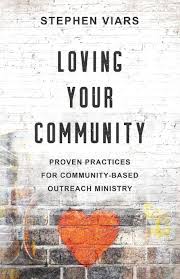
"Loving Your Community" (Stephen Viars)

TITLE: Loving Your Community
AUTHOR: Stephen Viars
PUBLISHER: Grand Rapids, MI: Baker Books, 2020, (240 pages).

The greatest commandment according to Jesus is simply this: Love the Lord our God with all our heart, our mind, and our soul. The second is to love our neighbour as ourselves. Saying it is easy. Doing it is hard. That is why love is easier said than done. Many churches budget for outreach programs as part of the Great Commission. Such outreach generally comprises evangelism, mission, social concerns, and community outreach. If I can use one word to summarize all of the above, outreach would be quite appropriate. Whether local or foreign, near or distant, the reason churches exist must be for the sake of proclaiming God's kingdom far and wide. The moment churches become inward-looking, that would not only compromise their calling as the Bride of Christ, that marks the beginning of the end for their existence. Author and pastor Stephen Viars shares his over thirty years of experience serving the community both inside and outside of his Church community. He shares his work and ministry in this book driven by one objective: Helping us to default from "Saying NO unless you have to say YES" to "Saying YES unless you have to say NO."  He knows the appalling rate of outreach among many churches that choose to play it safe and to keep their resources to themselves.

Friday, May 29, 2020

"Courageous" (Dr Robert Jeffress)

TITLE: Courageous: 10 Strategies for Thriving in a Hostile World
AUTHOR: Dr. Robert Jeffress
PUBLISHER: Grand Rapids, MI: Baker Books, 2020, (272 pages).

What are we afraid of? What do we do when our faith is under attack? What strategies can we adopt when living in a hostile world? Can we live beyond simply surviving toward thriving? In this book, author and pastor Robert Jeffress gives us ten practical "survival tips" which are actually a disguise for helping us to thrive instead. These ten tips are:
  1. Don't panic
  2. Gain situational awareness
  3. Take inventory
  4. Develop a victor, not a victim mindset
  5. Trust your training
  6. Bend, don't break
  7. Beware of celebrating the summit
  8. Learn from the past
  9. Help others
  10. Do the next right thing.

Monday, January 27, 2020

"Small Groups Made Easy" (Ryan Lokkesmoe)

TITLE: Small Groups Made Easy: Practical and Biblical Starting Points to Lead Your Gathering
AUTHOR: Ryan Lokkesmoe
PUBLISHER: Bloomington, MN: Bethany House Publishers, 2019, (160 pages).

As the saying goes, "No man is an island." We all need community. Whether it is a family related community, or having a group with people of common interest, it is the very nature of human beings to connect and be connected to one another. Sometimes, when the desire is there but the know-how is not, it can be crippling. This book is written to address that very need. How do we start a small group? What are the logistics and practical challenges? How do we go about addressing the personal and spiritual aspects? Four chapters of this book summarize the principles behind the need for small groups. Here, author Lokkesmoe talks about the need for leadership to be like Jesus. It is less about competence or knowledge; more about serving and relying on God. This is indeed a good reminder for us as leading small groups is a spiritual calling. He has good pointers for logistical matters as well, helping us think through factors for attendance; appropriate communications; raising up co-leaders; timing and place; and other practical matters to help make small group meetings a fruitful one. He then guides us through some sticky matters such as managing conflicts; gossip; and the four types of people (needy; monopolizers; silent; and the disinterested) that present unique challenges to a successful small group.

Thursday, October 31, 2019

"Don't Give Up" (Kyle Idleman)

TITLE: Don't Give Up: Faith That Gives You the Confidence to Keep Believing and the Courage to Keep Going
AUTHOR: Kyle Idleman
PUBLISHER: Grand Rapids, MI: Baker Books, 2019, (240 pages).

How do we encourage someone? Do we use the soft gentle approach like Mr Rogers? That might tempt one toward self-pity or worse, a sense of depression. Or do we use the William Wallace approach to usher in courage? That might move us beyond our comfort zones. In this book by bestselling author and senior pastor of one of the largest mega churches in America, we are told not only to never give up but to press on with the exhortation from the Bible book of Hebrews 12:1-3. After showing us the powerful examples of faith in the long list of people in Hebrews 11, we receive a “battle cry” to press ahead to finish the race of faith. There is a time for sympathy and a time to spring into action. Idleman’s key thesis has to deal with the latter. His three-part strategy is based on the Hebrews 12:1-3 text, especially verse 1.
  1. Listen to the Crowd
  2. Throw off the Weight
  3. Run Your Race

Thursday, April 18, 2019

"The New Elder's Handbook" (Greg R Scharf and Arthur Kok)

TITLE: The New Elder's Handbook: A Biblical Guide to Developing Faithful Leaders
AUTHOR: Greg R Scharf and Arthur Kok
PUBLISHER: Grand Rapids, MI: Baker Books, 2018, (186 pages).

Leaders are hard to find. There is no such thing as a ready leader. Some would claim inadequacy. Others would shun leadership because it seems too daunting. Those who might be willing might not be ready as well for various reasons. The truth is, leaders are more easily farmed than found. It is more practical to prepare a leader and equip that person from the ground up instead of waiting for the perfect leader to appear from somewhere. I suspect that is one reason why we are exhorted to equip and prepare mature and godly leaders instead. One of the most prominent positions in any Church is the elder. This is not merely a title but a position of responsibility and maturity. They are the go-to persons for spiritual wisdom and guidance. While not every Church has an official office or name of "elder," the role is pretty clear: Elders are mature individuals who could be depended upon for Church leadership and spiritual guidance. This underlines the convictions of the authors in this book, that leaders can be raised up among us, and if called, we can be trained up to be an elder too. After all, Paul's exhortation to Timothy in 1 Tim 3:1 says "The saying is trustworthy: If anyone aspires to the office of overseer, he desires a noble task." "Anyone" means any one of us. Whether we are trained or not, we all have the potential to become an elder. God could call anyone. At the same time, this book is written to enable readers to support and to encourage their own church's elders.

Monday, March 11, 2019

"Insurgence" (Frank Viola)

TITLE: Insurgence: Reclaiming the Gospel of the Kingdom
AUTHOR: Frank Viola
PUBLISHER: Grand Rapids, MI: Baker Books, 2018, (448 pages).

The gospel of the kingdom is inherently radical. The early Church is radical in their love and faith. Unfortunately, the modern church have largely lost the necessary conviction and passion of old. What is needed is a renewal of conviction and a revelation of the Kingdom of God. How do we do that? Create an insurgence to reclaim the  gospel of the Kingdom of God. For the grand narrative of the whole Bible is about declaring the Kingdom of God having come and will be coming soon.  In order to do that, we need to clear the decks. We have to distinguish between worldly wisdom and heavenly wisdom. We need to proclaim the Kingdom of God over all else. We need a vision of the beauty of the Kingdom so that we can proclaim with passion our freedom in Christ and glory of God. Author Frank Viola writes in six parts to do just that. The six parts are titled as follows:

  1. Three Different Gospels
  2. Unveiling the King's Beauty
  3. The Gospel of the Kingdom
  4. Entering and Enjoying the Kingdom
  5. Our Glorious Liberty
  6. Advancing the Kingdom


Tuesday, September 25, 2018

"Preaching Jesus Christ Today" (Annette Brownlee)

TITLE: Preaching Jesus Christ Today: Six Questions for Moving from Scripture to Sermon
AUTHOR: Annette Brownlee
PUBLISHER: Grand Rapids, MI: Baker Academic, 2018, (190 pages).

Preaching is unlike speaking. It is not about giving a talk. Neither is it a speech or good advice about what to do with our lives. Preaching is essentially about proclaiming Christ and declaring the Kingdom of God coming to earth. It is about letting the ancient truths of the Bible come alive in modern contexts. Yet, it is challenging for preachers who had to prepare, produce, and preach a sermon week in and week out. Depending on the texts, one may have too many things to pack into a limited time or simply has too little to say due to the difficulty of the passage. Preachers in general need help from time to time, though some more and others less. For author and preacher Annette Brownlee, it is about preaching Jesus Christ and to move from text to interpretation to application through six core questions. Questions like:
  1. What do I see? (Preacher as Witness)
  2. Whom do I see? (Preacher as Witness to Christ)
  3. What is Christ's Word to me? (Preacher as Confessor)
  4. What is Christ's Word to us? (Preacher as Theologian)
  5. What does it look like? (Preacher as Theologian of a Broken Body)
  6. What does it look like? (Preacher as Witness to Christ in a Disobedient World)

Tuesday, July 3, 2018

"Every Job a Parable" (John Van Sloten)

TITLE: Every Job a Parable: What Walmart Greeters, Nurses, and Astronauts Tell Us about God
AUTHOR: John Van Sloten
PUBLISHER: Colorado Springs, CO: NavPress, 2017, (220 pages).

Is God really interested in our jobs? What if our jobs are powerful windows into God's work in our lives? What is the relationship between our faith and our jobs? What does it mean to work joyfully as for the Lord? Can ordinary routine jobs be as significant as those mover-and-shaker jobs? These are everyday questions that would pique the interest of anyone out there working in the marketplace.

Your work matters to God because you matter to God. Every job is a story of this relationship. Through our jobs, we exercise our vocation to demonstrate God's grace in our work and the daily things we do. Through each vocation, author and preacher John Van Sloten has discovered a unique narrative in each of them. He calls it a "kind of parable," a unique story in which God manifests Himself in our work through us. He hopes that this book will spark in each reader a "renewed vocational imagination"to trust that because God is with them in their workplace, they would reveal God's glory in everything they do. In a secular age, it would seem impossible to even talk about things of faith in the marketplace. Yet, there is a way. Opportunities abound for the discerning. He shares about how a Walmart employee named Shirley puts customers before herself, just like Christ who put others before Himself. The forensic psychologist in searching for healing recognizes the powerful role of the Holy Spirit to heal and to make people whole. For Sam Kolias, one of Canada's largest residential landlords, it is a reminder that we are all God's tenants on earth. Through the many vocations, we learn about the different ways in which our gifts and talents are put to good use, all reflecting God's creative work in us.


Monday, May 14, 2018

"Building the Body" (Gary L. McIntosh and Phil Stevenson)

TITLE: Building the Body: 12 Characteristics of a Fit Church
AUTHOR: Gary L. McIntosh and Phil Stevenson
PUBLISHER: Grand Rapids, MI: Baker Books, 2018, (204 pages).

The Bible mentions several metaphors on the spiritual life. In the gospels, we have Jesus reminding us about the parable of the four types of soils. Without the right growth conditions, we cannot see fruit. In Jeremiah 2:15, we learn about perseverance that, "If you have raced with men on foot and they have worn you out, how can you compete with horses? If you stumble in safe country, how will you manage in the thickets by the Jordan?" Timothy was exhorted to fight the good fight (1 Tim 6:12) while Paul himself confessed to completing the race and keeping the faith. These highlight one common principle: Fitness. Just like the human body needs to be fit in order to be fruitful in our works, the Church as a body of Christ needs to be fit. How does the Church go about it? How do we measure a fit Church? The fitter the Church, the further she could go. A healthy human body would have a healthy cardiovascular endurance; robust muscular strength; sturdy muscular endurance; able flexibility; and balanced body composition. All these components are to be present. A healthy heart pumps fresh oxygen to nourish the whole body. Robust muscles help overcome resistance. Firm endurance provides strength to push on ahead. Flexibility enables one to embrace new challenges when they appear. A balanced body composition brings all these together in appropriate ways. In this book about spiritual fitness, readers get to hear 12 characteristics, compositions that would make a fit Church. Written by two experienced church leaders, Gary McIntosh and Phil Stevenson, we learn of fitness described through the characteristics of:

Tuesday, May 8, 2018

"Saving Truth" (Abdu Murray)

TITLE: Saving Truth: Finding Meaning and Clarity in a Post-Truth World
AUTHOR: Abdu Murray
PUBLISHER: Grand Rapids, MI: Zondervan, 2018, (256 pages).

The Renaissance gives rise to a new age of confidence in humanism. Modernism ups the bar to through science, technology, and all manner of human advancement. Postmodernism introduces an era of skepticism and relativism. As the age of Christendom diminishes, the age of atheism and secularism emerges with greater boldness and confidence. Some calls the present a Post-Christian world. Others deem it a Post-Postmodernism society. For author and North American director of RZIM, it is simply a "Post-Truth world," which he defines it as a "Culture of Confusion." In a culture of relativity, without an absolute to anchor oneself upon, we risk losing clarity. We lose a sense of purpose. We lose ourselves. Incidentally, those who declare that there are no absolutes are guilty of making their theory of relativity as an absolute in themselves. For if relativism is not an absolute, it is but a flaky philosophy. Truth is about fixed points of reference; about solid ground; about objectivity; and about the clarity of thought and life. From a big picture view, Murray moves to deal with the seductions of a "Post-Truth Mindset." Surprisingly, this mindset is not just non-Christians, but involves Christians as well. Things such as a wrong understanding of "judge not let ye be judged." Truth is, Jesus is not forbidding any forms of judging but reminding us about the purpose and motive of judgment. Other ways in which Christians are not helping clarity is when they overcorrect in their desire to defend the truth. Be calm, caring, and clear. Following the chapters on Post-Truth world and Post-Truth mindset, Murray goes into various specifics such as the proper understanding of freedom; about human dignity that does not elevate itself above God nor dumbs us down. Gospel clarity will help resolve true workmanship and worthiness.


Friday, April 20, 2018

"Surprise the World!" (Michael Frost)

TITLE: Surprise the World: The Five Habits of Highly Missional People
AUTHOR: Michael Frost
PUBLISHER: Colorado Springs, CO: NavPress, 2018, (132 pages).

We have heard of the popular "Seven Habits of Highly Effective People." That bestseller by Stephen Covey has spawned a host of other books about systematic ways of self-improvements. What about being missional? What about good habits to cultivate in spreading the good news about the kingdom of God? Author and leading missional advocate Michael Frost calls it the "Five Habits of Highly Missional People." Just to be clear, missional is not some updated version of conventional missions. Neither is it program to train missionaries. Being missional is about being Christ wherever we go. It is a refreshing new paradigm in understanding how to evangelize and to share the gospel.

Frost distinguishes the two different kinds of evangelism. The first is the gifted evangelists who are able to proclaim the gospel without fear or intimidation. It is a common misunderstanding of evangelism that every believer as an evangelist. While everyone are called to evangelize, not all are gifted with the gab of evangelism. After all, Paul does mention in his letter that evangelism is one of the gifts. At the same time, there are some who are gifted evangelists who could boldly proclaim clearly the gospel without fear or intimidation. The second kind is for the rest of us,where we are to be "evangelistic believers." By this distinction, believers who don't feel like they have the gift of evangelism need not be guilt-trip every time the word evangelism is mentioned. Instead, they could be encouraged to do whatever they can in the direct or indirect declaration of the gospel. This second group learns how to provide "gracious answers" to questions posed by unbelievers. Remarkably, this two-fold approach to evangelism helps us not to behave as if we must but to do whatever we can in the task of evangelism. Those who are gifted are urged to be faithful to exercise their gifts to the fullest potential. Those who are not given such gifts are encouraged to be faithful in other ways that helps spread the gospel creatively. This book is written more for this group. Frost introduces his BELLS model as the five habits of highly missional people.
  1. BLESS (Value Generosity): People who would live generously by blessing three people each week.
  2. EAT (Value of Hospitality): Those who practice hospitality by eating with others frequently
  3. LISTEN (Value of Spirit-Led): Those who learns to listen to the Holy Spirit
  4. LEARN (Value of Christlikeness): Those who learn to live more like Christ
  5. SENT (Value of Missional): Those who see themselves as missionaries in the making first to our neighbourhoods and then beyond.
Frost allocates one chapter to each of the five values. After describing each habit, he lists the reasons for it and draws up the limitations of each habit. With biblical support and illustrations along the way, he builds upon each habit with a call to go forth and practice. He concludes by reminding readers not to treat these habits as a short-term project but a longer term lifestyle. If the former is true, he would have subtitled the book as "Five Effective Steps of Highly Missional People." Instead, he uses the word "habit" which needs to be intentional; regularly practiced; and adopted as a way of life. Frost wants us to "inculcate these habits as a central rhythm" of our lives. He ends the book with practice pages for the individual and follow-up discussions for the group.

My Thoughts
1) I am pleasantly surprised at the simplicity of the model. The BELLS acronym is such a clever way to help readers recall the five habits. This showcases how effective the author is as a communicator and author. Simplicity is the key to revolution. We live in a "Too Long Didn't Read" (TLDR) world where many lack the patience to read beyond a certain number of paragraphs. Communications for the new generation must cut straight to the chase. This is even more important in a world inundated by busyness and constant distractions of being connected. Simplicity is the key to effect communication.

2) I like the way the habits unfurl the missional values of generosity; hospitality; Spirituality; Christlikeness; and Missional Living. The active verb used in BELLS are supported by biblical values which are timeless and applicable everywhere. The practice of even one value would be a large step in the long obedience in the missional direction. Readers are free to apply any of these habits in any way. There is no compulsion to follow them in the order it is presented in the book. While it is always good to read from cover to cover to get a sense of the big picture, when it comes to applications, one can begin anywhere, preferably from the habit that we feel strongest first. Depending on how God guides, we can optimize all of them in appropriate ways.

3) Finally, as the author suggest, the building of a habit takes time. Thus, we should not pick up this book and be too quick to put it back on the bookshelves. Practice it regularly. Memorize the BELLS model and remember the individual missional values for a time. Until we can remember it easily, it will be hard to practice it. That is why the instructions at the end of each chapter is an important exercise. Whether we do it in 40 days more or less, we need to do it actively. Then and only then can we move BELLS from print to the head; from the head to the heart; and from the heart to the hands.

Though this book is also available as an ebook across the Internet, I would recommend using a printed copy so that we can write our own notes in it, especially the accountability pages toward the end of the book.

Michael Frost is a leading voice for the missional movement. His books have been well-received by churches, seminaries, and schools. He is founding principal of Morling College and co-founder of Forge International Mission Training Network. He is author of the bestselling book, "The Shaping of Things to Come."

Rating: 4.5 stars of 5.

conrade

This book has been provided courtesy of NavPress, Tyndale Publishing House, and Graf-Martin Communications without requiring a positive review. All opinions offered above are mine unless otherwise stated or implied.

Friday, April 6, 2018

Movie: "The Miracle Season"

TITLE: The Miracle Season
DIRECTOR: Sean McNamara
STARS: Helen Hunt, Erin Moriarty, William Hurt, Danika Yarosh
PRODUCER: LD Entertainment (Released Apr 6th, 2018)

Sports movies remain one of the most powerful ways to inspire people. This latest faith-based movie is no different. What makes it even more powerful and inspirational is that it is based on a true story of what a high school girls' volleyball team had to go through amid a tragedy.  Showing us the emotional highs and lows, viewers would be captivated by the sheer determination to succeed against all odds. Driven by a passionate reminder of a young life who gave her all, it inspired the whole team, the whole school, the whole town, and even the entire state to rise up and cheer. Even though Caroline was no longer with them, their memories of her and the dedication to her cause remain etched in their minds and hearts.

With award winning actress Helen Hunt anchoring the whole cast, not only was she a firm and tough force to glue the shaky volleyball team, her presence provided immense stability to the many younger and less experienced actors in the movie.

The Synopsis:
Iowa's West High School Girls Volleyball team had just won the 2010 State Volleyball Championship. Led by their star player, who was also the captain of the team, Caroline "Line" Found, the entire school had never been so energized as they look to repeat their feat in 2011. No school had ever done that before and West High was set to break that duck. Caroline was full of energy, full of love, and full of pure fun. She was able to lift up the sagging faces of discouragement with her pure joy and laughter. In short, she possesses boundless energies to galvanize anyone who knows her. Until a terrible road accident took her life and the rest of the movie focuses on how the whole family, the entire school, and especially the girls volleyball team led by Caroline's best friend, Kelley, rose from the ashes of discouragement to unimaginable heights. There are many themes we could draw and learn from. Here is a short list.


Monday, March 12, 2018

"A Disruptive Generosity" (Mac Pier)

TITLE: A Disruptive Generosity: Stories of Transforming Cities through Strategic Giving
AUTHOR: Mac Pier
PUBLISHER: Grand Rapids, MI: Baker Books, 2017, (208 pages).

Giving and mission go hand in hand. For the grace of God is about that generous gift of Jesus Christ for the world. All who have received and benefited from this gift would go on to share of the gospel message of love in Christ. Just as Christ had disrupted the archaic world of human society, we too are called to disrupt the world of sin with the gift of grace. In this book, this is about "disruptive generosity." Containing many testimonies of what generous giving had done, readers are empowered through these stories that transformation of the world is possible, one person at a time; one place at a time; one possibility at a time. Such acts of generosity do not simply appear out of nothing. They are rooted in the fundamental truths of the Bible. According to the author, there are three big ideas in this book. The first is to highlight biblical truths from the Book of Isaiah. The second is to link these truths with practical movements. The third is to build relational networks starting with believers convicted about transforming the communities they live in. All these three are rooted in the gospel.


Wednesday, January 17, 2018

"The Perfect You" (Dr Caroline Leaf)

TITLE: The Perfect You: A Blueprint for Identity
AUTHOR: Dr Caroline Leaf
PUBLISHER: Grand Rapids, MI: Baker Books, 2017, (320 pages).

Is there such a thing as a perfect person? What happened to the common phrase: "There's no perfect person?" Before we dismiss this book on the basis of the title, perhaps we could begin with the cultural use of the word 'perfect.' In our everyday conversations, sometimes we would respond to the question: "How's your day going on?" with the answer: "Perfect!" This book is neither about semantics nor cultural cliches. Instead, it is about helping us become the best version of ourselves. It is about identity and what we can do to unleash our deepest potential. Most importantly, it is about recognizing the perfection is not about us but about the Perfect God who had designed us and made us. Our key to unlocking this is understanding how we are wired. It begins with God and the blueprint provided in this book will bring us closer to seeing this beauty of God in us. Combining theology, science, philosophy, and practical checklists, Dr Caroline Leaf helps us to discern how we think, feel, and choose. Based on neuroscience, she is convinced that our minds control our brains. Based on her research and practice, she believes that individual choice plays a bigger role. She defines the "Perfect You" as "how you uniquely and specifically think, how you uniquely and specifically feel, and how you uniquely and specifically choose." It is essentially the intersection of mind, heart, and will that makes up the framework of this key thesis. She redefines success as being able to transform our community and to bring heaven to earth. Instead of searching for some potential out there, we are urged to consider developing the potential that is in us.


Friday, December 22, 2017

"Reading People" (Anne Bogel)

TITLE: Reading People: How Seeing the World through the Lens of Personality Changes Everything
AUTHOR: Anne Bogel
PUBLISHER: Grand Rapids, MI: Baker Books, 2017, (224 pages).

Why do people behave in a certain way? How can we understand another person based on their behaviour? How can we better understand others and ourselves? Enter personality tests. These help us learn more about ourselves and give us a snapshot of who we are at any particular time. Many of these are based on scientific data and research. With choices lie a new challenge: Of the many  many personality tests out there, how do we choose? What are the differences between them? How do they stack up against one another? Here is where author Anne Bogel can help us navigate the potpourri of models. She talks about how the Myers-Briggs Type Indicator (16 personality types) help her understand her own unique characteristics, how it explains her marital relationship and understanding herself. She dwells on Carl Jung's famous introvert/extrovert temperaments and takes it beyond just human people but church structures. For instance, she observes that most denominational churches have programs that appeal more to extroverts, which becomes a challenge for the introvert. Looking at Elaine Aaron's "Highly Sensitive Person," we become more aware of how sensitive our nervous systems are to various stimulus. This is particularly useful for parents dealing with highly sensitive children. Then there is the popular "Five Love Languages" by Gary Chapman that essentially deals with our primary language that would stir us up emotionally. Kiersey's four basic temperaments are the Artisans (SP); Guardians (SJ); Idealists (NFs); and Rationals (NTs). Bogel goes into detail the Myers-Briggs Type Indicator, showing us what we need to know about the eight cognitive functions (combinations of extrovert/introvert perceptive (sensing or intuiting) and judging (thinking or feeling) functions. She takes time to explain what each of the eight cognitive functions mean and gives us three reasons for persisting in this self-analysis. First, it helps us to be confident of our own MBTI Type. Second, it helps us understand people. Finally, it helps us in our relationship as we adapt ourselves to adapt to the respective persons we deal with. She covers the "Clifton Strengthfinder" and confesses how this tool helps her love reading in the first place. Listing the 34 strengths, we learn about themes in executing; influencing; relationship-building; strategic-thinking; etc. The Enneagram is a personality framework that "fosters self-awareness and self-examination" to help us understand our spirituality. It is based on Evagrius Ponticus's eight or nine vices that impede our relationship with God. She then summarizes all the models and shares about the uniqueness and challenges of personality change vs behavioral change. While the results for us change over time, our core temperaments remain consistent. The more important questions are:

Wednesday, December 20, 2017

"Preaching with Cultural Intelligence" (Matthew D. Kim)

TITLE: Preaching with Cultural Intelligence: Understanding the People Who Hear Our Sermons
AUTHOR: Matthew D. Kim
PUBLISHER: Grand Rapids, MI: Baker Academic, 2017, (288 pages)

There are many books on preaching. Some of the classics include ; Martin Lloyd Jones's "Preaching and Preachers"; the late Dr Haddon Robinson's "Biblical Preaching" that highlights the single big idea preaching; Charles Spurgeon's "Lectures to My Students"; Fred Craddock's "Preaching" and more recently, Thomas Long's "The Witness of Preaching" and Tim Keller's "Preaching." Continuing Gordon-Conwell's tradition of innovation and development in the art and craft of preaching, associate professor of GCTS Matthew Kim has given us a book that focuses on the recipients and contexts of sermon delivery. This book grows out of the author's elective courses, "Cultural Exegesis for Preaching" and "Preaching to Culture and Cultures" which explore how hermeneutics, preaching, and cultural contexts intersect. Beginning with the story of giraffes (majority culture) and elephants (minority culture), Matthew Kim observes that our churches are increasingly non-homogeneous. There are diversities lurking behind every supposedly distinct areas. No longer is it about ethnicities because there are intermarriages. Neither is it about similar backgrounds because generation gaps exists. With increased cross-cultural interactions, mindsets are constantly changing. In other words, do not build our houses with solely giraffes or elephants in mind. Acknowledge the increasing diversity of not only elephants and giraffes but others as well. Lest we preach to a congregation that no longer exists!


Friday, December 8, 2017

"The God Guarantee" (Jack Alexander)

TITLE: The God Guarantee: Finding Freedom from the Fear of Not Having Enough
AUTHOR: Jack Alexander
PUBLISHER: Grand Rapids, MI: Baker Books, 2017, (226 pages).

Every generation, people would say that their era is tougher than their predecessors. There is not enough time to do all they wanted to do. There is not enough people to do what the community need to do. There is not enough resources for us to give, to live on, or to help others with. There are anxieties of lacking what we need. There are also uncertainties that surround our future. Most damning of them all is the fear that prevents us from exercising our fullest potential and to live out our faith. According to author and motivational speaker, Jack Alexander, all we need to change our paradigm of lack to contentment. There is no need to fear about not having enough. The root of an ungenerous heart is fear. Thus, Alexander helps us to change this perspective and to understand and practice biblical generosity. I like the way Tim Keller explains in the foreword that this is not a "self-help" nor a "stewardship" book, nor a "devotional," but a book that would "send you to your knees." I like that.

Alexander dispels the scarcity mentality that paints us as victims needing more. He writes: "All the money in the world can't uncover a deeply embedded sense of scarcity." That is so true. If our hearts are not at peace, no amount of encouragement or serenity can change us. So, the author shows us that God has created us and provided for us in more ways than we could ever imagine. We doubt because we are too engrossed in independence and self-sufficiency. We doubt because of lack of faith in God. By taking on Jesus's practice of taking the bread, blessing it, breaking it, and giving it, Alexander gives us a framework to hone our contentment in God and to develop our conviction in generous giving. First in CAPACITY, we discover capacity as we take stock of what we already have. Second in CONSECRATION, as we bless God and be thankful for them, we invite God in to work in us. Third in CHALLENGES, we re-order our lives as we breaks the old set paradigms. Fourth in COMMUNITY, we give and provide for others.


Tuesday, November 28, 2017

"Good Arguments" (Richard A. Holland Jr and Benjamin K. Forrest)

TITLE: Good Arguments: Making Your Case in Writing and Public Speaking
AUTHOR: Richard A. Holland Jr and Benjamin K. Forrest
PUBLISHER: Grand Rapids, MI: Baker Academic, 2017, (144 pages).

The word "argument" often has negative connotations. Many people see it as something to be avoided. Such a reaction is due to a misunderstanding of what arguments mean. Authors Holland and Forrest have come together to redeem the word and to assert that good arguments reflect God's character. As far as good arguments are concerned, three things are essential. First, ensure that all the essential elements are there (conclusion, premise, and claims). Second, state the claim upfront. Third, connect the premise(s) to the conclusion. They then show us the two types of reasoning: Deductive and Inductive. The former presents direct evidence to support the conclusion. By having all the evidence reasoned out to be true, the conclusion will then be true. For the latter, even if the premises are true, the conclusion is still uncertain. There is a lot more openness as far as inductive reasoning is concerned. This book is a primer for how we can present our case well. We learn of the laws of identity, the law of noncontradiction, and the law of the excluded middle.They show us about fallacies, which is essentially defective reasoning. They distinguish between belief, fact, and opinion, which is a refreshing reminder that while all of us are entitled to our own opinion, not all of us are right. There are Subjective claims vs Objective statements. They show us the importance of understanding and defining our terms, for often, different terms mean different things to different people. In fact, the authors point out an important observation: "Dictionaries do not define words. Rather, for any word, the dictionary simply tells us what the definition is. The distinction is this: words are defined by those who use them." How true indeed. Words and terms are meaningless until they are put together by users. They need a context to be meaningful. By proper definition of terms we are able to communicate them clearly in our statements and arguments. Sometimes, we need analogies or other literary devices to help us achieve that.


Tuesday, October 24, 2017

"Eyes to See" (Compassion Canada)

TITLE: Eyes to See -Reflecting God's Love to a World in Need
AUTHOR: Compassion Canada
PUBLISHER: London, ON: Compassion Canada, 2017, (152 pages).

One of the greatest biblical indictments about the human race is this: People have eyes but not see. Used frequently in the Old Testament judgments of a rebellious people of Israel, prophets have constantly railed against the disobedience of the Israelites. The prophets Isaiah and Jeremiah had frequently reprimanded the Israelites for their insensitivity to the call of God. Jesus also rebuked the religious leaders in the first century about their stubborn hearts and closed minds. For many of us in modern world, sometimes we get compassion fatigue where we see so many needs around us that we simply got overwhelmed to the point of inaction. Others presume good intentions are enough. Others deem themselves too small and unable to do anything helpful at all. Poverty is real. Some images of poverty may guilt-trip us into action. Yet, we need something far more substantial in order to make some difference in the world. This is where this book enters in. Rather than simply rely on random images of poverty or TV commercial to jiggle our heart strings, this book provides a six week journey to sharpen our vision and our compassion for people in need. At the end of the 30-days exercise, it is hoped that readers will not only develop eyes to see but hands and feet that are ready for action.


Thursday, September 14, 2017

"One by One" (Gino Dalfonzo)

TITLE: One by One: Welcoming the Singles in Your Church
AUTHOR: Gino Dalfonzo
PUBLISHER: Grand Rapids, MI: Baker Books, 2017, (240 pages).

Church, we have a singles problem. Not the singles, but the Church perception of singles. This is the single biggest theme in this very needed book about how we have tended to ignore singles in our preoccupation toward families, marriages, and children. In doing so, we are ostracizing the single folks unconsciously when we fail to welcome them as they are, regardless of age or gender. Often, it is not the fault of the individual for being single. Some honestly couldn't find a right soulmate. Others for various reasons are unable to commit to any relationship. In general, we must learn to accept people regardless of their marital status. This book goes deeper into the sociological and theological aspects of this issue of singlehood and acceptance. There are many types of singles. Some are divorced or widowed. Others are separated. Author Gina Dalfonzo, a life-long single, focuses on those who are singles all their lives. She shares and critiques various writers and teachers about the issue of singleness. She points out the unfortunate situation of singles being a stigma in themselves. Married people are relatively more well regarded. That is not the issue. The issue is how some teachers have unfairly blamed the problem of singleness on singles themselves. For instance, if someone is not married, they are too career-minded. They are too individualistic. They are way too uninterested in starting families, and so on. Singles can also be treated as pariahs when they are placed on a lower level of importance. They can also be seen as projects to be worked on or problems that needed a solution. All of these stem from an unhealthy perception of singleness. We need to learn to treat them as real people who are equally important as everyone else. Dalfonzo shares painful stories of many singles, even as she identifies deeply with their predicament. The many testimonies and words bring home a powerful angle and perspective that many of us who are married are unable to appreciate. In some cases, there is a sad case of women reserving themselves for sex after marriage and in the process missed the boat with men who demanded sex before marriage. Is that fair for the women who remained single out of their desire to honour the marriage institution? The problem lies in the infatuation of a happily-ever-after picture of a married couple with kids. That is not all. She also critiques a subculture made popular by Josh Harris' "I Kissed Dating Goodbye" for having hurt many people in their thinking and relationship building. It is an overly conservative approach that seems out of touch with reality that really hurts many people. In a culture where people are "courtship crazy," such a teaching makes it difficult for well-meaning Christians to find their potential soulmate. It makes me wonder whether there is such a thing as "biblical courtship." Other poignant observations include: