About This Blog

Showing posts with label Sermons. Show all posts

Thursday, January 9, 2025

"Preaching in a New Key" (Mark R. Glanville)

TITLE: Preaching in a New Key: Crafting Expository Sermons in Post-Christian Communities
AUTHOR: Mark R. Glanville
PUBLISHER: Downers Grove, IL: IVP Academic, 2025, (240 pages)
 
Our audiences are changing. Culture is shifting. So too are people's expectations. While we should not follow worldly ways, preachers must be aware of new cultural attitudes and changing paradigms. Expository preaching is needed but it needs to be adjusted in a manner that connects with modern listeners. Australian-Canadian pastor and author Mark Glanville helps us contextualize our message sensitively to changing cultural movements. Trained in Haddon Robinson's Big-Idea Preaching and updated with Graham Johnson and Tim Keller's apologetic approaches, Glanville feels that expository preaching needs to move with changing times. A paradigm shift is needed for a post-Christian culture. Our preaching strategies need to change simply because our audiences are changing. This itself is not a new idea. This book casts fresh light on expository preaching for a new post-Christian generation. Glanville intends this book to be an introductory textbook for new preachers and a "recalibration" for experienced ones. His thesis is this: Expository preaching needs to form communities that will participate in God's big redemption plan to bring healing and hope to the communities we are in.

Wednesday, August 23, 2023

"Lights a Lovely Mile" (Eugene Peterson)

TITLE: Lights a Lovely Mile: Collected Sermons of the Church Year
AUTHOR: Eugene Peterson
PUBLISHER: New York, NY: Waterbrook & Multnomah, 2023, (320 pages).
 
When was the last time you heard a good sermon? What is the purpose of the sermon? How do you preach through the Church year? In a title that tells us the way Eugene Peterson's sermons had done, we learn from the late master preacher, beloved pastor, and spiritual pilgrim, about how sermons can light a lovely mile for us. Culling from some of the best sermons preached at Christ Our King Presbyterian Church from his 29 years of service there, editor Paul Pastor has given us some collected sermons of the church year. Starting with Advent, which is also the start of a new Church Year, Peterson reminds us about the need to love our neighbour in the present even as we anticipate the second coming of Christ. Advent also symbolizes attentiveness and awareness of the presence of Christ in creation. At Christmas, we celebrate the "conclusion" which is the fulfillment of divine prophecy about the first coming. During the season of Epiphany, the focus shifts to being shaped in Christlikeness, in conjunction with the meditation on Jesus' ministry on earth. He urges us to trust in God's promise to make us new. Based on a growing relationship with Jesus, he urges us to be patient for sometimes the work of God is "slow, intricate, complex" but is also "sure." He also shows us how worship, love, and God's time shape life. He also gives a startling observation of how church-goers can sometimes prove to be careless stumbling blocks when they are petty or easily offended. Calling us to be runners who never stop believing in the goodness of God, he encourages us to help one another be more resilient in getting along well with one another. The Season of Lent prepares our hearts to crave holiness like a child wanting pure spiritual milk. Easter celebrates the resurrection of Christ. Pentecost celebrates the coming of the Holy Spirit and focuses on the birth and growth of the Church. Key to the growth and sustenance of any Church community is the need for love. Finally, the long season of "Ordinary Time" continues with the meditations on the Christian life, covering diverse issues from Church to righteous living, warnings about idolatry, and exhortations to be the Christlike believers that we are called to be. 

Monday, October 17, 2022

"Preaching: A Simple Approach to the Sacred Task" (Daniel Overdorf)

TITLE: Preaching: A Simple Approach to the Sacred Task
AUTHOR: Daniel Overdorf
PUBLISHER: Grand Rapids, MI: Kregel Academic, 2022, (pages).

Preaching is one of the most challenging tasks for those of us in ministry. That is why many seminaries teach students about the science and art of preaching. The curriculum includes practice sessions to incorporate academic learning with actual practice. Unfortunately, it is another challenge altogether to help students bridge theory with practice. If there is something in-between, like a simple framework to remember, that will help students of preaching. Recognizing a need for a simple framework for beginner students of preaching, author Daniel Overdorf has written a simpler approach to preparing and deliver sermons. There is a total of eight steps:

  1. Conviction about Preaching the Word
  2. Researching the Text
  3. Focusing on the Single Idea
  4. Shaping the flow of thought
  5. Developing each segment
  6. Bookend with Introduction and Conclusion
  7. Polish with descriptive language
  8. Embody the sermon

Wednesday, September 22, 2021

"Following the Call" (Charles E. Moore)

TITLE: Following the Call: Living the Sermon on the Mount Together
AUTHOR: Charles E. Moore
PUBLISHER: Walden, NY: Plough Publishing House, 2021, (396 pages).

One of the most powerful teachings of Jesus is none other than the Sermon on the Mount. Even though many sermons have been preached on it, many books written about it, and many references made to it, these precious messages continue to astound us. If there is one theme about the Sermon on the Mount, it would be about the revelation of the Kingdom of God. This is where this book comes in, to help us learn from the different masters of reflection throughout the ages. Compiled from the writings and expositions from Early Church leaders like Irenaeus (2nd Century), Gregory of Nyssa (4th Century), and Jerome (4th Century); to modern writers like Wendell Berry, Stanley Hauerwas, Timothy Keller, Philip Yancey, and more, readers get to learn about kingdom character, kingdom commands, kingdom devotion, and kingdom priorities. Like having multiple preachers on selected sections of the Sermon on the Mount, we get many powerful perspectives on Jesus' teachings. E. Stanley Jones asserts that the Sermon is not about a Christian's duty but liberty to do all the good they can. On the beatitudes, Philip Yancey gives us a profound image of what it means to be poor in spirit, often making provocative observations about the virtues of poverty. There seems to be a correlation between the beatitudes discussed and the corresponding expertise or experience of the authors concerned. For instance, the beatitude on mourning brings together writers like Nicholas Wolterstorff who had experienced personal tragedies. The beatitude on purity engages Søren Kierkegaard's famous reflections on purity. The beatitude on persecution draws from the experience of Jerome and Oscar Romero, both of whom were persecuted because of how they practiced their faith convictions. Just reading the short reflections alone and a little knowledge of the contributors' backgrounds gives the reader a fascinating insight not only into the passage but also into the unique ways God has touched these individuals.

Tuesday, May 25, 2021

"Sermons That Sing" (Noel A. Snyder)

TITLE: Sermons That Sing: Music and the Practice of Preaching (Dynamics of Christian Worship)
AUTHOR: Noel A. Snyder
PUBLISHER: Downers Grove, IL: InterVarsity Press, 2021, (208 pages).
 
For many preachers, giving a sermon is often done as a solo effort. Yet, some of the most powerful preaching are done through a team effort. There is the pair comprising of D.L. Moody and Ira D. Sankey, and through their teamwork, they have touched many lives in ways that no single person could have done. Even the televangelist like Benny Hinn at the height of his popularity, has his worship leader such as Terry MacAlmon to thank. Some people might say that the preacher gives the food for the mind, the worship leader provides fodder for the emotion, and the Spirit uses them to minister to the hungry soul. Whatever it is, I believe that worship with Scripture and song is powerful beyond measure. Yet, there is a cautionary note that if we are not careful, one might manipulate the other subconsciously. Knowing the balance is tricky and the author Noel Snyder knows it full well. As a musician as well as a preacher, he understands the uniqueness from both angles and is well suited to demonstrate to us sermons musically and music in accordance to Scripture. It reminds me also of Jeremy Begbie's amazing lectures on how music and Scripture could work together hand in hand. it is apt to see Professor Begbie giving an eloquent foreword to this book that emphasizes that point. The key thesis of this book is to utilize the unique qualities of music to guide and enhance the message at the pulpit. By marrying the art of music into the homiletical practice of preaching, it is hoped that congregations would hear more "sermons that sing."

Tuesday, November 10, 2020

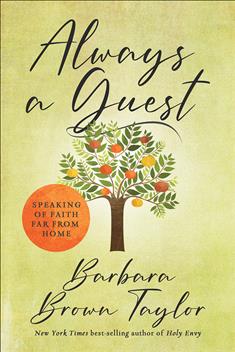
"Always a Guest" (Barbara Brown Taylor)

TITLE: Always a Guest: Speaking of Faith Far from Home
AUTHOR: Barbara Brown Taylor
PUBLISHER: Louisville, KY: Westminster John Knox Press, 2020, (256 pages).

Many churches invite guest preachers to their Sunday pulpit time for different reasons. It could be giving the regular pastor a break. It could also be due to a specialized topic that the congregation needed to hear in a specific moment of time. Sometimes, a famous preacher might be in town also available. Many churches would pounce on the opportunity to listen to experienced clergy and well-known preachers. Barbara Brown Taylor is one such person that I find churches should not miss out. As an Episcopal priest who had stepped down from her Church in order to teach, while she may not be preaching at her regular Church, she has been guest preaching in other places like seminaries, colleges, community groups, as well as churches from different denominations. In this book, Taylor shares her thoughts and experiences about what it means to be doing guest preaching and hones her literary creativity in a constantly changing congregational environment. This collection of sermons is a gift to the rest of the world. Not only does Taylor stay faithful to the Scripture, she expounds it in a way that is very much herself. On her website, she calls herself as one who dares to say things that most of us are not "supposed to say." Things like learning to see the ordinary as beautiful. The world famously glorifies the pretty aesthetics but fails to see from God's perspective, that all of God's creation is good. Our problem is sin, which has marred the way we see the world. She looks at political anxiety in society and carefully redirects the problem back to the nature of human unneighborliness.

Thursday, September 5, 2019

"Preaching God's Grand Drama" (Ahmi Lee)

TITLE: Preaching God's Grand Drama: A Biblical-Theological Approach
AUTHOR: Ahmi Lee
PUBLISHER: Grand Rapids, MI: Baker Academic, 2019, (192 pages).

Not all kinds of preaching are the same. There is also no one way to preach the Bible. It depends on the genre. It depends on the audience. With such a wide range of contexts and circumstances, preaching remains one of the most challenging vocations. How do we make sense of the nature of preaching? How can preachers preach in a way that is faithful to the text and yet relevant to the listeners? This is the constant challenge for all. The purpose of this book is twofold: First, to describe the “text-based” and “reader-based” forms of Bible interpretation in today’s world. Second, to find a third way based on the strengths of the two homiletical approaches.

Chapter One summarizes the traditional homiletic by using four metaphors. The "herald metaphor" pronounces the message of God that the Word originates with God; the preacher called by God to spread the Word; and a congregation ready to receive the Word as proclaimed. The "banking metaphor" is about expanding preaching into teaching and storing the knowledge of the Word in the minds and hearts of listeners. The "golden key metaphor" is about preaching sermons to unlock a central message. The "still-life picture" focuses on the big idea from which we derives applications for life. There are many merits to this approach. The main one being the absolute trust in the power of the Word to speak. However, Lee cautions us about two "dysfunctions" of such mining approaches. First, there is a tendency to be so text-focused that we neglect "attentiveness to God." Second, we treat application as an "accessory" instead of as an important "hermeneutical lens." In other words, application should not be the end or the means to the truth. It should be a byproduct of a bigger spiritual reality and encounter with God. The strengths and weaknesses listed sets the stage to compare with the other perspective: Reader-Perspective. Chapter Two looks at this New Homiletic movement that is based on the conversational style. Lee highlights three different conversational styles through the homiletics of Lucy Rose, John McClure, and O Wesley Allen Jr. The New Homiletics includes diverse preaching models that adapts rhetoric; authority alongside rather than above the community; anticipatory models; shared stories; congregational exegesis; and others. For Lucy Rose, the new homiletic is dialectical. John McClure prefers the collaborative styles while O Wesley Allen Jr takes on the subject of "meaning-making" that focuses less on absolute truth but on relevant truth. All of them acknowledges the cultural shifts happening in the congregations. As appealing as the New Homiletics may sound, Lee has several critiques packed in Chapter Three. Key weakness is in the subjectivity of the New Homiletics. In trying to take the best of both worlds, Lee proposes her model in the next three chapters. She argues her theology in Chapter Four by calling it a “dramatic view of theology" based on the findings of several theologians, especially Kevin Vanhoozer. In this drama, there are "three agents of communication: God, messenger, and congregation." She describes the three approaches to theology by describing the epic (objectivity); the lyric (New Homiletic subjectivity) and the dramatic (middle way). She hopes to bring sermons alive through the appropriate bridging of the epic and lyric ways through theodrama. She notes that "Preaching is a performance of the theodrama based on the biblical script in interaction with the present context."

Wednesday, July 3, 2019

"The Practices of Christian Preaching" (Jared E. Alcántara)

TITLE: The Practices of Christian Preaching: Essentials for Effective Proclamation
AUTHOR: Jared E. Alcántara
PUBLISHER: Grand Rapids, MI: Baker Academic, 2019, (256 pages).

What has a jazz musician got to do with a Christian preacher? Is there any connection between playing music and the preaching of the Bible? Yes there is, says author and professor Jared Alcántara. That one key word in common: Practice. Anticipating objections with regard to human-centered efforts in the ministry of the Word, the author makes a case for spiritual growth via spiritual practices and bearing fruit. He boldly claims that: "preachers who cultivate life-giving preaching habits through deliberate practice will enhance their proficiency, grow in their commitment, and flourish in their homiletical ministry." The reason for advocating constant practice is three-fold. First, without deliberate practice, no matter how skilled or knowledgeable one is, deterioration would happen over time. Second, talking about practice is different from actually doing it. Thus, the book is arranged in a practice-oriented approach. Third, there is a consistent focus on both the what and the how of preaching. Using the 5Cs to alliterate the practices of Christian preaching, Alcántara proceeds with using a chapter each to elucidate the practices.
  1. Preach Convictionally: to let our words reflect the truth of the Bible;
  2. Preach Contextually: to be faithful to the meaning behind the texts;
  3. Preach Clearly: to ensure our message can be easily understood;
  4. Preach Concretely: to remain connected with our listeners;
  5. Preach Creatively: to learn how to break through any barriers.

Wednesday, June 20, 2018

"A Gospel of Hope" (Walter Brueggemann)

TITLE: A Gospel of Hope
AUTHOR: Walter Brueggemann
PUBLISHER: Louisville, KY: Westminster John Knox Press, 2018, (200 pages).

There is a sense of familiarity in many Christian books. They are essentially about the Christian faith and perspectives taken from Christ. Yet, there is also a sense of freshness that even when it is about the same old gospel there is a strange fresh new truth to be reminded or to be reaffirmed. Books of hope tend to come into such a category. For hope is always about something fresh, something new, something to look forward to. Such is the gospel of hope. In this compilation of wisdom and sayings from his past sermons and published materials, Richard Floyd does the heavy lifting by putting together Brueggemann's memorable words according to the theme of hope. Brueggemann acknowledges Floyd as one who has "entered" his mind enough to know what he wanted to say most, and his rhetoric enough to know when he is most likely to say it. The gospel of hope has many sub-themes such as abundance, generosity, alternative worlds, freedom, fidelity, faith, justice, Jesus, identity, love, public witness, responsibility, and so on. In our world of short quips and concise statements limited by a tweet, a text, or a FaceBook post, we sometimes use words devoid of contexts. A master with words, Brueggemann's ability to nuance meaning upon meaning with literal devices and rhetoric makes this book a delightful read. With many quotes and quips, readers have many new things to learn. Rather than a series of random thoughts, there is a central theme in all of these: Hope. It is interesting to see how Brueggemann's thoughts can form a picture for the gospel of hope. Beginning with "Abundance and Generosity," we are reminded that hope is about enduring generosity, that the same God who had given us much yesterday and today, is the same God who would provide for us for the future. It is about being overwhelmed with the abundant generosity of God instead of being bogged down by the worries of today. Hope helps us become mindful of "alternative worlds." He contrasts the way we try to secure our future through economic, military, and other forms of human endeavors. Being content with what God has given us and what He will give us should spur us toward an alternative faith that is different from the world. One of the reasons why hope is so often needed is because of the restlessness of the human soul which is masqueraded as anxiety and a desire to be free from what enslaves us. Whether it is anxiety due to fear or fatigue, we must be constantly mindful that the gospel of hope is in Jesus. How? By remembering that what Jesus stands for is completely different from what the world stood for. Hope is sustained by a recognition that God is faithful and God will promise to give us what we need, even when we do not deserve it. God is not limited by anything. His heart is big for anything that we may thrown at Him. Jesus embodies hope. He is hope.


Wednesday, December 20, 2017

"Preaching with Cultural Intelligence" (Matthew D. Kim)

TITLE: Preaching with Cultural Intelligence: Understanding the People Who Hear Our Sermons
AUTHOR: Matthew D. Kim
PUBLISHER: Grand Rapids, MI: Baker Academic, 2017, (288 pages)

There are many books on preaching. Some of the classics include ; Martin Lloyd Jones's "Preaching and Preachers"; the late Dr Haddon Robinson's "Biblical Preaching" that highlights the single big idea preaching; Charles Spurgeon's "Lectures to My Students"; Fred Craddock's "Preaching" and more recently, Thomas Long's "The Witness of Preaching" and Tim Keller's "Preaching." Continuing Gordon-Conwell's tradition of innovation and development in the art and craft of preaching, associate professor of GCTS Matthew Kim has given us a book that focuses on the recipients and contexts of sermon delivery. This book grows out of the author's elective courses, "Cultural Exegesis for Preaching" and "Preaching to Culture and Cultures" which explore how hermeneutics, preaching, and cultural contexts intersect. Beginning with the story of giraffes (majority culture) and elephants (minority culture), Matthew Kim observes that our churches are increasingly non-homogeneous. There are diversities lurking behind every supposedly distinct areas. No longer is it about ethnicities because there are intermarriages. Neither is it about similar backgrounds because generation gaps exists. With increased cross-cultural interactions, mindsets are constantly changing. In other words, do not build our houses with solely giraffes or elephants in mind. Acknowledge the increasing diversity of not only elephants and giraffes but others as well. Lest we preach to a congregation that no longer exists!


Wednesday, October 12, 2016

"A Preacher's Guide to Lectionary Sermon Series" (Multiple contributors)

TITLE: A Preacher's Guide to Lectionary Sermon Series: Thematic Plans for Years A, B, and C
AUTHOR: Multiple contributors
PUBLISHER: Louisville, KY: Westminster John Knox Press, 2016, (320 pages).

What should I be preaching next week? How do I plan out the sermon series for the year? Should I do a Bible book or should I go topical? These questions often plague preachers all over the world. Sometimes, there is an inspiration toward certain themes of the Bible, or a random toggling between an Old Testament book followed by a New Testament letter. Other times, people just base their choices on pet topics. Enters the use of the lectionary that combines the thematic structures as well as covering the entire Bible over three years. It guides the Church not only in observing the Church seasons of the year, it helps preachers to plan their worship themes. With the lectionary as a common guide, other preachers can easily follow along. That includes guest preachers. In the Foreword, Amy Butler lists reasons for using the lectionary:

  • Preaching is not about the preacher but about truth of God
  • There is no fear in going back to the same texts because the Word of God is infinitely insightful
  • It enables one to connect and communicate with other preachers
  • Using the lectionary helps one avoid preaching on the basis of what people want but on what the Word of God directs
  • There is a consistency in format and structure to bring out the best in seasonal and series-based preaching
  • .... and several more.

Monday, September 12, 2016

"Sacramental Preaching" (Hans Boersma)

TITLE: Sacramental Preaching: Sermons on the Hidden Presence of Christ
AUTHOR: Hans Boersma
PUBLISHER: Grand Rapids, MI: Baker Academic, 2016, (240 pages).

What is "sacramental preaching?" It is essentially "incarnational storytelling" or bringing the realities of heaven down to earth; and then pointing to Christ as the greatest reality of life. Preaching Christ is not about imposing or superimposing Christ on everything we read, but finding Christ's presence as much as we can. Sermons are to be preached with a historical awareness; with an interpretive sensitivity to culture; with exegetical diligence; and with an application that moves people toward Christlikeness. Using St Gregory of Nyssa's interpretation of the beatitudes as a springboard, Boersma resisted the temptation to replace the word 'happiness' with 'blessedness', simply because the ancient fathers see a deeper connection between happiness and spirituality, in contrast to modern disdain that tends to dichotomize happiness as worldly and blessedness as more spiritual. By retaining the use of 'happiness,' he is making a statement to reclaim the word back for Christians. Boersma teaches us how to read Scripture through what it means then and now. His rhetorical strategy shows us how to move from sacramental reading to understanding reality in Christ.

The series of sermons are laid out in four parts. Part One is "Sensed Happiness" where the author explores the various human senses of touch, smell, sight, and taste, and relating that to the enjoyment of life in eating, drinking, celebrating, and many other aspects of human life. He argues strongly for the Christological reading in all Old Testament interpretation. In other words, it is to begin with Christ in mind. He uses several passages from Ecclesiastes to highlight the aesthetic and ascetic use of the spiritual senses. In the Song of Solomon, he treads initially on the love relationship between the main characters before proceeding to making applications about union with Christ. Part Two is "Pilgrim Happiness" which looks at our spiritual quest for union with God. The journey motif is strong here, with the Israel out of Egypt into the Promised Land; climbing up the hill; and our journey into the presence of God according to Hebrews 3-4. Part Three on "Heavenly Happiness" looks at what it means to arrive at the new heaven and new earth. What are the implications of the resurrection of Jesus? How is heavenly happiness related to Christ-centered living? Part Four on "Unveiled Happiness" reveals a fuller extent of life in Christ in the heavenly realm. He relates Jacob's ladder as a homiletical motif for preaching Christ. He opens up Ezekiel 1's vision of heaven and God's glory using the "wheel in a wheel" relationship between the Old and New Testament. He concludes with 2 Corinthians 3, showing us the continuity between law and grace in Christ.

Author and Professor Hans Boersma has often been asked whether Christians today can read the Bible just like the early church fathers. To what extent can we allegorize what we read? In a nutshell, it is not simply about doing what the early fathers had done. It is also about knowing our audience of today, just like the early fathers had understood about their audiences then. If there is another way to title this book, it would be "Sacramental Presence of Christ" as the author is passionate about beginning with Christ in mind in every sermon, in every passage, and in every application. There will be those who are uncomfortable with this approach because the ancient authors do not necessarily know of Jesus in the manner that we know today. After all, there was no New Testament at that time for them. They can only see through the glass "darkly" but we see face to face. Having said that, modern audiences who have the privilege of having both testaments will have to deal with the responsibility of interpreting it as best as we can, based on what God has revealed to us. It is because of this, I think it is plausible to interpret it like Boersma, to begin with Christ in mind. It is not wrong when it comes to preaching simply because all Christian preaching must have Christ in mind. What we should not do is to presume that the Old Testament authors know Jesus directly. They do not, and many of them only believe in the Messiah by faith.

I really like the "Preacher's Notes" section at the end of each sermon where Boersma spells out in greater detail what he had intended to do with the sermon. This provides powerful insights about the author's approach. This is definitely the part that is worth the price of the book.

Rating: 4.75 stars of 5.

conrade

This book is provided to me courtesy of Baker Academic and NetGalley in exchange for an honest review. All opinions offered above are mine unless otherwise stated or implied.

Friday, March 11, 2016

"How Odd of God" (William H. Willimon)

TITLE: How Odd of God: Chosen for the Curious Vocation of Preaching
AUTHOR: William H. Willimon
PUBLISHER: Louisville, KY: Westminster John Knox Press, 2015, (160 pages).

Preaching is a calling. It is also about God choosing His people. It is God's way of calling the preacher to Him, to preach the gospel in a manner that people be drawn closer to God. It is God's initiative to choose His people in the way He wants. In this series of lectures by the Dr William Willimon, who calls himself "The Peculiar Prophet," asserts that not only is God calling preacher to proclaim the good news, the ministry of preaching sits tightly within the general calling to God Himself. Willimon is currently Professor of the Practice of Christian Ministry at Duke Divinity School, Durham, North Carolina. The conviction of the author is that preaching is that "odd vocation" that God uses to bring back to God what belongs to God.

Like many introductions to a sermon, the title alone does not give away much. No one would have guessed that this book parallels the vocation of preaching with the drama of election, more specifically, Karl Barth's chapter of "The Election of God" in his magisterial work, Church Dogmatics. Like God calling people to Him, preaching is about God calling certain people to the pulpit ministry. It is a book to encourage preachers with fresh conviction that the pulpit ministry is the will of God and the way that God will continue to draw people close to Him. Election is God's love. Preaching amplifies that calling. He is retired, after serving for 8 years as Bishop of the North Alabama Conference of the United Methodist Church. He was named as one of America's 12 most effective preachers in 1996. This book contains his reflections on election and the place of preaching.


Friday, February 12, 2016

"Preaching the Whole Counsel of God" (Julius J. Kim)

TITLE: Preaching the Whole Counsel of God: Design and Deliver Gospel-Centered Sermons
AUTHOR: Julius J. Kim
PUBLISHER: Grand Rapids, MI: Zondervan, 2015, (240 pages).

There are lots of preaching going on every week everywhere. Due to the many different theories and philosophies surrounding the ministry of preaching, very often, it is not easy to distinguish what is true preaching of the whole counsel of God. Some expound the Bible well but fail to connect with contemporary relevance. Others connect so well that they fail to emphasize the relevance of the gospel to life. Some believe that content is everything while others insist on the method of delivery. Not only that, preaching is also about the audience. Do we preach until it hurts or do we maintain a level of feel-good healing posture? This book is important for the simple fact that good preaching means reestablishing a renewed confidence in the Word of God for all of life. The basic question in this book is this: What constitutes the whole counsel of God?

As far as author Julius Kim is concerned, there are four parts to this. Preaching must begin with the author's discovery of the truth; progressing to discerning the truth; designing the message; and finally delivering the text.
  1. The herald must discover the truth of the text according to the human author.
  2. The herald must discern Christ in the text according to the Divine Author.
  3. The herald must design a sermon that is true, good, and beautiful.
  4. The herald must deliver the sermon for attention, retention, integration, and transformation.

Monday, June 15, 2015

"The Collected Sermons of Walter Brueggemann, Vol 2" (Walter Brueggemann)

TITLE: The Collected Sermons of Walter Brueggemann, Volume 2
AUTHOR: Walter Brueggemann
PUBLISHER: Louisville, KY: Westminster John Knox Press, 2015, (304 pages).

In theological circles, he is well-known for his works on the Old Testament. Among students, especially those who know him personally, he is well loved. Among laypersons, his sermons continue to impact congregations. Besides being known as an Old Testament theologian, the William Marcellus McPheeters Professor of Old Testament Emeritus at Columbia Theological Seminary is also known as an eloquent preacher. The first volume of sermons was arranged in a chronological order from the years 1972 to 2009. This second volume is more organized according to the liturgical calendar and the lectionary. Recognized for his classic work, "The Prophetic Imagination," Brueggemann is sometimes referred to as "a prophetic voice in our time." Not only that, he moves listeners from theology to doxology, and inspires people to let the ancient text guide their contemporary living. Four types of "accents" guide Brueggemann. The first is trusting the text for what it says regardless of how we feel. Using the techniques of biblical criticism is not about saying nasty things about the text. It is about respecting the text for what it is saying and trying to understand the text as comprehensively as possible. Brueggemann does it in a manner that is God-centered, historically informed, culturally relevant, and most importantly, faithful to the biblical contexts. Many sermons just touch the surface of the Old Testament texts and contexts, but Brueggemann's do not simply dip in. He plunges into the text like an experienced diver, coming up to the surface not with inexperienced gasps but with steady pacing of analysis and application. The second accent is that of imagination which makes the ancient texts come alive. Calling preaching an art that comprises of "a process of layered imagination," that adds creativity to the preaching and encourages listeners to actively ponder upon the texts for opportunities to apply rather than a distant message without relevance for the presence. Such imagination gives Brueggemann the freedom to wander from the Old Testament to the New Testament, from the Early Church to the contemporary Church, and from the biblical contexts to the spiritual implications of our age. The third accent is about offering an alternative to the present world we have. Like Jesus' Sermon on the Mount, which the late John Stott had called "counter cultural," preaching in this third sense is counter to what the world believes in. Lest we continue in worldliness and unbiblical ways, preaching must maintain a call for believers to wake up from any spiritual slumber toward an active faith that elevates Christ above all. The fourth accent is particularly important, for preaching is an "act of utterance and receptive listening" that respects God's rule whether we like it or now. It brings out the truth of the "already" but prepares the hearts of listeners for the "not yet." His sermon on the "antiphon" is an example of how he connects the two together with ease and eloquence, like a musical response to the text.

How prophetic is Brueggemann's sermons? Remembering that contrary to what some people think about prophets being some kind of crystal ball experts that foretell the future, prophets in the Old Testament also do a lot of forthtelling. The latter is about pronouncement of what God had said about the present, to go forth and tell the same story of faith and need to come back to God. It means going forth to point out the ills of society. It means lamenting about the injustice, and also celebrating the good and beautiful. Brueggemann throws a punch at Bishop Spong who questioned the literal meaning of abundance of bread. He accuses both liberals and conservatives for painting themselves as victims for being so stubborn in their ways that they risk becoming "irrelevant" in our society. Instead of politicizing religion, he urges all to come back to an identity of faith and trust in God through compassion, awareness of our need for grace and mercy. He calls upon all to be concerned about the welfare of others instead of being engrossed in wealth matters. He even clarifies the meaning of prophesy and tongues, reminding us that the latter is not about uncontrollable blabbering but a conscious sense of self-control in whether to speak or not to speak in tongues. Righteousness is not about moralistic deeds but "acts of intervention" to ensure fairness, justice, and the overall well-being of any community. Torah in our hearts means an active faith in helping the poor, the marginalized, and the disadvantaged, and not some kind of a moralistic activity that puffs up our heads. He criticizes the world, in particular Christians who have been too caught up with notions of what is a "successful person" and forgot all about the call to be a "righteous" and humble person in Christ.

The sermons are very readable. It should come across more powerfully when spoken over the pulpit. This collection of sermons will benefit those of us who have not had the privilege of Brueggemann coming to our pulpits. Well researched and well delivered, may the book also be well read as one ponders imaginatively about what the Bible speaks then and what it means to us today.

Rating: 5 stars of 5.

conrade

This book is provided to me courtesy of Westminster John Knox Press and NetGalley in exchange for an honest review. All opinions offered above are mine unless otherwise stated or implied.

Friday, April 20, 2012

"Show Me How to Illustrate Evangelistic Sermons"

TITLE: Show Me How to Illustrate Evangelistic Sermons: A Guide for Pastors and Speakers (Show Me How Series)
AUTHOR: R. Larry Moyer
PUBLISHER: Grand Rapids, MI: Kregel Publications, 2012, (368 pages).

This is Book #2 of a series of Evangelistic Sermons by Larry Moyer. The review for book #1 was published yesterday here.

Moyer provides this companion volume to the first book that can be a useful reference for preachers, pastors, and teachers.  In a nutshell, illustrations need to be relevant, pertinent, sufficient, engaging, believable, understandable, and appropriate.  He then provides a library of illustrations that cover three major aspects of an evangelistic sermons: Sin, Substitution, and Saving Faith.

This book shows us the hows, the whats and the whys on using illustrations in sermons. It gives readers a one-volume collection of illustrations, checklist, and topics. What is most useful for me is the way in which the author guides readers on the use of each illustration, with "Possible Entrance" and "Possible Exit" like parenthesis of each illustration. That to me is in itself worth the price of the book.

My General Comments (Both books)

These two books form an important resource for all preachers and teachers. In fact, sermons ought to be evangelistic as the Word of God needs to be constantly preached to both believers and unbelievers. The latter needs to hear the good news. The former needs to be reminded of the gospel. I find the book useful for three reasons. Firstly, it shows us what expository preaching really is and that evangelistic sermons ought to be the staple of every Church. As a student of Dr Haddon Robinson, I find myself nodding my head at every page I turn. Moyer has applied Haddon's teachings in many ways, faithfully and diligently. Secondly, it reminds all preachers that preaching is hard work and not to be taken lightly. This hard work includes the need to continue to improve our speaking and communicating skills, the need to use fresh examples, and the need to continue learning and growing as students of the Word. Thirdly, this book is a resource that preachers can readily use when they preach. Although the title of the book refers to 'evangelistic sermons,' the illustrations are so good that they can be readily applied in many different kinds of messages. In fact, this book may very well encourage preachers to learn and to collect more illustrations from other sources, especially from a more personalized perspective. What I particularly like in this book is the way the author shows us 'possible entrance' and the 'possible exit' of each illustration. That easily is worth the price of the book.

That said, I have a few observations which I hope to see greater improvement. Firstly, it will have been better for the two books to be combined into one volume. For those of us with library of books, it is so easy to pick up one book and then misplace the other. Moreover, if not for the blog tour requirement, I will not have noticed that these two books are supposed to be purchased in pairs! Perhaps, the cover of the book can indicate something to show readers that there is a companion volume to the book.  Secondly, a preface or an introduction will be good for the prospective reader to get a map of where the author is going. In such an introduction, the author can also share with readers what the book is meant or not meant to achieve. Perhaps, share the philosophy behind the book clearly in the introduction. Thirdly, have a conclusion and a list of resources for the interested reader to look at.

As a preacher and pastor, I feel that these two books form an important resource for the sharing of the Word of God over the pulpit. Congratulations and thanks to Larry Moyer for sharing this wonderful resource and for serving the preaching community with books like these.

Rating: 4.5 stars of 5.


conrade

Tuesday, April 17, 2012

"Show Me How To Preach Evangelistic Sermons"

TITLE: Show Me How to Preach Evangelistic Sermons (Show Me How Series)
AUTHOR: R. Larry Moyer
PUBLISHER: Grand Rapids, MI: Kregel Publications, 2012, (256 pages).

As part of the Kregel Blog Tour this week, I have two books by the author to review. I have combined both books into one review in my main blog at YAPDATES here. In addition, I have decided to give each book a posting of its own at BookSaint, as I feel there is a lot of good things to take from these books. Remember that these two books go together.

The author starts off with a candid appraisal of his own humble beginnings. He shares about his early years of being corrected for not speaking clearly enough. With help from his seminary professor and a speech therapist, Moyer eventually hones his speaking skills and is able to let his passion drives his speaking. The book is arranged in two parts. In the first pare, he looks at the opportunity to learn to improve one's skills no matter how difficult it is. He clarifies what expository preaching is. He probes into the reasons why expository and evangelistic sermons are few and hard to find. He tackles the challenges of dealing with such topics. He warns preachers against 4 erroneous assumptions and provides 6 different ways to communicate an evangelistic message. While it is normal to expect preachers to prepare messages targeted at believers, Moyer makes a point to remind preachers how to design a message for unbelievers even in a non-evangelistic setting. This part essentially helps readers make the most of all the possible opportunities to bring about an evangelistic message, that evangelism is both to believers and non-believers; both good times and bad; both service and sermon; both expository and evangelistic, etc.

Part Two goes into the nitty-gritty of designing, preparing, and preaching an evangelistic sermon. Using a generous helping of stories, examples, and illustrations, Moyer shows us how to communicate seemingly simple terms such as 'sin' or 'sinner.' He makes a case for ensuring our message be simple enough and understandable not only by laypersons, but for non-believers. That means clarity and frequent explanation of terms. He points out the need to let grace and truth flow together as one body. Content-wise, it is critical for sermons to have good illustrations. Context-wise, it is important to understand the audience and the setting. In terms of method, repetition, humour, length of message are all crucial elements of an evangelistic sermon. Most of all, the message needs to aim at the hearts of men for the Spirit of God to touch.

The Appendices complement the book with an example sermon on John 3:16, Luke 19, and ways in which we can creatively ask questions of the audience.

I appreciate the authors frankness about his early humble experiences as a young preacher. I like the passion he shows through the books, largely from his experience in the ministry of EvanTell. This book can be used as a primer for new and young preachers, a reminder for older preachers, and a necessary resource for all pastors, preachers, and teachers.

Rating: 4.5 stars of 5.

conrade
This book is provided to me free by Kregel Publications without any obligation for a positive review. All opinions offered above are mine unless otherwise stated or implied.

Wednesday, November 2, 2011

Book Review: "The Collected Sermons of Walter Brueggemann"

TITLE: The Collected Sermons of Walter Brueggemann
AUTHOR: Walter Brueggemann
PUBLISHER: Louisville, KY: Westminster John Knox Press, 2011, (392 pages).

Walter Brueggemann is one of the most imaginative preachers I know. This book is proof of that. As an Old Testament professor, he not only teaches well, he writes and preaches well too. He is also most famous for his work on "Introduction to the Old Testament" and "The Prophetic Imagination."

In this collection of sermons, Brueggemann pulls together selected sermons form as far back as the Vietnam War era in 1972. He adapts  the lectionary creatively especially on special occasions like Easter and Christmas. He speaks at chapels, conferences, and in churches of various theological persuasions. Typical of Brueggemann, he weaves in both Old Testament and New Testament texts, always careful of its genre. At the same time, he bridges the ancient contexts and contemporary culture with stories, images, illustrations, and his personal life. It is imagination at Brueggemann's best.

What I like is the way Brueggemann condenses his main idea into a very creatively titled sermon. For instance, in "The Strong God with Two Weak Verbs," Brueggemann combines his understanding of the nuances of Hebrew language, the relationship between God and Israel, and illuminates the Hebrew clearly for the English speaking public.  In that sermon, he provides short and succinct application for a busy and worrying world.

"We shall not be good servants of covenant until we ourselves are rescued exiles. I suggest that before you worry about how to speak these verbs, hear them." (32)

One of my favourites is his introduction of the 'Sabbath Voice' which he describes as:

"Humble and gentle of heart, making no demands." (294)

I believe this is an important book for preachers and teachers to learn from. The modern church tends to be one that is lopsided toward New Testament preaching. As a result, the Old Testament has been left untouched, especially the prophetical books. Thankfully, Brueggemann bucks the trend. He shows us the way forward, that the whole Bible is to be preached, not just the New Testament part. By presenting the entire Bible, both Old and New Testament as God's Word through teaching, preaching, and writing, listeners will be blessed.

conrade

Ratings: 4.5 stars of 5.


This book has been supplied to me free by Westminster John Knox Press and NetGalley without any obligation for a positive review. The review above is mine.