TITLE: Trust.: Responsible AI, Innovation, Privacy and Data Leadership
AUTHOR: Dominique Shelton Leipzig
PUBLISHER: Charleston, SC: Forbes Books, 2024, (399 pages).
It is not easy to trust what we see today. From Artificial Intelligence to Deep Fake technologies, it is becoming easier to manipulate data for illegitimate ends. With innovation comes the tendency for cheating and criminal activities. Data security is critical to preserve the integrity of businesses and maintain positive public trust. All it takes is a data leak, hacking, systems malfunction, or an infiltration of ransomware, and the corporation's activities easily come to a standstill. According to Dominique Shelton Leipzig, the problem with modern corporate boardrooms is that data management is typically delegated to backroom staff, like data scientists or IT professionals. Some don't know the right questions to ask about their data in the first place. This calls for a more proactive approach when dealing with data and information in the company. Data stewardship cannot be left to consultants, or engineers in the data center, or outsourced to cheaper IT professionals outside. They need to be managed responsibly. Senior management needs to be held accountable. Data breaches and data security lapses cannot be blamed on data center staff. CEOs must take an active interest in the integrity and use of data in their organizations. With more businesses and information being collected and stored both inside and outside the organizations, there needs to be a heightened awareness and responsibility about its collection, management, protection, and usage. Companies of all sizes need a proper data strategy. The thesis in this book is that to re-establish trust in organizations, it is high time for senior management to take leadership of their corporate data as a critical asset. In Leipzig's words, one must "lead with trust." That means three things:
"Good books do not make saints, but they can nudge one a little closer." (Conrade Yap)
Showing posts with label Computers. Show all posts
Thursday, March 21, 2024
"Trust" (Dominique Shelton Leipzig)
Labels:
AI,
Computers,
Culture,
Ethics,
Forbes,
Leadership,
Netgalley,
People,
Relationships,
Social Media,
Society,
Technology,
Truth
Friday, October 6, 2023
"Digital Liturgies" (Samuel D. James)
TITLE: Digital Liturgies: Rediscovering Christian Wisdom in an Online Age
AUTHOR: Samuel D. James
PUBLISHER: Wheaton, IL: Crossway Publishers, 2023, (208 pages).
AUTHOR: Samuel D. James
PUBLISHER: Wheaton, IL: Crossway Publishers, 2023, (208 pages).
Just saying that the digital revolution has changed the world is an understatement. Like the story of two young fish that fail to understand what water is, some of us who have been so immersed in technology do not understand what it means to live without technology. Digital immigrants are those who have "immigrated into" the modern technology platforms while digital natives are those who grew up in technology right from the start. Regardless of whether one is a digital immigrant or native, the inherent threats to personality are the same for all. No one will be able to escape the far-reaching tentacles of the Internet and modern digital technologies. This book is a critical look at the way technology is shaping us and its implications for Christians wanting to live fruitfully in an increasingly complex world. He attempts to help us discern the digital world with biblical wisdom ethically, practically, and theologically. Concerned about the incredible amount of time people spend online, author Samuel James reflects on the significance of living in a world of "screens, algorithms, and pixels." From the threat of fake news to the dangers of disembodied living, this book is a crucial alarm to wake us up from becoming too trusting to the point of idolizing technology. It is also a wake-up call for any uncritical use or reliance on the technology we have gotten so used to using. He asks questions like:
Labels:
Christian Life,
Computers,
Crossway,
Ethics,
Liturgy,
Netgalley,
Social Media,
Society,
Spirituality,
Technology,
Theology
Thursday, May 26, 2022
"Following Jesus in a Digital Age" (Jason Thacker)
TITLE: Following Jesus in a Digital Age
AUTHOR: Jason Thacker
PUBLISHER: Nashville, TN: B&H Publishing, 2022, (176 pages).
Android, Apple TV, Facebook, Google, Instagram, Twitter, YouTube, etc are all familiar names in our modern culture. The news that we get in the past via newspapers, TV, and radio, are now being disseminated faster and more efficiently throughout the world. No more waiting for the latest paper edition at our regular newsstands. All it takes now is an Internet connection all at the convenience of a modern smartphone. Unsurprisingly, this modern innovation has changed the way we interact with people and communicate with one another. Traditional barriers of entry have been lowered. The communications bigwigs now have to compete not just with their mega-peers, but also with individual social media enthusiasts. The Internet and social media are here to stay. This will affect our relationships in how we live and what we say. Due to the ease of getting into social media, fake news are also on the rise. How do we deal with this new reality? How could we discern each piece of news as they come along? Are all sensational news false? Are all routinely boring stuff true at all? Technology is shaping us in more ways than one. Like the proverbial face of beauty that launched a thousand ships, an insensitive Tweet or a scandalous post could launch thousands of reactions, protests, and even violence. Author Jason Thacker notices the impact of technology and offers us some powerful reflections on what technology is, what technology demands of us, and how we could co-exist ethically and meaningfully with people in a society drowning in technological waters. Thacker offers us four reflections to help us recognize the technology that is trying to shape us, and the need to be true to ourselves.
AUTHOR: Jason Thacker
PUBLISHER: Nashville, TN: B&H Publishing, 2022, (176 pages).
Android, Apple TV, Facebook, Google, Instagram, Twitter, YouTube, etc are all familiar names in our modern culture. The news that we get in the past via newspapers, TV, and radio, are now being disseminated faster and more efficiently throughout the world. No more waiting for the latest paper edition at our regular newsstands. All it takes now is an Internet connection all at the convenience of a modern smartphone. Unsurprisingly, this modern innovation has changed the way we interact with people and communicate with one another. Traditional barriers of entry have been lowered. The communications bigwigs now have to compete not just with their mega-peers, but also with individual social media enthusiasts. The Internet and social media are here to stay. This will affect our relationships in how we live and what we say. Due to the ease of getting into social media, fake news are also on the rise. How do we deal with this new reality? How could we discern each piece of news as they come along? Are all sensational news false? Are all routinely boring stuff true at all? Technology is shaping us in more ways than one. Like the proverbial face of beauty that launched a thousand ships, an insensitive Tweet or a scandalous post could launch thousands of reactions, protests, and even violence. Author Jason Thacker notices the impact of technology and offers us some powerful reflections on what technology is, what technology demands of us, and how we could co-exist ethically and meaningfully with people in a society drowning in technological waters. Thacker offers us four reflections to help us recognize the technology that is trying to shape us, and the need to be true to ourselves.
Labels:
B and H Publishing,
Christianity,
Computers,
Culture,
Faith,
Jesus,
Netgalley,
News,
Social Media,
Society,
Technology,
Truth
Thursday, January 13, 2022
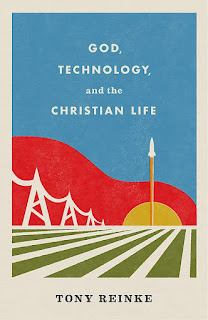
"God, Technology, and the Christian Life" (Tony Reinke)
TITLE: God, Technology, and the Christian Life
AUTHOR: Tony Reinke
PUBLISHER: Wheaton, IL: Crossway Publishers, 2021, (320 pages).
We have a lot of technology around us. We have different types of devices. Many of us use them on a daily basis. We need them. We cannot do without them. If we are to take a moment to ask ourselves, "What is Technology?" we might pause and wonder what kind of a question is that. For many people, the use of technology has become so ubiquitous that it has become an uncritical use of such powerful tools without actually knowing its grand purpose and significance. Fair to say, not many people really know how "technology" is defined. If we go back in history, human progress can be classified under different ages. The Stone Age, the Bronze Age, the Iron Age, the Nuclear Age, the Computer Age, and now the Technology Age. The common thread through all of them is the rising capability and discovery of tools to assist and improve human lives. Hunting tools from bones and stones were invented in the Stone Age. Engraving was introduced during the Bronze Age. The wheel was invented in the Iron Age. Nuclear power and the hydrogen bomb were creations in the Nuclear Age. Then comes the familiar personal computer and cell phones in the Computer and Technology Ages respectively. Even the biblical story of David and Goliath is a powerful story of the kind of technology being used at that time. Author Tony Reinke comes from a family of inventors. Out of his research and reflection, he sees technology as a way to tell the story of the human race. Through innovative skills and creative techniques, technology moves from animate functions like pulleys, to inanimate capabilities such as driving a car. Now we have technologies with automated abilities like self-driving cars and self-learning algorithms. The philosophical question is this: Is technology leading us toward a "dystopia" like Babel or a "heavenly utopia?" Reinke refuses to be drawn to either extreme, choosing the middle path. He enlists the help of nine voices to reveal 12 common myths about technology. These voices are mostly from the Modern Age: John Calvin the Reformer; Charles Spurgeon the Preacher; Abraham Kuyper the Theologian; Herman Bavinck the Calvinist; Jacques Ellul the French Philosopher; Wendell Berry the Conservationist; Kevin Kelly the technologist; Elon Musk the trendsetter; and Yuval Noah Harari, the Jewish Professor of History. All of these voices speak into the purpose and use of technology. He deals with six key questions:
AUTHOR: Tony Reinke
PUBLISHER: Wheaton, IL: Crossway Publishers, 2021, (320 pages).
We have a lot of technology around us. We have different types of devices. Many of us use them on a daily basis. We need them. We cannot do without them. If we are to take a moment to ask ourselves, "What is Technology?" we might pause and wonder what kind of a question is that. For many people, the use of technology has become so ubiquitous that it has become an uncritical use of such powerful tools without actually knowing its grand purpose and significance. Fair to say, not many people really know how "technology" is defined. If we go back in history, human progress can be classified under different ages. The Stone Age, the Bronze Age, the Iron Age, the Nuclear Age, the Computer Age, and now the Technology Age. The common thread through all of them is the rising capability and discovery of tools to assist and improve human lives. Hunting tools from bones and stones were invented in the Stone Age. Engraving was introduced during the Bronze Age. The wheel was invented in the Iron Age. Nuclear power and the hydrogen bomb were creations in the Nuclear Age. Then comes the familiar personal computer and cell phones in the Computer and Technology Ages respectively. Even the biblical story of David and Goliath is a powerful story of the kind of technology being used at that time. Author Tony Reinke comes from a family of inventors. Out of his research and reflection, he sees technology as a way to tell the story of the human race. Through innovative skills and creative techniques, technology moves from animate functions like pulleys, to inanimate capabilities such as driving a car. Now we have technologies with automated abilities like self-driving cars and self-learning algorithms. The philosophical question is this: Is technology leading us toward a "dystopia" like Babel or a "heavenly utopia?" Reinke refuses to be drawn to either extreme, choosing the middle path. He enlists the help of nine voices to reveal 12 common myths about technology. These voices are mostly from the Modern Age: John Calvin the Reformer; Charles Spurgeon the Preacher; Abraham Kuyper the Theologian; Herman Bavinck the Calvinist; Jacques Ellul the French Philosopher; Wendell Berry the Conservationist; Kevin Kelly the technologist; Elon Musk the trendsetter; and Yuval Noah Harari, the Jewish Professor of History. All of these voices speak into the purpose and use of technology. He deals with six key questions:
Labels:
Apologetics,
Christian Life,
Computers,
Crossway,
God,
Netgalley,
Social Media,
Technology
Friday, October 29, 2021
"Following" (Jason Byassee and Andria Irwin)
TITLE: Following (Pastoring for Life: Theological Wisdom for Ministering Well)
AUTHOR: Jason Byassee and Andria Irwin
PUBLISHER: Grand Rapids, MI: Baker Academic, 2021, (208 pages).
Even with technological advances, there is almost always a constant divide between two poles. There are the Technological Luddites and the Technophiles. There are the modernists and the mystics. In a digital age, there are digital immigrants and digital natives. These are some of the distinctions between the old and the new forms of thinking. In a book written by a digital immigrant (Byassee) and a digital native (Irwin), we get a fascinating conversation about what discipleship means in a digital age. While getting online is easy, discerning what is going on is not so straightforward. In the area of discipleship, learning how to discern is increasingly important as many Christians go online and interact more on the Internet. Theologically, one of the biggest heresies throughout history was Gnosticism. This heresy is basically about dualistic views of life, seeing earthly things as evil and heavenly things as good. Salvation is thus a matter of running away from this world into the real good one. It is still occurring today to fuel any inclination toward escapism especially in times of trouble. Closely related to Gnosticism is Manicheism, something that had influenced St Augustine in his earlier days. This heresy is not as extreme as Gnosticism but still retains semblances of Gnostic beliefs into seeing some things as good and some things as evil. The Truth is, God has created creation as good, and right theology needs to discern what is good and fallen, against what the heresies claimed as inherently or naturally evil. The authors here seek to find a balance between the two heresies so as to make sense of what is theologically true and coherent with the human experience. In an age where the online environment is threatening to pull people toward any heretical extremes, they urge readers to learn to refrain, to restrain, and to rest from constant online engagement, without jettisoning the usefulness of technology. They also show us how to discern what are the things that can and cannot be done online. One of the key questions posed is: "How might we use technology, perhaps despite its intentions, to trick ourselves into a more embodied life of discipleship?"
AUTHOR: Jason Byassee and Andria Irwin
PUBLISHER: Grand Rapids, MI: Baker Academic, 2021, (208 pages).
Even with technological advances, there is almost always a constant divide between two poles. There are the Technological Luddites and the Technophiles. There are the modernists and the mystics. In a digital age, there are digital immigrants and digital natives. These are some of the distinctions between the old and the new forms of thinking. In a book written by a digital immigrant (Byassee) and a digital native (Irwin), we get a fascinating conversation about what discipleship means in a digital age. While getting online is easy, discerning what is going on is not so straightforward. In the area of discipleship, learning how to discern is increasingly important as many Christians go online and interact more on the Internet. Theologically, one of the biggest heresies throughout history was Gnosticism. This heresy is basically about dualistic views of life, seeing earthly things as evil and heavenly things as good. Salvation is thus a matter of running away from this world into the real good one. It is still occurring today to fuel any inclination toward escapism especially in times of trouble. Closely related to Gnosticism is Manicheism, something that had influenced St Augustine in his earlier days. This heresy is not as extreme as Gnosticism but still retains semblances of Gnostic beliefs into seeing some things as good and some things as evil. The Truth is, God has created creation as good, and right theology needs to discern what is good and fallen, against what the heresies claimed as inherently or naturally evil. The authors here seek to find a balance between the two heresies so as to make sense of what is theologically true and coherent with the human experience. In an age where the online environment is threatening to pull people toward any heretical extremes, they urge readers to learn to refrain, to restrain, and to rest from constant online engagement, without jettisoning the usefulness of technology. They also show us how to discern what are the things that can and cannot be done online. One of the key questions posed is: "How might we use technology, perhaps despite its intentions, to trick ourselves into a more embodied life of discipleship?"
Tuesday, October 5, 2021
"Parenting Generation Screen" (Jonathan McKee)
TITLE: Parenting Generation Screen: Guiding Your Kids to Be Wise in a Digital World
AUTHOR: Jonathan McKee
PUBLISHER: Carol Stream, IL: Tyndale House Publishers, 2021, (208 pages).
Did you know that 10 is the average age a kid gets a phone in America? Did you know that the most common reason why parents give kids a smartphone so early is to anticipate emergencies? By the time a kid turns 13, nearly three-quarters of his contemporaries would already have a phone with a screen. How do you parent a young child in a smartphone era? Experts have said that parents ought to wait until kids are older and more mature before giving them the phones. Many caved in to their children's pleas while others simply do not know how to respond to the demand tsunami. Sadly, this has led to uncontrolled and unlimited use of the smartphones by children totally oblivious to the dangers of the Internet. So the key question for parents is this: What are we going to do? Author Jonathan McKee begins by cautioning us not to look for quick fixes. Instead, develop a connection with our kids before correction. Love needs to come before limits; bonding before boundaries; and communication before commandments. Urging us to pause before confiscating the devices, begin with conversation with our kids. That means learning not just to express our concerns but also to understand what our kids are going through. Then there is the question of what age is best to give our kids smartphones. With peer pressure and the torrent of requests, parents will find it increasingly difficult to deny this request. Plus, screen gadgets nowadays are everywhere. They are in computers, laptops, tablets, small gadgets, TV screens, and even in vehicles! If we say no to one, how do we consistently maintain our stance for the others? Perhaps, it is more important to show kids the reasons and the thinking process instead of plainly a yes or a no answer. We have heard scientific evidence about kids staying up late at night and how screens stimulate their brain activity. This in turn affects our children's mental health and sleep patterns which could lead to depression and emotional problems. Then there is social media and the seductive attraction to fame, game, and all kinds of exposure, including illicit ones.
AUTHOR: Jonathan McKee
PUBLISHER: Carol Stream, IL: Tyndale House Publishers, 2021, (208 pages).
Did you know that 10 is the average age a kid gets a phone in America? Did you know that the most common reason why parents give kids a smartphone so early is to anticipate emergencies? By the time a kid turns 13, nearly three-quarters of his contemporaries would already have a phone with a screen. How do you parent a young child in a smartphone era? Experts have said that parents ought to wait until kids are older and more mature before giving them the phones. Many caved in to their children's pleas while others simply do not know how to respond to the demand tsunami. Sadly, this has led to uncontrolled and unlimited use of the smartphones by children totally oblivious to the dangers of the Internet. So the key question for parents is this: What are we going to do? Author Jonathan McKee begins by cautioning us not to look for quick fixes. Instead, develop a connection with our kids before correction. Love needs to come before limits; bonding before boundaries; and communication before commandments. Urging us to pause before confiscating the devices, begin with conversation with our kids. That means learning not just to express our concerns but also to understand what our kids are going through. Then there is the question of what age is best to give our kids smartphones. With peer pressure and the torrent of requests, parents will find it increasingly difficult to deny this request. Plus, screen gadgets nowadays are everywhere. They are in computers, laptops, tablets, small gadgets, TV screens, and even in vehicles! If we say no to one, how do we consistently maintain our stance for the others? Perhaps, it is more important to show kids the reasons and the thinking process instead of plainly a yes or a no answer. We have heard scientific evidence about kids staying up late at night and how screens stimulate their brain activity. This in turn affects our children's mental health and sleep patterns which could lead to depression and emotional problems. Then there is social media and the seductive attraction to fame, game, and all kinds of exposure, including illicit ones.
Thursday, August 26, 2021
"Restless Devices" (Felicia Wu Song)
TITLE: Restless Devices: Recovering Personhood, Presence, and Place in the Digital Age
AUTHOR: Felicia Wu Song
PUBLISHER: Downers Grove, IL: InterVarsity Press, 2021, (232 pages).
With the fast-changing technological landscape, issues pertaining to human-machine interactions continue to evolve. Since the turn of the century, people are increasingly using technological devices in all of their human interactions. Whether one is a digital native or digital immigrant, the common denominator between the different generations is the use of technology. What is increasingly common is that time spent for both adults and kids on digital devices is also rising, albeit for different reasons. Addiction, mental health, restlessness, and so on are becoming more unsettling each day. Just think about it. How many people can live without WiFi or some form of Internet access? In this book, author and professor Felicia Wu Song argues that we are all descending down a digital environment that is threatening to unravel our personhood and calls us all to start on the journey to recover our humanness through a process of re-embodiment. We do not have to surrender to every desire to upgrade our devices or to constantly check our phones for the latest news. Song proposes three paths forward:
AUTHOR: Felicia Wu Song
PUBLISHER: Downers Grove, IL: InterVarsity Press, 2021, (232 pages).
With the fast-changing technological landscape, issues pertaining to human-machine interactions continue to evolve. Since the turn of the century, people are increasingly using technological devices in all of their human interactions. Whether one is a digital native or digital immigrant, the common denominator between the different generations is the use of technology. What is increasingly common is that time spent for both adults and kids on digital devices is also rising, albeit for different reasons. Addiction, mental health, restlessness, and so on are becoming more unsettling each day. Just think about it. How many people can live without WiFi or some form of Internet access? In this book, author and professor Felicia Wu Song argues that we are all descending down a digital environment that is threatening to unravel our personhood and calls us all to start on the journey to recover our humanness through a process of re-embodiment. We do not have to surrender to every desire to upgrade our devices or to constantly check our phones for the latest news. Song proposes three paths forward:
- Spiritual disciplines and practices
- Recovery of our Human Embodiment
- Living in Community
Labels:
Christianity,
Computers,
IVP,
Netgalley,
Science,
Social Media,
Spiritual Growth,
Spirituality,
Technology
Wednesday, January 20, 2021
"Posting Peace" (Douglas S. Bursch)
TITLE: Posting Peace: Why Social Media Divides Us and What We Can Do About It
AUTHOR: Douglas S. Bursch
PUBLISHER: Downers Grove, IL: InterVarsity Press, 2021, (204 pages).
We are increasingly angry online. Anything could become an anger trigger, a point of contention, or an explosive rant. With more people stuck at home during the pandemic, this situation seems to be getting worse. With such high temperatures on social media, what if this is just the early stages of an even bigger problem? Can we do something about such divisions? How can we bring about greater unity and calm in the digital world? Could the online wars contribute to the growing polarization among different sides and opinions? Lamenting on the inability of people (including Christians) to speak the truth in love, author Douglas Bursch probes the ongoing social media heat and helps us find a way to cool down and to be peacemakers. Otherwise, things might very well become more polarized. The key thesis in this book is that Christians need to lead the way in online communications to be peacemakers. It is hoped that such efforts would lead to greater restraint, reconciliation, and restoration of goodness in our relationships. The author knows this the hard way. Having been a talkshow host who tries to bring conservatives, moderates, progressives, and liberals to the same table to remove contentious debates, he has experienced bitter feedback and disappointment as people use the platform to hurl their views down the rest. The verbal mudslinging spoke louder than his voice of moderation. Many of the comments he received were mean and harsh. Political infighting and social media seem to feed off each other, deepening the existing divisions and widening the cracks. He also learns that for talk show hosts to be successful, they have to hold a strong opinionated side. Staying in the middle ground hardly cuts it.
AUTHOR: Douglas S. Bursch
PUBLISHER: Downers Grove, IL: InterVarsity Press, 2021, (204 pages).
We are increasingly angry online. Anything could become an anger trigger, a point of contention, or an explosive rant. With more people stuck at home during the pandemic, this situation seems to be getting worse. With such high temperatures on social media, what if this is just the early stages of an even bigger problem? Can we do something about such divisions? How can we bring about greater unity and calm in the digital world? Could the online wars contribute to the growing polarization among different sides and opinions? Lamenting on the inability of people (including Christians) to speak the truth in love, author Douglas Bursch probes the ongoing social media heat and helps us find a way to cool down and to be peacemakers. Otherwise, things might very well become more polarized. The key thesis in this book is that Christians need to lead the way in online communications to be peacemakers. It is hoped that such efforts would lead to greater restraint, reconciliation, and restoration of goodness in our relationships. The author knows this the hard way. Having been a talkshow host who tries to bring conservatives, moderates, progressives, and liberals to the same table to remove contentious debates, he has experienced bitter feedback and disappointment as people use the platform to hurl their views down the rest. The verbal mudslinging spoke louder than his voice of moderation. Many of the comments he received were mean and harsh. Political infighting and social media seem to feed off each other, deepening the existing divisions and widening the cracks. He also learns that for talk show hosts to be successful, they have to hold a strong opinionated side. Staying in the middle ground hardly cuts it.
Labels:
Christian Living,
Christianity,
Communications,
Computers,
Culture,
IVP,
Netgalley,
Social Media,
Society,
Technology
Friday, October 30, 2020
"Communicating with Grace and Virtue" (Quentin J Schultze)
TITLE: Communicating with Grace and Virtue: Learning to Listen, Speak, Text, and Interact as a Christian
AUTHOR: Quentin J Schultze
PUBLISHER: Grand Rapids, MI: Baker Academic, 2020, (144 pages).
Communications seem to be an evergreen topic for discussion. Many schools and universities continue to offer courses that specialize in both the art and science of communications. Books continue to be written about the ways and means to communicate even as we deal with cultural and technological changes. Yet, one thing is to be expected. It is only a matter of time before we encounter difficulties in communications. In other words, there is no way we can separate life from conflicts. Being people from different backgrounds essentially mean that we have to deal with differences sooner or later. Even the best types of relationships require a fair bit of knowledge about conflict management. These include marriages, relationships with office colleagues, social circles, Church communities, online correspondences, and increasingly on social media. Enters the call toward "servant communication" which author and professor Quentin Schultze defines as "a way of using God’s gift of communication to love God and our neighbors as ourselves (Mark 12:30–31)." It begins with a willingness to accept the challenge to practice such communications as a way to witness grace and love. At the heart of this virtue is the practice of gratitude. The more grateful we are, the more able we are to practice graciousness in our communications. Christians are called to honour God in all that they do. Schultze knows the challenges of doing that. Thus, he guides us through some barriers, to point out how sin has made us broken, which not only affects us, but also the way we communicate. Here, the author lays out bare his past brokenness to demonstrate that he knows personally what it means to be part of a broken relationship.
AUTHOR: Quentin J Schultze
PUBLISHER: Grand Rapids, MI: Baker Academic, 2020, (144 pages).
![]() |
Labels:
Baker Academic,
Communications,
Computers,
Netgalley,
People,
Social Media,
Technology
Tuesday, June 2, 2020
"The Dark Side of Our Digital World" (Andrew Weiss)
TITLE: The Dark Side of Our Digital World: And What You Can Do about It (LITA Guides)
AUTHOR: Andrew Weiss
PUBLISHER: Lanham, MD: Rowman & Littlefield Publishers, 2020, (272 pages).
We live in a world of information technology. Almost everything in the world has a digital counterpart. One of the signs of the digital revolution is the impact of e-Commerce and the way we are living our lives. We are slowly moving from snail-mail to email; from texting to social media; and from face-to-face communications to video conferencing. Looking at the way technology stocks had usurped the top positions of traditional bricks and mortar companies, we know that the world of digital is here to stay. Our world has changed forever and there is no going back to the slow-paced world of yesterday. For all the fascination and the optimism that comes with digital platforms, a few people are not content in simply consuming these stuff as they come along. They question. They critique. They look outside the box to try to challenge conventional ways of thinking. One such explorer is Andrew Weiss, a librarian and cultural observer who recognizes the dark side of the digital world, which is what this book is all about. It is essentially learning to use digital tools wisely while being aware of the insidious dark side. Written in four parts, the first three parts deal with the awareness while the final part offer steps toward redemption.
AUTHOR: Andrew Weiss
PUBLISHER: Lanham, MD: Rowman & Littlefield Publishers, 2020, (272 pages).
We live in a world of information technology. Almost everything in the world has a digital counterpart. One of the signs of the digital revolution is the impact of e-Commerce and the way we are living our lives. We are slowly moving from snail-mail to email; from texting to social media; and from face-to-face communications to video conferencing. Looking at the way technology stocks had usurped the top positions of traditional bricks and mortar companies, we know that the world of digital is here to stay. Our world has changed forever and there is no going back to the slow-paced world of yesterday. For all the fascination and the optimism that comes with digital platforms, a few people are not content in simply consuming these stuff as they come along. They question. They critique. They look outside the box to try to challenge conventional ways of thinking. One such explorer is Andrew Weiss, a librarian and cultural observer who recognizes the dark side of the digital world, which is what this book is all about. It is essentially learning to use digital tools wisely while being aware of the insidious dark side. Written in four parts, the first three parts deal with the awareness while the final part offer steps toward redemption.
Wednesday, April 29, 2020
"Analog Church" (Jay Y. Kim)
TITLE: Analog Church: Why We Need Real People, Places, and Things in the Digital Age
AUTHOR: Jay Y. Kim
PUBLISHER: Downers Grove, IL: InterVarsity Press, 2020, (216 pages).
This is a strange time to be reading this book. With much of the world locked down due to the coronavirus crisis, many churches are forced to conduct services digitally. They meet via virtual rooms. They see each other's faces (when the cameras are turned on), as well as the physical environment they are in. More often than not, they put on their best looks when online. In a digital environment, things are made to look more like zeros and ones, metaphorically. As the world becomes more digitized and virtualized, we have a challenge of trying to make human connections as authentic as possible. Knowing the limitations of technology is one thing. Making extra effort to bridge the gaps is another. In this increasingly hybrid community, we don't really have a choice. Digital Church is convenient but not necessarily practical; fast but not necessarily effective; comfortable but not necessarily authentic. Author Jay Kim takes a closer look at the differences between analog and digital communities and points out why digital connections can only go so far and are ultimately inadequate for true connections. He cautions readers against adopting a sense of what CS Lewis calls "chronological snobbery," which is another way of preferring new things over the new. True enjoyment and happiness comes not with the latest and greatest gizmos but the down to earth relational activities we do, especially those face-to-face. Otherwise, we reduce human relationships to convenience, efficiency, and even status updates. The latter especially is merely a tip of the understanding the iceberg of a person. One can post an emotional status now and a minute later feels totally opposite of what was posted.
AUTHOR: Jay Y. Kim
PUBLISHER: Downers Grove, IL: InterVarsity Press, 2020, (216 pages).
This is a strange time to be reading this book. With much of the world locked down due to the coronavirus crisis, many churches are forced to conduct services digitally. They meet via virtual rooms. They see each other's faces (when the cameras are turned on), as well as the physical environment they are in. More often than not, they put on their best looks when online. In a digital environment, things are made to look more like zeros and ones, metaphorically. As the world becomes more digitized and virtualized, we have a challenge of trying to make human connections as authentic as possible. Knowing the limitations of technology is one thing. Making extra effort to bridge the gaps is another. In this increasingly hybrid community, we don't really have a choice. Digital Church is convenient but not necessarily practical; fast but not necessarily effective; comfortable but not necessarily authentic. Author Jay Kim takes a closer look at the differences between analog and digital communities and points out why digital connections can only go so far and are ultimately inadequate for true connections. He cautions readers against adopting a sense of what CS Lewis calls "chronological snobbery," which is another way of preferring new things over the new. True enjoyment and happiness comes not with the latest and greatest gizmos but the down to earth relational activities we do, especially those face-to-face. Otherwise, we reduce human relationships to convenience, efficiency, and even status updates. The latter especially is merely a tip of the understanding the iceberg of a person. One can post an emotional status now and a minute later feels totally opposite of what was posted.
Labels:
Christian Living,
Christianity,
Church,
Communications,
Community,
Computers,
IVP,
Money,
Netgalley,
People,
Technology
Friday, April 3, 2020
"The Learning Cycle" (Muriel I. Elmer and Duane H. Elmer)
TITLE: The Learning Cycle: Insights for Faithful Teaching from Neuroscience and the Social Sciences
AUTHOR: Muriel I. Elmer and Duane H. Elmer
PUBLISHER: Downers Grove, IL: InterVarsity Press, 2020, (224 pages).
From time to time, I would hear graduates speak about how disconnected their college education was from their jobs. Some would say that what exists in practice do not quite match up to the theories they learned in school. Among older folks, they prefer to tell us that experience is worth much more than the educational qualification. This common sentiment is also felt among seminarians and those who had theological education. I once came across a study that shows how inverted the expectations are between seminaries and churches. What church elders and members claim are more important often do not align with theologians and biblical scholars' expectations. Ideally, they should be the same. Practically, they are more different than thought. Helping to bridge this divide is the aim of this book. As educators for the past 50 years, the authors share their passion for teaching and give us insights about how to learn. Their underlying assumptions are:
AUTHOR: Muriel I. Elmer and Duane H. Elmer
PUBLISHER: Downers Grove, IL: InterVarsity Press, 2020, (224 pages).
From time to time, I would hear graduates speak about how disconnected their college education was from their jobs. Some would say that what exists in practice do not quite match up to the theories they learned in school. Among older folks, they prefer to tell us that experience is worth much more than the educational qualification. This common sentiment is also felt among seminarians and those who had theological education. I once came across a study that shows how inverted the expectations are between seminaries and churches. What church elders and members claim are more important often do not align with theologians and biblical scholars' expectations. Ideally, they should be the same. Practically, they are more different than thought. Helping to bridge this divide is the aim of this book. As educators for the past 50 years, the authors share their passion for teaching and give us insights about how to learn. Their underlying assumptions are:
Labels:
Christian Education,
Christian Living,
Christianity,
Community,
Computers,
Environment,
Faith,
IVP,
Learning,
Netgalley,
People,
Society
Thursday, February 27, 2020
"Three Pieces of Glass" (Eric O. Jacobsen)
TITLE: Three Pieces of Glass: Why We Feel Lonely in a World Mediated by Screens
AUTHOR: Eric O. Jacobsen
PUBLISHER: Grand Rapids, MI: Baker Academic, 2020, (288 pages).
Relationship is the glue that bonds a society together. Driven by a desire to belong, we live in a challenging environment to navigate between our inner needs and outer cultural climate. Author Eric Jacobsen calls refers to this as "the crisis of belonging." Why a crisis? It is because of three key challenges or barriers that are keeping people from one another: Relational; Place; and Narrative. Throughout the book, readers will see how these three challenges constantly prevent people from finding their sense of belonging. Written in four parts, Jacobsen skillfully guides us through the reasons why we are increasingly lonely. Beginning with the scene from Cheers where the chorus chimes, "You want to be where everybody knows your name," he paints a picture where we all long to belong. With rising fragmentation of society, the diminishing common spaces to gather, and the loss of a common story that we can share in, it is becoming harder to build relationships. The irony is that, while we all want to have our own private spaces in life, we hide that innate desire in us to want to connect publicly. Jacobsen looks at the problem of relationships and belonging through several different angles.
AUTHOR: Eric O. Jacobsen
PUBLISHER: Grand Rapids, MI: Baker Academic, 2020, (288 pages).
Relationship is the glue that bonds a society together. Driven by a desire to belong, we live in a challenging environment to navigate between our inner needs and outer cultural climate. Author Eric Jacobsen calls refers to this as "the crisis of belonging." Why a crisis? It is because of three key challenges or barriers that are keeping people from one another: Relational; Place; and Narrative. Throughout the book, readers will see how these three challenges constantly prevent people from finding their sense of belonging. Written in four parts, Jacobsen skillfully guides us through the reasons why we are increasingly lonely. Beginning with the scene from Cheers where the chorus chimes, "You want to be where everybody knows your name," he paints a picture where we all long to belong. With rising fragmentation of society, the diminishing common spaces to gather, and the loss of a common story that we can share in, it is becoming harder to build relationships. The irony is that, while we all want to have our own private spaces in life, we hide that innate desire in us to want to connect publicly. Jacobsen looks at the problem of relationships and belonging through several different angles.
Labels:
Baker Academic,
Computers,
Culture,
Netgalley,
People,
Relationships,
Science,
Social Media,
Technology,
World
Thursday, March 7, 2019
"Always On" (Angela Williams Gorrell)
TITLE: Always On: Practicing Faith in a New Media Landscape (Theology for the Life of the World)
AUTHOR: Angela Williams Gorrell
PUBLISHER: Grand Rapids, MI: Baker Academic, 2019, (208 pages).
The new media is defining us in more ways than one. This is not just social media. It is a new age of media technology and people interactions that revolutionizes the way we work, play, and live. Social networking sites like Facebook and Twitter have changed the way we communicate with one another. People express themselves using online platforms such as YouTube and Instagram. Consumers buy and sell on sites such as eBay and Amazon while many play online Internet games with people they have never met face to face. This is the face of the new media. Like any phenomenon or change of social landscape, there are plus and minus aspects. It has the potential to communicate and to bring about a lot of good in brand new ways. Unfortunately, the downsides are also huge. In order to ensure we have a healthy kind of hybrid, that is, to maximize the positive and minimize the negative, it would be a great way forward. This could be done through "interested conversations" that enables meaningful dialogue that are both "theologically reflective" as well as "Spirit-guided." Author Angela Gorrell brings us through a fascinating journey through the new media terrain. It is an ambitious attempt to connect ancient faith with modern media. Like our modern multimedia folks, the early church communicate with one another through many senses such as "written, oral" and "reading and singing." The common theme is communicating. The difference is the specific ways we communicate the written, the spoken, and the various dialogue avenues. While that might be true, it is also true that social media has been mixed with fake news and "empty and shallow" talk. This is a legitimate concern but the potential for Christians to influence worldviews is too big to be ignored.
AUTHOR: Angela Williams Gorrell
PUBLISHER: Grand Rapids, MI: Baker Academic, 2019, (208 pages).
The new media is defining us in more ways than one. This is not just social media. It is a new age of media technology and people interactions that revolutionizes the way we work, play, and live. Social networking sites like Facebook and Twitter have changed the way we communicate with one another. People express themselves using online platforms such as YouTube and Instagram. Consumers buy and sell on sites such as eBay and Amazon while many play online Internet games with people they have never met face to face. This is the face of the new media. Like any phenomenon or change of social landscape, there are plus and minus aspects. It has the potential to communicate and to bring about a lot of good in brand new ways. Unfortunately, the downsides are also huge. In order to ensure we have a healthy kind of hybrid, that is, to maximize the positive and minimize the negative, it would be a great way forward. This could be done through "interested conversations" that enables meaningful dialogue that are both "theologically reflective" as well as "Spirit-guided." Author Angela Gorrell brings us through a fascinating journey through the new media terrain. It is an ambitious attempt to connect ancient faith with modern media. Like our modern multimedia folks, the early church communicate with one another through many senses such as "written, oral" and "reading and singing." The common theme is communicating. The difference is the specific ways we communicate the written, the spoken, and the various dialogue avenues. While that might be true, it is also true that social media has been mixed with fake news and "empty and shallow" talk. This is a legitimate concern but the potential for Christians to influence worldviews is too big to be ignored.
Thursday, June 14, 2018
"Ecologies of Faith in a Digital Age" (Stephen D. Lowe & Mary E. Lowe)
TITLE: Ecologies of Faith in a Digital Age: Spiritual Growth through Online Education
AUTHOR: Stephen D. Lowe & Mary E. Lowe
PUBLISHER: Downers Grove, IL: IVP, 2018, (250 pages).
We are living in an increasingly digital world. In such a ubiquitous environment, almost everything seems to be going digital. From printed papers to ebooks; groceries to e-shopping; communications to GPS directions; anything that could be digitized would be digitized. With the Internet at a global scale, more people are interconnected than ever. What about faith? What about spiritual formation matters? What about online theological education? According to the authors, two of the biggest challenges to teaching spiritual education online "were community formation and spiritual growth." It could be due to the difference between digital natives and digital immigrants. It could be due to the lack of experience in the new digital world. It could also be due to the skepticism among many educators. Whatever the case, both Stephen and Mary Lowe believe that online education is not only here to stay, they are poised to become a major part of spiritual formation, both communally and personally. Rather than outright rejection or cynical avoidance, perhaps a model to teach and help people Perhaps, just like the speed of evolutionary progress, why not use the ecological model of spiritual formation? For using ecology as a metaphor gives at least three advantages. It is interconnected. It takes time. It requires mutual dependence. It brings together the importance of both communal and individual health. Moreover, this motif is biblical. From Genesis to Revelation, the gospel parables about ecological growth, ecological references in Paul's epistles, there is a strong motif about ecology and faith.
AUTHOR: Stephen D. Lowe & Mary E. Lowe
PUBLISHER: Downers Grove, IL: IVP, 2018, (250 pages).
We are living in an increasingly digital world. In such a ubiquitous environment, almost everything seems to be going digital. From printed papers to ebooks; groceries to e-shopping; communications to GPS directions; anything that could be digitized would be digitized. With the Internet at a global scale, more people are interconnected than ever. What about faith? What about spiritual formation matters? What about online theological education? According to the authors, two of the biggest challenges to teaching spiritual education online "were community formation and spiritual growth." It could be due to the difference between digital natives and digital immigrants. It could be due to the lack of experience in the new digital world. It could also be due to the skepticism among many educators. Whatever the case, both Stephen and Mary Lowe believe that online education is not only here to stay, they are poised to become a major part of spiritual formation, both communally and personally. Rather than outright rejection or cynical avoidance, perhaps a model to teach and help people Perhaps, just like the speed of evolutionary progress, why not use the ecological model of spiritual formation? For using ecology as a metaphor gives at least three advantages. It is interconnected. It takes time. It requires mutual dependence. It brings together the importance of both communal and individual health. Moreover, this motif is biblical. From Genesis to Revelation, the gospel parables about ecological growth, ecological references in Paul's epistles, there is a strong motif about ecology and faith.
Labels:
Christian Life,
Christianity,
Computers,
Culture,
Faith,
IVP,
Netgalley,
Social Media,
Technology
Friday, May 4, 2018
"Selfies" (Craig Detweiler)
TITLE: Selfies: Searching for the Image of God in a Digital Age
AUTHOR: Craig Detweiler
PUBLISHER: Grand Rapids, MI: Brazos Press, 2018, (240 pages).
The invention of the self-facing camera has also invented another word in our popular language: Selfie. On the surface, it seems like some harmless photograph for keepsake. Since everybody's doing it, it should be ok, right? Not so fast. There are more things happening below the surface consciously and sub-consciously. According to author and professor Craig Detweiler, it is something that reveals our conflicted thoughts about ourselves. Instagram, Snapchat, Twitter, Facebook Live, and all kinds of social media apps are able to help us capture precious selfie moments. What they fail to capture is the underlying philosophies or meanings attached to such selfie movements. Enter this book that reflects on the meanings, the conflicts, the pluses and minuses of this cultural phenomenon. With selfies, there is no longer private moments but public. There are no longer just self-image but shared images. Anything we put out there is subject to a multitude of interpretations and criticisms. With technology that are increasingly self-learning and automated, every selfie we take could be automatically uploaded the moment our devices establish an Internet connection. With our increasing array of digital devices, multiple copies could be backed up or shared across different platforms and distributed throughout our social and public spheres. Whether it is to bolster our self-image or simply to have our pictures on some famous landmark, Detweiler helps us ask questions to distill this phenomenon into some fundamental self identity and our endless search for meaning, and more importantly for God.
AUTHOR: Craig Detweiler
PUBLISHER: Grand Rapids, MI: Brazos Press, 2018, (240 pages).
The invention of the self-facing camera has also invented another word in our popular language: Selfie. On the surface, it seems like some harmless photograph for keepsake. Since everybody's doing it, it should be ok, right? Not so fast. There are more things happening below the surface consciously and sub-consciously. According to author and professor Craig Detweiler, it is something that reveals our conflicted thoughts about ourselves. Instagram, Snapchat, Twitter, Facebook Live, and all kinds of social media apps are able to help us capture precious selfie moments. What they fail to capture is the underlying philosophies or meanings attached to such selfie movements. Enter this book that reflects on the meanings, the conflicts, the pluses and minuses of this cultural phenomenon. With selfies, there is no longer private moments but public. There are no longer just self-image but shared images. Anything we put out there is subject to a multitude of interpretations and criticisms. With technology that are increasingly self-learning and automated, every selfie we take could be automatically uploaded the moment our devices establish an Internet connection. With our increasing array of digital devices, multiple copies could be backed up or shared across different platforms and distributed throughout our social and public spheres. Whether it is to bolster our self-image or simply to have our pictures on some famous landmark, Detweiler helps us ask questions to distill this phenomenon into some fundamental self identity and our endless search for meaning, and more importantly for God.
Labels:
Brazos,
Christianity,
Computers,
Culture,
Netgalley,
Social Media,
Technology
Monday, September 11, 2017
"The Tech-Wise Family" (Andy Crouch)
TITLE: The Tech-Wise Family: Everyday Steps for Putting Technology in Its Proper Place
AUTHOR: Andy Crouch
PUBLISHER: Grand Rapids, MI: Baker Books, 2017, (226 pages).
Whenever there is anything latest and greatest, not only will there be hype, there will also be concerns about how it will affect relationships both present and future. Some would harp back at the "good old days" and dismiss the vogue of the day. Others would do the reverse, committing the error of what CS Lewis has called as "chronological snobbery," where the newest trends are deemed better than the past. Both are poor responses to changing cultural forces. The way forward is neither abandonment or careless acceptance. It is wisdom. This wisdom includes the appropriate ways to work with rather than abandon technology. It means putting technology in its proper place instead of letting it set our pace. It is knowing about what the new movements are, what are the sources, and how best we can respond. In Culture Making, Andy Crouch critiques the two conventional approaches of culture. The first is unwitting acceptance while the second is unnecessary rejection. He then argues for the path of creative culture making. This book follows up on such a mindset. Instead of totally embracing or rejecting technology in our digital world, we need to learn to be wise in our use of technology. In a survey of parents with regard to the difficulties of modern parenting, technology tops the list of parenting concerns.
Crouch writes:
AUTHOR: Andy Crouch
PUBLISHER: Grand Rapids, MI: Baker Books, 2017, (226 pages).
Whenever there is anything latest and greatest, not only will there be hype, there will also be concerns about how it will affect relationships both present and future. Some would harp back at the "good old days" and dismiss the vogue of the day. Others would do the reverse, committing the error of what CS Lewis has called as "chronological snobbery," where the newest trends are deemed better than the past. Both are poor responses to changing cultural forces. The way forward is neither abandonment or careless acceptance. It is wisdom. This wisdom includes the appropriate ways to work with rather than abandon technology. It means putting technology in its proper place instead of letting it set our pace. It is knowing about what the new movements are, what are the sources, and how best we can respond. In Culture Making, Andy Crouch critiques the two conventional approaches of culture. The first is unwitting acceptance while the second is unnecessary rejection. He then argues for the path of creative culture making. This book follows up on such a mindset. Instead of totally embracing or rejecting technology in our digital world, we need to learn to be wise in our use of technology. In a survey of parents with regard to the difficulties of modern parenting, technology tops the list of parenting concerns.
Crouch writes:
Labels:
Baker Books,
Children,
Christian Life,
Computers,
Graf-Martin,
Parenting,
Parents,
People,
Relationships,
Social Media,
Society,
Technology,
Youth
Wednesday, December 7, 2016
"Networked Theology" (Heidi Campbell and Stephen Garner)
TITLE: Networked Theology: Negotiating Faith in Digital Culture (Engaging Culture)
AUTHOR: Heidi Campbell and Stephen Garner
PUBLISHER: Grand Rapids, MI: Baker Academic, 2016, (192 pages).
Digital devices have become ubiquitous throughout the world. It has redefined how we communicate, how we interact, and how we live. For many people, technology has become so integral that one cannot live without it. An outage could easily shift people to panic mode. Its attractiveness can become an addiction in itself. In faith matters, digital media and technology has not only redefined how we practise our faith, it is taking us on a whole new direction. This means we need to learn how to engage this new environment wisely and appropriately. This new digital era has invaded and affected the way we learn, do outreach, teach Christian Education, do Church, and share faith concerns. This is why we need to take the technology seriously and to think of constructive ways to engage with it, about it, and through it.
AUTHOR: Heidi Campbell and Stephen Garner
PUBLISHER: Grand Rapids, MI: Baker Academic, 2016, (192 pages).
Digital devices have become ubiquitous throughout the world. It has redefined how we communicate, how we interact, and how we live. For many people, technology has become so integral that one cannot live without it. An outage could easily shift people to panic mode. Its attractiveness can become an addiction in itself. In faith matters, digital media and technology has not only redefined how we practise our faith, it is taking us on a whole new direction. This means we need to learn how to engage this new environment wisely and appropriately. This new digital era has invaded and affected the way we learn, do outreach, teach Christian Education, do Church, and share faith concerns. This is why we need to take the technology seriously and to think of constructive ways to engage with it, about it, and through it.
Monday, September 26, 2016
"The Biblical Greek Companion for Bible Software Users" (Mark L. Strauss)
TITLE: The Biblical Greek Companion for Bible Software Users: Grammatical Terms Explained for Exegesis
AUTHOR: Mark L. Strauss
PUBLISHER: Grand Rapids, MI: Zondervan, 2016, (112 pages).
Studying the original biblical languages can be a very challenging discipline. Students often have to memorize as much vocabulary as possible, the alphabets, the numbers, the case endings, and the various grammar associated with genders, moods, aspect, voice, and to note the nuances of each word and phrase. Even the punctuation marks can be important expressions of biblical communications. With the invention of Bible software, many of these things are memories of the past. As the power of the software increases, the costs of owning Bible software decreases, making it more affordable to study the ancient languages without struggling through the tough work of memorization. Unfortunately, this often leads to a lack of foundation in grammatical basics. What are the differences between verbs and participles? What is the meaning of aorist? What about the dative and vocative cases? Is there a way to derive exegetical insights from the grammar? This book anticipates such questions and poses even more for those of us who had done some introductory Greek or knows a little bit of New Testament Greek. Arranging each grammatical term in alphabetical order, the book is an easy reference for readers to understand the definitions, the meaning, the case endings, and how to see the difference between the various nuances of the grammar. We learn about what the word and grammar looks like. We understand what it does and how it is used in the Bible. The exegetical insights in every chapter brings out the beauty and relevance of biblical exegesis.
As more students are moving away from traditional rote learning of the ancient languages, books like this are going to be more important with the use of Bible software. One can also see this book as the flash cards that students used to have. Meant as a companion to Bible software users, it provides a very quick and precise reference to clarify lingering questions about what the grammar means and how it is used. The Greek language is powerful because it is able to express important ideas merely from the language itself. Those of us in the English speaking world will often have to use more words and phrases just to express the same thought, and even then, the transmission relatively inferior. That is why the Greek remains the defacto standard for interpretation. With the use of Bible software, plus this companion book, while we may lose out in terms of diluting our natural memorization skills, we gain in terms of speed in getting to the meaning with the help of computers. Moreover, we would make lesser mistakes when we misread certain endings. At the end of it all, while the computers and software can provide the science of reading and analyzing, we will still need to do the hard work of interpretation and application. Hopefully, as the software helps take care of the grammatical meanings, we can spend more time connecting the grammar, the ancient contexts, and the opportunities for modern applications.
Mark Strauss is Professor of New Testament at Bethel Seminary in San Diego California. He has authored many books on Bible study methods, interpretation, and all things New Testament. He holds a PhD from the University of Aberdeen and is a member of the Bible translation committee for the New International Version.
Rating: 5 stars of 5.
conrade
This book is provided to me courtesy of Zondervan Academic and NetGalley in exchange for an honest review. All opinions offered above are mine unless otherwise stated or implied.
AUTHOR: Mark L. Strauss
PUBLISHER: Grand Rapids, MI: Zondervan, 2016, (112 pages).
Studying the original biblical languages can be a very challenging discipline. Students often have to memorize as much vocabulary as possible, the alphabets, the numbers, the case endings, and the various grammar associated with genders, moods, aspect, voice, and to note the nuances of each word and phrase. Even the punctuation marks can be important expressions of biblical communications. With the invention of Bible software, many of these things are memories of the past. As the power of the software increases, the costs of owning Bible software decreases, making it more affordable to study the ancient languages without struggling through the tough work of memorization. Unfortunately, this often leads to a lack of foundation in grammatical basics. What are the differences between verbs and participles? What is the meaning of aorist? What about the dative and vocative cases? Is there a way to derive exegetical insights from the grammar? This book anticipates such questions and poses even more for those of us who had done some introductory Greek or knows a little bit of New Testament Greek. Arranging each grammatical term in alphabetical order, the book is an easy reference for readers to understand the definitions, the meaning, the case endings, and how to see the difference between the various nuances of the grammar. We learn about what the word and grammar looks like. We understand what it does and how it is used in the Bible. The exegetical insights in every chapter brings out the beauty and relevance of biblical exegesis.
As more students are moving away from traditional rote learning of the ancient languages, books like this are going to be more important with the use of Bible software. One can also see this book as the flash cards that students used to have. Meant as a companion to Bible software users, it provides a very quick and precise reference to clarify lingering questions about what the grammar means and how it is used. The Greek language is powerful because it is able to express important ideas merely from the language itself. Those of us in the English speaking world will often have to use more words and phrases just to express the same thought, and even then, the transmission relatively inferior. That is why the Greek remains the defacto standard for interpretation. With the use of Bible software, plus this companion book, while we may lose out in terms of diluting our natural memorization skills, we gain in terms of speed in getting to the meaning with the help of computers. Moreover, we would make lesser mistakes when we misread certain endings. At the end of it all, while the computers and software can provide the science of reading and analyzing, we will still need to do the hard work of interpretation and application. Hopefully, as the software helps take care of the grammatical meanings, we can spend more time connecting the grammar, the ancient contexts, and the opportunities for modern applications.
Mark Strauss is Professor of New Testament at Bethel Seminary in San Diego California. He has authored many books on Bible study methods, interpretation, and all things New Testament. He holds a PhD from the University of Aberdeen and is a member of the Bible translation committee for the New International Version.
Rating: 5 stars of 5.
conrade
This book is provided to me courtesy of Zondervan Academic and NetGalley in exchange for an honest review. All opinions offered above are mine unless otherwise stated or implied.
Labels:
Bible,
Biblical Studies,
Computers,
Greek,
Netgalley,
Reference,
Technology,
Zondervan
Tuesday, June 28, 2016
"The Inevitable" (Kevin Kelly)
TITLE: The Inevitable: Understanding the 12 Technological Forces That Will Shape Our Future
AUTHOR: Kevin Kelly
PUBLISHER: New York, NY: Viking Books, 2016, (336 pages).
With the rising pace of technology, what is going to happen in the next 30 years? What are the ways technology are going to shape our future? What are the evidence that suggest such forces and how can we prepare for it? In a book that looks forward to the next 30 years, author and futurist Kevin Kelly has put together a compelling overview of 12 technological forces that will shape the kind of world we live and will be living in. Calling it "the inevitable," he tells us that we need to embrace the changes that are coming. We need to brace ourselves for changes that are going to be faster, paradigm shifting, and massively different from our traditional models. For example, mass copying will be coming. The traditional gates against plagiarism will crumble. Tracking, surveillance, and the erosion of privacy will continue. Instead of resisting the changes, we need to learn the underlying forces that are same. The author believes that once we understand the digital nature of change, we can deal with the change per se.
AUTHOR: Kevin Kelly
PUBLISHER: New York, NY: Viking Books, 2016, (336 pages).
With the rising pace of technology, what is going to happen in the next 30 years? What are the ways technology are going to shape our future? What are the evidence that suggest such forces and how can we prepare for it? In a book that looks forward to the next 30 years, author and futurist Kevin Kelly has put together a compelling overview of 12 technological forces that will shape the kind of world we live and will be living in. Calling it "the inevitable," he tells us that we need to embrace the changes that are coming. We need to brace ourselves for changes that are going to be faster, paradigm shifting, and massively different from our traditional models. For example, mass copying will be coming. The traditional gates against plagiarism will crumble. Tracking, surveillance, and the erosion of privacy will continue. Instead of resisting the changes, we need to learn the underlying forces that are same. The author believes that once we understand the digital nature of change, we can deal with the change per se.
Labels:
Computers,
Culture,
Netgalley,
Science,
Social Media,
Technology,
Viking Books
Subscribe to:
Posts (Atom)