TITLE: Wounded Pastors: Navigating Burnout, Finding Healing, and Discerning the Future of Your Ministry
AUTHOR: Carol Howard Merritt and James Fenimore
PUBLISHER: Louisville, KY: Westminster John Knox Press, 2024, (190 pages).
Saying pastoral ministry is not easy is an understatement. Many enter the call to full-time ministry at some level of social and economic disadvantage. Well-remunerated pastors are few. Many struggle even to make ends meet. Having written about wounded Christians in all walks of life, there is one group of people that the authors have left out: The clergy. This book is the answer to the many criticisms about excluding the clergy in the woundedness category. From burnout to blatant hurts, healing is a necessary process, and some of us might say, even more so for the clerical vocation. Frequently, those in the ministry of helping others need help themselves. It is widely expected that pastors have to comfort others in their times of grief. Unfortunately, the same cannot be said the other way around. Who comforts them when they are grieved? In some congregations, expectations of pastoral perfection can even lead to unrealistic assumptions that pastors with special calling will automatically experience God's comfort. What if God is using ordinary people to help the hurting pastors? What if we recognize that not everyone is like the Bible heroes of old, like Moses, Joshua, David, etc, where God was their personal Comforter, Deliverer, and Saviour? God can use supernatural means to help, but we should not restrict God from using ordinary people via ordinary means. This book is one ordinary way in which pastors can find a way to heal from their wounds. Written in three parts, authors James Fenimore and Carol Howard write about this process.
"Good books do not make saints, but they can nudge one a little closer." (Conrade Yap)
Showing posts with label Healing. Show all posts
Tuesday, December 12, 2023
"Wounded Pastors" (Carol Howard Merritt and James Fenimore)
Thursday, January 26, 2023
"Exit the Cave" (Blaine Hogan)
TITLE: Exit the Cave: Embracing a Life of Courage, Creativity, and Radical Imagination
AUTHOR: Blaine Hogan
PUBLISHER: Grand Rapids, MI: Baker Books, 2023, (256 pages).
Each of us has our own cave. It is a place where we could feel comfortable, relaxed, and honest with ourselves. For author Blaine Hogan, his cave is more than that. It is about him boldly taking a step out of the cave of addiction, depression, self-pity, and encountering health issues among his loved ones. He shares about past broken relationships, broken marriages, and emotional struggles. As an actor, he toggles from the highs of success to the lows of addiction. He shares his ups and downs through personal stories told with brutal honesty. Some of his most painful episodes were about the hurts he had inflicted on others and the resultant turmoil that tormented him emotionally and spiritually. He thought singing can help him feel better but any positive vibes didn't last. He shares about his constant travels because of his gigs. His search for peace continues with his foray into theological education in Seattle. While disappointed with the city and the school for various reasons, he soon finds inspiration in the stories of Hagar and Sarah. He would be challenged by two simple questions:
- Where have you come from?
- Where are you going?
These two questions would gradually help sprout other questions that not only probe his inner self and relationships but also his purpose in life. The bulk of this book deals with the way he answers these two questions. On the question of where he came from, Hogan shares honestly about his past, celebrating the highs as well as admitting the lows. The second question about where he is going deals with his desire to move forward from his checkered past. His journey in search of healing does not come easy. He summarizes his life with "four straight lines" or more specifically, our imperfect efforts to draw four perfectly straight lines. In a throwback to life in general, he shows us that we ought not be chained by our imperfections. Spirituality is essentially about not giving up in spite of our imperfect drawings of life. This is such a liberating thing to learn.
Labels:
Baker Books,
Christian Life,
Compassion,
Courage,
Creativity,
Culture,
Encouragement,
Healing,
Memoir,
Netgalley,
Pastoral Care,
Stories
Wednesday, September 21, 2022
"The Long COVID Survival Guide" (Fiona Lowenstein, ed)
TITLE: The Long COVID Survival Guide: Stories and Advice from Twenty Long-Haulers and Experts
AUTHOR: Fiona Lowenstein, ed
PUBLISHER: New York, NY: The Experiment, 2022, (288 pages).
It has been more than two years since the pandemic began. Since 2020, people around the world have become more cautious about face masks, vaccination requirements, handwashing, disinfectants, and many other healthcare concerns. Many have gotten covid and subsequently recovered. However, not all recoveries are the same. Some continue to suffer symptoms called "long covid." While the rest of the world chug along, those with long covid symptoms find it the journey long and often lonely. From initial diagnosis to constant anxiety about whether it gets better or worse, even medical professionals are learning new things every day with regard to how to help patients deal with covid, especially long covid. In this book, we hear directly from contributors who have experienced either directly or indirectly the challenges of long covid. In this book, twenty contributors share their stories. Sabrina writes about her loss of smell, headaches, stomach flu symptoms, and a sense of exasperation of not having anyone who could expertly tell her what to do. She tells us that there are a lot more nuances to know with regard to healing and recovery. Many who have struggled with long covid realize they are no longer the same persons they used to be. We learn about what it takes to be a knowledgeable, understanding, and supportive community. We learn about logistical and financial advice. We learn about symptom management, crowdsourced guidance, discerning the theories floating around covid-19, and a host of other issues pertaining to understanding more about Long Covid. Conventional words like healing, recovery, care, disability, patient, are all redefined under the new awareness of long covid. From a first-person perspective, we read about:
Labels:
Encouragement,
Healing,
Health,
Inspiration,
Justice,
Love,
Medicine,
Netgalley,
Pastoral Care,
Rest,
Stories,
World
Tuesday, June 28, 2022
"Inner Healing and Deliverance" (Jennifer Eivaz)
TITLE: Inner Healing and Deliverance Handbook
AUTHOR: Jennifer Eivaz
PUBLISHER: Minneapolis, MN: Chosen Books, 2022, (224 pages).
AUTHOR: Jennifer Eivaz
PUBLISHER: Minneapolis, MN: Chosen Books, 2022, (224 pages).
Hurt people, hurt people. Healed people, help people. Being human, we often need to be helped first before we could help others. It has been said that Christ came to earth not to make people good, but to make dead people live. The Bible says that because of sin, we died, but because of Christ, we live. Some Christians claim belief but still live superficially. We need to change from the inside out. One way or another, we all need to be healed and to be delivered from the different impediments that prevent us from growing spiritually. Sometimes, there are deeper issues of the soul that need particular attention. This is where this book comes in. Written by one whose life has been changed from the inside out, this book represents the work and experience of an author whose conviction is that Christ heals and there is demonstrable power of the Holy Spirit that we need. Author Jennifer Eivaz asserts that every believer is a minister. Known also as the "Praying Prophet," Eivaz has spent her life teaching the need for inner healing and deliverance. Inner healing is "the healing of the inner [person]: the mind, the emotions, the painful memories, the dreams. It is the process through prayer whereby we are set free from resentment, rejection, self-pity, repression, guilt, fear, sorrow, hatred, inferiority, condemnation, or worthlessness, etc." Deliverance is "from God and is part of the blessing of being in covenant with Him. It only destroys what is of the devil; it never destroys what is of the Holy Spirit. Since deliverance is a work of the Holy Spirit, it builds up the saints and edifies the Church. It tears down the strongholds of the enemy but builds up the work of God." Both are needed together.
Labels:
Baker Books,
Chosen Books,
Christian Life,
Healing,
Health,
Netgalley,
Spiritual Warfare
Tuesday, November 9, 2021
"The Loneliness Epidemic" (Susan Mettes)
TITLE: The Loneliness Epidemic: Why So Many of Us Feel Alone--and How Leaders Can Respond
AUTHOR: Susan Mettes
PUBLISHER: Grand Rapids, MI: Brazos Press, 2021, (224 pages).
AUTHOR: Susan Mettes
PUBLISHER: Grand Rapids, MI: Brazos Press, 2021, (224 pages).
Is loneliness a problem? Consider the research data. A third of American adults admit they are frequently lonely. Within the past two decades, feelings of loneliness have more than doubled. Nearly half of all practicing Christian Millennials have experienced it too. Moreover, the problem is growing, not just in North America but globally. Come Winter, the problem deepens. Rates of depression and suicide continue to rise. Why is this happening? In short, it is due to a lack of meaningful relationships. In pre-pandemic days, loneliness has been a rising concern. In 2020 when the world goes into lockdown, everyone starts to talk about the challenges of loneliness and mental health. Research from the Barna group offers compelling evidence on the extent of the problem. This leads to several other problems such as the lack of intimacy, fewer trust relationships, isolated lives, and other crises pertaining to human relationships. So widespread is the problem that even churches are full of lonely people. So why are people lonely? How is it that even people of faith who go to Church can be lonely? What can we learn from the statistics gathered? How can we address this problem? Is loneliness a Western phenomenon or is it more global? In Part One, Author and Professor Susan Mettes defines loneliness as "the distress someone feels when their social connections don’t meet their need for emotional intimacy." She distinguishes this from "social isolation" and "solitude." The former is about circumstances often unforeseen. The latter is about being alone. In Part Two, Mettes goes into greater detail about factors influencing loneliness such as:
Labels:
Baker Academic,
Brazos,
Christian Life,
Christian Living,
Christianity,
Church,
Culture,
Healing,
Health,
Leadership,
Loneliness,
Netgalley,
People,
Relationships
Wednesday, September 29, 2021
"Designed to Heal" (Jennie A. McLaurin and Cymbeline Tancongco Culiat)
TITLE: Designed to Heal: What the Body Shows Us about Healing Wounds, Repairing Relationships, and Restoring Community
AUTHOR: Jennie A. McLaurin and Cymbeline Tancongco Culiat
PUBLISHER: Carol Stream, IL: Tyndale, 2021, (272 pages).
There is much we can learn from the workings of the human body. There is also much that we do not yet know. This does not mean we cannot benefit from the knowledge available to us, the interconnectedness of the body systems as well as how we can use this knowledge to apply to human relationships. Learning about how the body heals gives us profound insights into healing human relationships all around. At the same time, their shared Christian beliefs enable them to relate to healing far beyond the physical domain, especially pertaining to the repair of relationships in a community. McLaurin begins with a dramatic retelling of a serious that happened during a family ski trip. Her husband Andrew was badly wounded and had to be rushed to the hospital. It so happened that the physical wounds coincided with emotional hurts arising from Andrew's work situation. That was a significant moment that motivated McLaurin to apply what she knew about healing to a societal level. Co-author Bem also had her traumatic moments when her husband Julio developed polycythemia. In the midst of her family struggles, many friends and fellow believers flooded them with multiple acts of care and love, creating an environment that facilitates healing and recovery. Going through the four stages of physical healing, a physician and a geneticist share their expertise and knowledge about how the human body functions before and after a wound, and how it heals. The four stages (overlapping but distinct) of healing are:
Labels:
Christian Living,
Healing,
Health,
Medicine,
Netgalley,
Spirituality,
Tyndale
Wednesday, March 24, 2021
"100 Poems to Break Your Heart" (Edward Hirsch)
TITLE: 100 Poems to Break Your Heart
AUTHOR: Edward Hirsch
PUBLISHER: Boston, MA: Houghton Mifflin Harcourt, 2021, (512 pages).
"We live in distracting times," writes one of the most popular poets in our modern era. In the midst of widespread superficiality, we need a more down-to-earth reality. Driven by an overwhelming rush for success, we often do not spend time licking our wounds of failure, reflecting on setbacks, or grieving over losses. Busyness could be a convenient coverup for emotional weakness or vulnerability. The difference between prose and poetry is quite well-known. Prose tends to be relatively direct while poetry requires time to digest. It also takes on a more pragmatic mode rather than imaginative; information-driven vs experience-led; utilitarian vs expressiveness; and so on. Poetry on the other hand gives one the freedom to express our feelings that allows us to use a variety of literary art such as art, music, or various methods of illumination. There is more freedom of expression, something that adequately sways with the feelings of the poet. Poet Edward Hirsch gives us a powerful collection of poems from various contributors, both past and present. He writes this book of poems as a way to invite us into a world of how many people have expressed their hurts, pains, and struggles. People from the past such as William Wordsworth who mourns his daughter's death with a poem "Surprised by Joy" or Alfred Lord Tennyson's "In Memoriam" that describes his distress over the passing of a dear friend. People in the present such as Mary Oliver who mourns the loss of loons due to lead poisoning in New England where her poem "Lead" laments the failure to protect the environment we live in. Anne Sexton's "Wanting to Die" is a counsel for a friend wanting to commit suicide. Muriel Rukeyser's "Poem" is an anti-war cry. Anya Krogovoy Silver's "Persimmon" is a mindful meandering over fruit in the midst of cancer. Michael Collier's "An Individual History" expresses the struggles and pain of seeing one's grandmother going through a potpourri of medication and drug side-effects. Philip Schultz's "Failure" expresses a humiliating situation where one needs to borrow money from his father's debtor to pay for his father's funeral.
Labels:
Art,
Depression,
Healing,
Houghton Mifflin Harcourt,
Humility,
Inspiration,
Literature,
Loneliness,
Netgalley,
Poems,
Poetry
Tuesday, December 29, 2020
"Room of Marvels" (James Bryan Smith)
TITLE: Room of Marvels: A Story About Heaven that Heals the Heart
AUTHOR: James Bryan Smith
PUBLISHER: Downers Grove, IL: InterVarsity Press, 2020, (192 pages).
Presented through the eyes of Tim Hudson, the book begins with Tim going on a personal 5-day spiritual retreat in a secluded New England monastery. Tim is an established author. He shares with his spiritual director about the loss of his mother, his friend Wayne, and his young daughter Madison. He was at the point of losing his own faith in God despite previously writing books like "God's On Your Side." He describes the mundane daily activities like eating in silence; sitting in silence for hours in his room; pacing the floors; reading Scripture; eat, sleep; and dream. He asks questions about the efficacy of prayer. He seeks a personal voice from God. He tells of a dream about him even interacting with animals, seeing his barber friend Ernie, and various snippets of heaven. There Tim works through some theological struggles in his interactions. In heaven, he meets his old friend Wayne and continues with questions and curiosity about his life after death. These conversations reveal the deep friendship between Tim and Wayne. In heaven, Tim meets his great-grandmother, his mother, as well as his daughter. At his personal retreat, his spiritual mentor challenges him with snippets of spirituality gleaned through the wisdom of CS Lewis and Dallas Willard. He poses questions many of us would ask. Questions like:
Labels:
Christian Life,
Christianity,
Death,
Fiction,
God,
Grief,
Healing,
Heaven,
IVP,
Life,
Netgalley,
Reflections,
Relationships
Wednesday, May 13, 2020
"Double Blessing" (Mark Batterson)
TITLE: Double Blessing: How to Get It. How to Give It.
AUTHOR: Mark Batterson
PUBLISHER: Colorado Springs, CO: Multnomah, 2019, (240 pages).
This is a surprisingly good book. I was thinking if this is another of those self-help writings inclined toward the health and wealth gospel angle. Coming from Mark Batterson, no way I thought, and I was right. With vivid storytelling and creative illustrations, the author takes a biblical theme of blessings and doubles the space for deeper understanding. The message is simple. Blessings are there to be received. They are also there to be given. The biblical mandate given to Abraham is that he will be blessed to be a blessing to many nations. This unconditional covenant continues to be active in our world today. He starts with a story of "Ariadne's Thread" which in itself could teach us multiple meanings. The key point is that many people in search of blessings tend to be like those who rush into the labyrinth of personal wants, only to be trapped inside. We need the other part, which is the thread to escape this labyrinth, in order to continue the process of blessings, lest we commit the error of James 4:3, which warns us about praying with the purpose of self-gratification.
Labels:
Bible,
Christian Life,
Giving,
Healing,
Health,
Interpretation,
Love,
Multnomah,
Netgalley,
Spiritual Growth,
Spirituality
Wednesday, January 15, 2020
"When Narcissism Comes to Church" (Chuck DeGroat)
TITLE: When Narcissism Comes to Church: Healing Your Community From Emotional and Spiritual Abuse
AUTHOR: Chuck DeGroat
PUBLISHER: Downers Grove, IL: Inter-Varsity Press, 2020, (208 pages).
Self-love is not entirely a bad thing. After all, Jesus did tell us to love our neighbour as ourselves. So, what is the problem when it comes to self-love? The one word answer is: Narcissism. Self-love beomes bad when all the focus, or most of the focus is on ourselves. Someone has said that love is not love until it is given away. Narcissism fits that description of the kind of love that is not given away. How do we recognize it when it arrives? This is what this book is about. Chuck DeGroat has pointed out the major prognosis: It must start with the leadership, in particular, the pastor. The Church of today is swimming in the cultural waters of narcissism. Whether it is a #MeToo or #ChurchToo taglines, many are increasingly impatient about matters pertaining to their needs. More astutely, the author takes us to a deeper level of understanding the roots of narcissism. Taking a leaf from Christopher Lasch's definition of narcissism as "the longing to be free from longing," it is a critical look at narcissism as an unhealthy desire to be dehumanized superhumans. In other words, narcissism makes us "less human." Written over a period of twenty over years, DeGroat shares his experiences with people who had gone through brokenness, pain, and healing. We need to be careful not to carelessly apply labels on people. While we are all capable of narcissistic behaviour, it would be inappropriate to call anybody a narcissist. I think that makes sense. Keeping it as an adjective is more redeemable. Some of the observations about narcissism in the church do offer food for thought. These include:
Labels:
Christian Life,
Christian Living,
Church,
Healing,
IVP,
Leadership,
Netgalley,
Pastoral Ministry,
Power,
Society
Monday, January 22, 2018
"Mending Broken Branches" (Elizabeth Oates)
TITLE: Mending Broken Branches: When God Reclaims Your Dysfunctional Family Tree
AUTHOR: Elizabeth Oates
PUBLISHER: Grand Rapids, MI: Kregel Publications, 2017, (240 pages).
Marriages break up. Divorces happen. Children suffer the consequences. Can we escape from our past? Maybe. Will we be free to live well in the present? That depends on how we are healed. In spite of the high place of family in society, these are some of the modern struggles family go through. It pretty much describes the landscape of the cliché: “No family is perfect.” While that is true, it is also true that some families are more imperfect than others. This is often what society means when they say “dysfunctional families.” Writing from her own broken background and a determination to heal from her wounds, author Elizabeth Oates uses the planting metaphor to help us make sense of our past, our present, and our future. The purpose in this book is three-fold. First, we are given the space to grieve our past. Second, we learn to be equipped to deal with our present circumstances. Third, we are encouraged to build a healthy and hopeful future.
Part One helps us work through our past to find our true significance in Christ instead of the “transactional relationship” with Santa Claus. Readers will learn about being bold to open the dreaded Pandora’s Box of any shame in the past. Oates uses a familiar plant model to craft out our past. There is the root of the problem which is a failure to find our significance in Christ alone. There is a need for pruning, where we tackle head-on the heavy baggage from the past. Our family of origin is not to be blamed or praised but accepted. The sprouting willows and branches are like opportunities and spaces for us to acknowledge our past. Just like a branch that can grow in any direction, once we are safely anchored on a trunk, we grieve with all the space we need. We need not feel alone because we are not the only ones that have baggage from the past. Every family do. Slowly but surely, we learn to let go and move forward. Whether it is shame or lost childhood; failed dreams or broken realities; the positive thing to do is to acknowledge our various stages of grief. Here, Oates uses Elisabeth Kubler-Ross’s five stages of grief model. It would have been better if the author had acknowledged this in a footnote but I suppose the model is popular enough for most people. This journey to the past ends in the embrace of the Heavenly Gardener, God Himself.
Labels:
Bible Study,
Blog Tour,
Children,
Communications,
Culture,
Healing,
Kregel Publications,
Marriage,
Pain,
Parenting,
Parents,
Relationships,
Women
Monday, December 5, 2016
"When There Is No Miracle" (Robert L. Wise)
TITLE: When There Is No Miracle: Finding Hope in Pain and Suffering
AUTHOR: Robert L. Wise
PUBLISHER: Grand Rapids, MI: Kregel Publications, 2016, (168 pages).
Many people have tried to answer it. Many have provided it. Yet, the questions keep coming. At all times, through the centuries, and probably throughout the future as well. The question of pain, evil, and suffering continues to be asked in spite of the many answers. Why is that so? Perhaps, the most plausible explanation is that suffering is in itself a complex and unique one. Complex because there are no easy answers. Unique because every suffering is different from all the rest. Even the same person encountering suffering will have different moments of inexplicable pain, all of which are unique in themselves. Yet, the fact remains that even when suffering cannot be easily understood, one can still share about the experiences and difficult lessons learned.
For author Robert Wise, this question still grips him. First published 40 years ago, this book covers personal encounters with the pain of seeing a friend die of brain cancer. It also includes 40 years of reflections about the wars around the world, unjust killings, and the mayhem occurring all the time at different places. It launches Wise on a quest for answers to look for hope in the midst of pain and suffering. Instead of answers, he discovered something better: Working with the best answer during the crucial stages of our lives. In a nutshell, when there is no miracle, take what we know, and move from there. What we do not know we wait. What we cannot know, we trust. This book is essentially about his periods of discernment after each episode of pain and suffering. He begins with a personal description of what miracles mean and how God is absolutely free to work through both miracles, divine interventions or other means. He addresses the question posed in the book's title directly by urging readers to avoid any forms of self-deception that artificially covers the reality of pain and suffering. He summarizes the whole point of the book through his professor's words: "Rather, each of us takes the best answer we can find at the moment and just lives with it. As years pass, what can't really be explained has a way of working down into one's life pattern, bringing the unacceptable into some order of sanity and propriety. If we are blessed, we find a grace that will assure us that what couldn't ever be really explained was in the end redemptive." (30)
Labels:
Blog Tour,
Christian Life,
Christianity,
Healing,
Health,
Kregel Publications,
Miracles
Wednesday, July 27, 2016
"Healing the Wounded Heart" (Dan B. Allender)
TITLE: Healing the Wounded Heart: The Heartache of Sexual Abuse and the Hope of Transformation
AUTHOR: Dan B. Allender
PUBLISHER: Grand Rapids, MI: Baker Books, 2016, (288 pages).
This world is more broken than some of us may have thought. For all the nice commercials and happy faces on social media, there is a hidden world of pain and despair due to shame and abuse. As the saying goes, hurt people will tend to hurt other people. Healed people will help others along their own paths of healing. If that is the case, then there are lots of incentives to be agents of healing. If we want to change the world, we start by touching one life at a time. In order to do this, we need to recognize the wounded and to be empowered to travel the healing path.
Dan Allender is Professor of Counseling Psychology and Former President of Seattle School of Theology and Psychology. Fifteen years ago, he wrote The Wounded Heart which gave many readers the vocabulary and language needed to express their pain of being victims of sexual abuse. This book is a sequel that not only updates the new face of sexual abuse, it also contains more material on what it takes to move from hurting to healing. Using his own pain of being hit by a drunken driver, which left him with permanent scars mentally and physically, he gained a unique perspective of being able to listen into the hurts of those who suffered from sexual abuse. Such abuses include rape, unwanted sexual approaches, molestations, groping, date rape, sex while intoxicated, sexual harassment, and so on. Working with the Allender Center for Abuse and Trauma, Allender has come across many cases of people suffering and struggling with the whole matter of abuse. As the culture and environment changes, the types of abuses also changes.
Labels:
Baker Books,
Christianity,
Church,
Counseling,
Culture,
Graf-Martin,
Healing,
Love,
People,
Sexuality,
Spiritual Guidance
Saturday, January 30, 2016
"Gifted Mind" (Jeff Kinley with Dr Raymond Damadian)
TITLE: Gifted Mind: The Dr. Raymond Damadian Story, Inventor of the MRI
AUTHOR: Jeff Kinley with Dr Raymond Damadian
PUBLISHER: Green Forest, AR: Master Books, 2015, (240 pages).
There have been great medical advancement through the centuries. Sometimes, many of us have taken the advancement for granted, oblivious to the many years of research, hard work, and brilliance behind each medical procedure we benefit from, each pill we swallow, and each medical equipment we use. One such equipment is the Medical Resonance Imaging (MRI) equipment. From TV shows to real life hospitals, many people have heard of or benefitted from the use of the MRI to detect cancer or obtain some form of assurance about the presence of normal cells in our body. What about the origins and history of the MRI? Who started the whole process going? What are the milestones of the invention of this great device? Are there any controversies? Dr Raymond Damadian, a doctor working at New York's Downstate Medical Center in 1971 discovered how certain chemical signals in cancerous body cells react differently from normal cells in that the former contains more water. All it takes then is to develop a machine to detect the additional hydrogen atoms that linger in cancer cells.
Saturday, November 7, 2015
"Abba's Heart" (Neal Lozano with Matthew Lozano)
TITLE: Abba's Heart: Finding Our Way Back to the Father's Delight
AUTHOR: Neal Lozano with Matthew Lozano
PUBLISHER: Minneapolis, MN: Chosen Books, 2015, (224 pages).
What is mankind's deepest need? For Neal and Matthew Lozano, the deepest need for us is to get back to the heart of Father God. With many households nowadays dealing with an absentee father environment, the deep need for a father figure has grown even deeper. Written in a very accessible manner, with tenderness of a father-son sensitivity, the authors affirm the call for each of us to accept the warm embrace of God. It prompts us to ask:
Birthed some eight years ago, this book was only completed with the help of the author's son, Matthew. Both are now serving in the same ministry called "Heart of the Father Ministries." They have many free resources there. Both understand the spiritual hunger in people. The reason why Jesus came to earth is to bring us back to the Father He so loved. Using a journey metaphor, readers are invited to come alongside the authors' approach toward homecoming to God. The first section talks about "The Way Home" that begins with a promise that God the Father is not some harsh judge who dishes out punishment but a loving God who wants to embrace us. They ask:
AUTHOR: Neal Lozano with Matthew Lozano
PUBLISHER: Minneapolis, MN: Chosen Books, 2015, (224 pages).
What is mankind's deepest need? For Neal and Matthew Lozano, the deepest need for us is to get back to the heart of Father God. With many households nowadays dealing with an absentee father environment, the deep need for a father figure has grown even deeper. Written in a very accessible manner, with tenderness of a father-son sensitivity, the authors affirm the call for each of us to accept the warm embrace of God. It prompts us to ask:
- What song is the Spirit of God singing?
- What message is God speaking to us personally?
- What is preventing us from experiencing God more?
- Who God is?
- What is God the Father like?
- What is in the Father's heart?
Labels:
Chosen Books,
Christian Living,
Graf-Martin,
Healing,
Love,
Spirituality
Monday, September 21, 2015
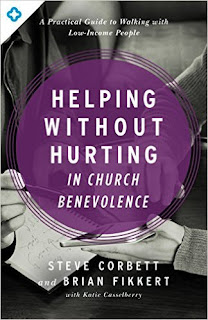
"Helping Without Hurting in Church Benevolence" (Steve Corbett and Brian Fikkert)
TITLE: Helping Without Hurting in Church Benevolence: A Practical Guide to Walking with Low-Income People
AUTHOR: Steve Corbett and Brian Fikkert
PUBLISHER: Chicago, IL: Moody Publishers, 2015, (160 pages).
What do we do when a jobless man enters our church doors asking for help to pay his rent? How would our church respond when a woman walks into our offices asking if we could help her family pay her utility bills? While we would like to help, how do we differentiate the tricksters from the most needy? Do we have a set of guidelines on how to deal with such situations? Written primarily for churches in the United States and Canada, this book provides some simple principles and concepts to assist Church leaders in setting a benevolence policy. At the same time, the authors are aware that any help must not disempower the ones being helped. The authors are both professors at Covenant College who are keen on helping the needy without hurting them. As a follow up to their previous book, "When Helping Hurts," they seek to remind readers that poverty is a complex problem with no simple solutions. While reminding us not to disempower the needy by mere handouts or doing things for them, Corbett and Fikkert are eager to encourage churches to do more to help the poor and the marginalized. Central to their thought is this: How do we help the lost, the last, and the least without hurting their dignity?
Labels:
Charity,
Christianity,
Church,
Culture,
Healing,
Moody Publishers,
Netgalley,
Poverty
Monday, July 6, 2015
"Marriage on the Mend" (Clint and Penny A. Bragg)
TITLE: Marriage on the Mend: Healing Your Relationship After Crisis, Separation, or Divorce
AUTHOR: Clint and Penny A. Bragg
PUBLISHER: Grand Rapids, MI: Kregel Publications, 2015, (248 pages).
There is no perfect relationship on this earth. That applies especially to marriages, where divorces, separation, and marital breakdowns are increasingly on the rise. Generally, no one enters a marriage thinking that it will break down. What about those marriages that had already broken down? Is there hope after a painful divorce? Can a marriage in crisis ever be rescued? Are "irreconcilable differences" really that irreconcilable? These questions are answered with a powerful affirmative by marriage missionaries, Clint and Penny Bragg, who themselves were both divorced for eleven years. Their conviction is spelled out right at the beginning: "Every broken marriage has the hope of becoming a saved marriage." That is because God can reconcile marriages, no matter how painful and difficult it may be. Using their own divorce-marriage-recovery as a testimony, Clint and Penny have gone on to launch Inverse Ministries, based in Ormond Beach, Florida. It all began with one letter.
Labels:
Christianity,
Healing,
Kregel Publications,
Marriage
Wednesday, October 16, 2013
"Transforming Church Conflict" (Deborah van Deusen Hunsinger & Theresa F. Latini)
TITLE: Transforming Church Conflict: Compassionate Leadership in Action
AUTHOR: Deborah van Deusen Hunsinger and Theresa F. Latini
PUBLISHER: Louisville, KY: Westminster John Knox Press, 2013, (184 pages).
All communities over time will experience conflicts. Churches too. It is not about whether conflicts will occur or not. It is a question of when. Knowing this fact of life, perhaps, since conflicts are going to happen anyway, why not learn how to positively deal with it? Rather than let conflicts deform and destroy relationships, why not use them as opportunities to transform people and the Church community? This calls for compassionate leadership. Based on their experience and knowledge of "Non-Violent Communications," developed by Marshall Rosenberg, the authors learn of eight ways in which NVC can be used to transform Church conflicts. Below is my paraphrase.
AUTHOR: Deborah van Deusen Hunsinger and Theresa F. Latini
PUBLISHER: Louisville, KY: Westminster John Knox Press, 2013, (184 pages).
All communities over time will experience conflicts. Churches too. It is not about whether conflicts will occur or not. It is a question of when. Knowing this fact of life, perhaps, since conflicts are going to happen anyway, why not learn how to positively deal with it? Rather than let conflicts deform and destroy relationships, why not use them as opportunities to transform people and the Church community? This calls for compassionate leadership. Based on their experience and knowledge of "Non-Violent Communications," developed by Marshall Rosenberg, the authors learn of eight ways in which NVC can be used to transform Church conflicts. Below is my paraphrase.- From Criticisms to Opportunities for Greater Understanding;
- From Disengagement to Dialogue;
- From Hurting to Healing;
- From Dismissive to Meaningful Expressing of Oneself;
- From Nonchalance to Compassion for People;
- From Anger to Healthy Application of Such Emotions;
- From a Distant Observer to a Mediating Brother;
- From Indifference to Authenticity.
Monday, September 16, 2013
"Wounded by God's People" (Anne Graham Lotz)
TITLE: Wounded by God's People: Discovering How God's Love Heals Our Hearts
AUTHOR: Anne Graham Lotz
PUBLISHER: Grand Rapids, MI: Zondervan, 2013, (240 pages).
Some of the deepest hurts are inflicted by people closest to you, even God's people. Some of the deepest healings are guided by God through the valley of hurts and wounds. So says the daughter of the famous Billy Graham. This reality has been experienced by many people. Most of them do get unreported. For various reasons, people choose to keep silent and quietly suffer the hurts they have received. Some will leave their church community they love. Others may even go around mouthing bad things as a retaliation. Not many will go on record to forgive and to publicly testify how God has healed them in spite of the deep hurts they have suffered from God's people. Ruth Graham Lotz is one such person who bucks the trend. She begins with painful memories of how she and her husband have been ostracized by her own Church in the aftermath of a power struggle, and compares her experience to that of Hagar. Feeling dumped by most of the Church people, she experiences the pain of rejection. Moreover, she was hurt by people she had respected, even receiving some wrongful accusations along the way. As she recalls the blows, she reflects back on Hagar, how God is bigger than any hurt.
Being hurt also brings about certain positive things. She learns that people who wound others are people who have been wounded themselves. This is the vicious cycle of pain. Like Sarah who has experienced the pain of being ignored by her husband, and as a result hurts Hagar. There is also the example of Hannah in the Bible, who was constantly ridiculed by Peninnah for not bearing a child. What happens is usually escape or to take flight. Wounded people, especially God's people often run away from the people who wound them. Thankfully, Lotz wastes no time in bringing readers toward the God who heals. Less than a third into the book, readers will notice that Lotz's intent is to lead people toward God more and more. There is no hurt too deep that God cannot reach. No one can outrun God. At the same time, God also shows us our blind spots. We need to be humble to see and to do something about it, with God's help. Lotz also makes an insightful note that it is those times when we feel hurt that we can be tempted to look out at the specks of other people's eyes, forgetting about the log in our own eye. It is a reminder that hurt people are not perfect themselves. When God heals us from wounds by others, God can also heal us of our self-inflicted wounds. The chapter on the "Spiritual Blind Spots" by itself is worth the price of the book.
Hurts can also come about through the act of wounding. When God prunes, He can also feel the hurts. Discipline can be painful. Sometimes, God can use others to discipline us. Thus, we cannot be too liberal to say that all hurts are evil and badly intended. Readers are reminded that when God is in control, He is free to use all methods to guide us, even hurts. That said, God is no sadist. Though sometimes, for those of us who receive hurtful wounds hurled at us one after another, we start to question whether God is fair to us in the first place. What is most important in these cases, is to remember steadfastly that the world may forsake us, but God will never forsake us. When we are in the wilderness, God is there. When we cry, God is there. When we need hope, God is there. Just because we do not feel it does not mean God is absent. For every seemingly silent moment is a tiptoe by God to look for opportunities to touch us. Even if God is around us, we need open hearts to let Him in. We need to open up our clenched fists and to let Him hold us. One touching moment is how Anne Lotz lets God reach out to her through her famous dad. In a moment of exceptional sensitivity and love, the author's terrible day turns into a terrific moment of praise and thanksgiving. All because she knows someone cares. This book through and through is a testimony of how God cares for His people, especially when they feel hurt.
So What?
Having experienced personal hurts, Anne Graham Lotz is an example that often, authors do not choose their books. Their own life experiences dictates the way. Aware that there are many who choose to keep silent in order to avoid embarrassing themselves or others, Lotz chooses to make it known in this very personal book. She anchors her book on the truth that Jesus is able to heal not merely because He is God, but He has also been wounded by people.
Although the title of the book says wounded, this book is less about the wounding but more about the healing. After all, any hurts written about have already happened. Any conflicts have already occurred. What remains is the nursing of the wounds, the remembrance of them may be even more distressing.
I used to tell my fellow pastors that "sheep can bite." What I fail to add is that sheep can also be healing agents used by God. People hurt. God heals. That often happens through people who are willing to let God use them. Of all the challenges of recovering from hurts, I think the most difficult will be our self-inflicted hurts. Our self-imposed prison can be the most difficult to overcome. Lotz calls this the stubborn spirit. In such times, we all need eyes that not only can see, but eyes that are willing to see. We need ears that not only can hear, but are willing to listen. We need hearts that not only are open, but are willingly laid open for God to use and to touch. People can hurt us lots. People can throw mud at our faces or torment us with their words. The test of character is how we respond. Do we retaliate? Do we judge? Do we wallow in self-pity and regret? Or do we demonstrate the grace of God and to let the peace of God that transcends all understanding, keep our hearts and minds in Christ Jesus our Lord?
One more thing. Remember that while every hurt is an opportunity for healing, it can also be spiritual moments of encountering God when we are most bare, most vulnerable, and most raw. This book is required reading for all who love the Church, those who have been hurt, and those who yearn to see more of God, in spite of their wounds.
Rating: 4.5 stars of 5.
conrade
This book is provided to me free by Zondervan and NetGalley without any obligation for a positive review. All opinions offered above are mine unless otherwise stated or implied.
AUTHOR: Anne Graham Lotz
PUBLISHER: Grand Rapids, MI: Zondervan, 2013, (240 pages).
Some of the deepest hurts are inflicted by people closest to you, even God's people. Some of the deepest healings are guided by God through the valley of hurts and wounds. So says the daughter of the famous Billy Graham. This reality has been experienced by many people. Most of them do get unreported. For various reasons, people choose to keep silent and quietly suffer the hurts they have received. Some will leave their church community they love. Others may even go around mouthing bad things as a retaliation. Not many will go on record to forgive and to publicly testify how God has healed them in spite of the deep hurts they have suffered from God's people. Ruth Graham Lotz is one such person who bucks the trend. She begins with painful memories of how she and her husband have been ostracized by her own Church in the aftermath of a power struggle, and compares her experience to that of Hagar. Feeling dumped by most of the Church people, she experiences the pain of rejection. Moreover, she was hurt by people she had respected, even receiving some wrongful accusations along the way. As she recalls the blows, she reflects back on Hagar, how God is bigger than any hurt.Being hurt also brings about certain positive things. She learns that people who wound others are people who have been wounded themselves. This is the vicious cycle of pain. Like Sarah who has experienced the pain of being ignored by her husband, and as a result hurts Hagar. There is also the example of Hannah in the Bible, who was constantly ridiculed by Peninnah for not bearing a child. What happens is usually escape or to take flight. Wounded people, especially God's people often run away from the people who wound them. Thankfully, Lotz wastes no time in bringing readers toward the God who heals. Less than a third into the book, readers will notice that Lotz's intent is to lead people toward God more and more. There is no hurt too deep that God cannot reach. No one can outrun God. At the same time, God also shows us our blind spots. We need to be humble to see and to do something about it, with God's help. Lotz also makes an insightful note that it is those times when we feel hurt that we can be tempted to look out at the specks of other people's eyes, forgetting about the log in our own eye. It is a reminder that hurt people are not perfect themselves. When God heals us from wounds by others, God can also heal us of our self-inflicted wounds. The chapter on the "Spiritual Blind Spots" by itself is worth the price of the book.
Hurts can also come about through the act of wounding. When God prunes, He can also feel the hurts. Discipline can be painful. Sometimes, God can use others to discipline us. Thus, we cannot be too liberal to say that all hurts are evil and badly intended. Readers are reminded that when God is in control, He is free to use all methods to guide us, even hurts. That said, God is no sadist. Though sometimes, for those of us who receive hurtful wounds hurled at us one after another, we start to question whether God is fair to us in the first place. What is most important in these cases, is to remember steadfastly that the world may forsake us, but God will never forsake us. When we are in the wilderness, God is there. When we cry, God is there. When we need hope, God is there. Just because we do not feel it does not mean God is absent. For every seemingly silent moment is a tiptoe by God to look for opportunities to touch us. Even if God is around us, we need open hearts to let Him in. We need to open up our clenched fists and to let Him hold us. One touching moment is how Anne Lotz lets God reach out to her through her famous dad. In a moment of exceptional sensitivity and love, the author's terrible day turns into a terrific moment of praise and thanksgiving. All because she knows someone cares. This book through and through is a testimony of how God cares for His people, especially when they feel hurt.
So What?
Having experienced personal hurts, Anne Graham Lotz is an example that often, authors do not choose their books. Their own life experiences dictates the way. Aware that there are many who choose to keep silent in order to avoid embarrassing themselves or others, Lotz chooses to make it known in this very personal book. She anchors her book on the truth that Jesus is able to heal not merely because He is God, but He has also been wounded by people.
Although the title of the book says wounded, this book is less about the wounding but more about the healing. After all, any hurts written about have already happened. Any conflicts have already occurred. What remains is the nursing of the wounds, the remembrance of them may be even more distressing.
I used to tell my fellow pastors that "sheep can bite." What I fail to add is that sheep can also be healing agents used by God. People hurt. God heals. That often happens through people who are willing to let God use them. Of all the challenges of recovering from hurts, I think the most difficult will be our self-inflicted hurts. Our self-imposed prison can be the most difficult to overcome. Lotz calls this the stubborn spirit. In such times, we all need eyes that not only can see, but eyes that are willing to see. We need ears that not only can hear, but are willing to listen. We need hearts that not only are open, but are willingly laid open for God to use and to touch. People can hurt us lots. People can throw mud at our faces or torment us with their words. The test of character is how we respond. Do we retaliate? Do we judge? Do we wallow in self-pity and regret? Or do we demonstrate the grace of God and to let the peace of God that transcends all understanding, keep our hearts and minds in Christ Jesus our Lord?
One more thing. Remember that while every hurt is an opportunity for healing, it can also be spiritual moments of encountering God when we are most bare, most vulnerable, and most raw. This book is required reading for all who love the Church, those who have been hurt, and those who yearn to see more of God, in spite of their wounds.
Rating: 4.5 stars of 5.
conrade
This book is provided to me free by Zondervan and NetGalley without any obligation for a positive review. All opinions offered above are mine unless otherwise stated or implied.
Labels:
Church,
Forgiveness,
Grace,
Healing,
Netgalley,
People,
Relationships,
Zondervan
Subscribe to:
Posts (Atom)