TITLE: Deep Reading: Practices to Subvert the Vices of Our Distracted, Hostile, and Consumeristic Age
AUTHOR: Rachel B. Griffis, Julie Ooms, & Rachel M. De Smith Roberts
PUBLISHER: Grand Rapids, MI: Baker Academic, 2024, (240 pages).
Recently, there has been a swath of books about reading, good reading. Since Mortimer Adler's classic on "How to Read a Book," there has been various additions from various authors like Robert Alter, Jeffrey Bilbro, Harold Bloom, Susan Gallagher & Roger Lundin, Alan Jacobs, Karen Swallow Prior, Jessica Hooten Wilson, etc. This book is a compelling addition to this library of excellent perspectives on reading. It is a treasure to behold. The key thesis in this book is that reading is a powerful mechanism for spiritual formation. Before embarking on this journey, there are three major impediments to overcome: Distraction, Hostility, and Consumerism. The way to achieve deep reading is to adopt practices to subvert these three vices. Otherwise, we become vulnerable to the ills of technology, adopt superficial reading, and lose the opportunity to grow the virtues of good reading. This book asks and probes not just the things we read but also questions surrounding who we are, why we read, and how we are reading. In other words, readers will not only be reminded about the need for deeper reading skills, they will recognize how modern culture is impacting general reading habits. These are warnings to be heeded wisely. We ignore them at our peril. The authors ask some poignant questions such as:
"Good books do not make saints, but they can nudge one a little closer." (Conrade Yap)
Showing posts with label Social Media. Show all posts
Monday, June 10, 2024
"Deep Reading" (Rachel B. Griffis, Julie Ooms, & Rachel M. De Smith Roberts)
Wednesday, May 15, 2024
"Listen, Listen, Speak" (Jay Y. Kim)
TITLE: Listen, Listen, Speak: Hearing God and Being Heard in a Noisy World
AUTHOR: Jay Y. Kim
PUBLISHER: New York, NT: Faithwords, 2024, (256 pages).
We want to be heard and understood. More often than not, people tend to mistake one for the other. In this social media culture, visibility is often linked to those who can speak the loudest, share the most, and attract the most attention. That is not always true. In fact, once the dust settles, we can see that there is more than meets the eye. Our world tends to be filled with all kinds of noises. Many clamour for attention but few bother to listen. In a wonderful push-back against the temptations of a noisy world, author Jay Kim has written an important book about learning to listen doubly hard before speaking. He calls us to distinguish "clarity" from "volume" by saying: ".. loudness often grabs our attention, it’s clarity that holds our attention. Grabbing attention is transactional. Holding attention is relational." Wise words. Listening is a key spiritual discipline. Elijah practices it. Jesus lives it. We are all called to do the same. Unfortunately, there are many barriers to listening. The author begins by helping us take down these barriers.
In Part One, he shows us the pitfalls of the lack of listening. With the rise of fake news and the malicious use of AI technology by scammers, we all need to learn the basics of discernment.
Labels:
Bible,
Christian Life,
Culture,
FaithWords,
Listening,
Social Media,
Spirituality
Thursday, March 21, 2024
"Trust" (Dominique Shelton Leipzig)
TITLE: Trust.: Responsible AI, Innovation, Privacy and Data Leadership
AUTHOR: Dominique Shelton Leipzig
PUBLISHER: Charleston, SC: Forbes Books, 2024, (399 pages).
It is not easy to trust what we see today. From Artificial Intelligence to Deep Fake technologies, it is becoming easier to manipulate data for illegitimate ends. With innovation comes the tendency for cheating and criminal activities. Data security is critical to preserve the integrity of businesses and maintain positive public trust. All it takes is a data leak, hacking, systems malfunction, or an infiltration of ransomware, and the corporation's activities easily come to a standstill. According to Dominique Shelton Leipzig, the problem with modern corporate boardrooms is that data management is typically delegated to backroom staff, like data scientists or IT professionals. Some don't know the right questions to ask about their data in the first place. This calls for a more proactive approach when dealing with data and information in the company. Data stewardship cannot be left to consultants, or engineers in the data center, or outsourced to cheaper IT professionals outside. They need to be managed responsibly. Senior management needs to be held accountable. Data breaches and data security lapses cannot be blamed on data center staff. CEOs must take an active interest in the integrity and use of data in their organizations. With more businesses and information being collected and stored both inside and outside the organizations, there needs to be a heightened awareness and responsibility about its collection, management, protection, and usage. Companies of all sizes need a proper data strategy. The thesis in this book is that to re-establish trust in organizations, it is high time for senior management to take leadership of their corporate data as a critical asset. In Leipzig's words, one must "lead with trust." That means three things:
Labels:
AI,
Computers,
Culture,
Ethics,
Forbes,
Leadership,
Netgalley,
People,
Relationships,
Social Media,
Society,
Technology,
Truth
Friday, October 6, 2023
"Digital Liturgies" (Samuel D. James)
TITLE: Digital Liturgies: Rediscovering Christian Wisdom in an Online Age
AUTHOR: Samuel D. James
PUBLISHER: Wheaton, IL: Crossway Publishers, 2023, (208 pages).
AUTHOR: Samuel D. James
PUBLISHER: Wheaton, IL: Crossway Publishers, 2023, (208 pages).
Just saying that the digital revolution has changed the world is an understatement. Like the story of two young fish that fail to understand what water is, some of us who have been so immersed in technology do not understand what it means to live without technology. Digital immigrants are those who have "immigrated into" the modern technology platforms while digital natives are those who grew up in technology right from the start. Regardless of whether one is a digital immigrant or native, the inherent threats to personality are the same for all. No one will be able to escape the far-reaching tentacles of the Internet and modern digital technologies. This book is a critical look at the way technology is shaping us and its implications for Christians wanting to live fruitfully in an increasingly complex world. He attempts to help us discern the digital world with biblical wisdom ethically, practically, and theologically. Concerned about the incredible amount of time people spend online, author Samuel James reflects on the significance of living in a world of "screens, algorithms, and pixels." From the threat of fake news to the dangers of disembodied living, this book is a crucial alarm to wake us up from becoming too trusting to the point of idolizing technology. It is also a wake-up call for any uncritical use or reliance on the technology we have gotten so used to using. He asks questions like:
Labels:
Christian Life,
Computers,
Crossway,
Ethics,
Liturgy,
Netgalley,
Social Media,
Society,
Spirituality,
Technology,
Theology
Thursday, May 26, 2022
"Following Jesus in a Digital Age" (Jason Thacker)
TITLE: Following Jesus in a Digital Age
AUTHOR: Jason Thacker
PUBLISHER: Nashville, TN: B&H Publishing, 2022, (176 pages).
Android, Apple TV, Facebook, Google, Instagram, Twitter, YouTube, etc are all familiar names in our modern culture. The news that we get in the past via newspapers, TV, and radio, are now being disseminated faster and more efficiently throughout the world. No more waiting for the latest paper edition at our regular newsstands. All it takes now is an Internet connection all at the convenience of a modern smartphone. Unsurprisingly, this modern innovation has changed the way we interact with people and communicate with one another. Traditional barriers of entry have been lowered. The communications bigwigs now have to compete not just with their mega-peers, but also with individual social media enthusiasts. The Internet and social media are here to stay. This will affect our relationships in how we live and what we say. Due to the ease of getting into social media, fake news are also on the rise. How do we deal with this new reality? How could we discern each piece of news as they come along? Are all sensational news false? Are all routinely boring stuff true at all? Technology is shaping us in more ways than one. Like the proverbial face of beauty that launched a thousand ships, an insensitive Tweet or a scandalous post could launch thousands of reactions, protests, and even violence. Author Jason Thacker notices the impact of technology and offers us some powerful reflections on what technology is, what technology demands of us, and how we could co-exist ethically and meaningfully with people in a society drowning in technological waters. Thacker offers us four reflections to help us recognize the technology that is trying to shape us, and the need to be true to ourselves.
Labels:
B and H Publishing,
Christianity,
Computers,
Culture,
Faith,
Jesus,
Netgalley,
News,
Social Media,
Society,
Technology,
Truth
Thursday, January 13, 2022
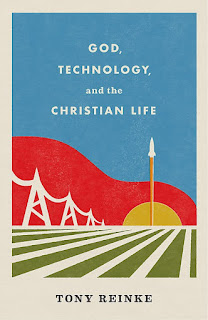
"God, Technology, and the Christian Life" (Tony Reinke)
TITLE: God, Technology, and the Christian Life
AUTHOR: Tony Reinke
PUBLISHER: Wheaton, IL: Crossway Publishers, 2021, (320 pages).
We have a lot of technology around us. We have different types of devices. Many of us use them on a daily basis. We need them. We cannot do without them. If we are to take a moment to ask ourselves, "What is Technology?" we might pause and wonder what kind of a question is that. For many people, the use of technology has become so ubiquitous that it has become an uncritical use of such powerful tools without actually knowing its grand purpose and significance. Fair to say, not many people really know how "technology" is defined. If we go back in history, human progress can be classified under different ages. The Stone Age, the Bronze Age, the Iron Age, the Nuclear Age, the Computer Age, and now the Technology Age. The common thread through all of them is the rising capability and discovery of tools to assist and improve human lives. Hunting tools from bones and stones were invented in the Stone Age. Engraving was introduced during the Bronze Age. The wheel was invented in the Iron Age. Nuclear power and the hydrogen bomb were creations in the Nuclear Age. Then comes the familiar personal computer and cell phones in the Computer and Technology Ages respectively. Even the biblical story of David and Goliath is a powerful story of the kind of technology being used at that time. Author Tony Reinke comes from a family of inventors. Out of his research and reflection, he sees technology as a way to tell the story of the human race. Through innovative skills and creative techniques, technology moves from animate functions like pulleys, to inanimate capabilities such as driving a car. Now we have technologies with automated abilities like self-driving cars and self-learning algorithms. The philosophical question is this: Is technology leading us toward a "dystopia" like Babel or a "heavenly utopia?" Reinke refuses to be drawn to either extreme, choosing the middle path. He enlists the help of nine voices to reveal 12 common myths about technology. These voices are mostly from the Modern Age: John Calvin the Reformer; Charles Spurgeon the Preacher; Abraham Kuyper the Theologian; Herman Bavinck the Calvinist; Jacques Ellul the French Philosopher; Wendell Berry the Conservationist; Kevin Kelly the technologist; Elon Musk the trendsetter; and Yuval Noah Harari, the Jewish Professor of History. All of these voices speak into the purpose and use of technology. He deals with six key questions:
Labels:
Apologetics,
Christian Life,
Computers,
Crossway,
God,
Netgalley,
Social Media,
Technology
Monday, December 27, 2021
"Breaking Ground" (Anne Snyder and Susannah Black, editors)
TITLE: Breaking Ground: Charting Our Future in a Pandemic Year
AUTHOR: (Anne Snyder and Susannah Black, editors)
PUBLISHER: Walden, NY: Plough Publishing House, 2022, (400 pages).
If there is any specific life-changing event at the turn of this decade, it would nonetheless be Covid-19. Never before have there been so many deaths, fears, disruptions to the local economy, and global repercussions for the general public, businesses, friends, families, and loved ones. From multinational corporations to non-profits like charities and churches, the arms of the pandemic have spread like wildfires affecting every continent, every country, and every culture. In early 2020, a group of thoughtful individuals came together to ask the question: "What would a post-pandemic world look like?" Refusing to accept a mere "Things will never be the same again," the contributors boldly attempt to see the future through renewed thinking of the many facets of life we have often taken for granted. That is not all. Even after removing the pandemic factor, there remains a deep-seated self-deception among people that they are presumed correct until proven otherwise. That sets the stage for arrogance and pride that refuses to learn, to the detriment of our future generations. We need a way to help us humbly learn from our mistakes and to break new ground for growth and human progress. This collection of essays is written by individuals who hail as cultural critics, scholars, speakers, businesspersons, professors, psychologists, philosophers, poets, political observers, professionals, researchers, venture capitalists, and many more. Written between June 2020 to June 2021, the writers explore issues pertaining to three types of needs, the need to:
Labels:
Apologetics,
Christian Life,
Christianity,
Courage,
Covid-19,
Encouragement,
Health,
Hope,
Humility,
Inspiration,
Life,
Netgalley,
People,
Plough,
Politics,
Social Media,
Society,
World
Friday, October 29, 2021
"Following" (Jason Byassee and Andria Irwin)
TITLE: Following (Pastoring for Life: Theological Wisdom for Ministering Well)
AUTHOR: Jason Byassee and Andria Irwin
PUBLISHER: Grand Rapids, MI: Baker Academic, 2021, (208 pages).
Even with technological advances, there is almost always a constant divide between two poles. There are the Technological Luddites and the Technophiles. There are the modernists and the mystics. In a digital age, there are digital immigrants and digital natives. These are some of the distinctions between the old and the new forms of thinking. In a book written by a digital immigrant (Byassee) and a digital native (Irwin), we get a fascinating conversation about what discipleship means in a digital age. While getting online is easy, discerning what is going on is not so straightforward. In the area of discipleship, learning how to discern is increasingly important as many Christians go online and interact more on the Internet. Theologically, one of the biggest heresies throughout history was Gnosticism. This heresy is basically about dualistic views of life, seeing earthly things as evil and heavenly things as good. Salvation is thus a matter of running away from this world into the real good one. It is still occurring today to fuel any inclination toward escapism especially in times of trouble. Closely related to Gnosticism is Manicheism, something that had influenced St Augustine in his earlier days. This heresy is not as extreme as Gnosticism but still retains semblances of Gnostic beliefs into seeing some things as good and some things as evil. The Truth is, God has created creation as good, and right theology needs to discern what is good and fallen, against what the heresies claimed as inherently or naturally evil. The authors here seek to find a balance between the two heresies so as to make sense of what is theologically true and coherent with the human experience. In an age where the online environment is threatening to pull people toward any heretical extremes, they urge readers to learn to refrain, to restrain, and to rest from constant online engagement, without jettisoning the usefulness of technology. They also show us how to discern what are the things that can and cannot be done online. One of the key questions posed is: "How might we use technology, perhaps despite its intentions, to trick ourselves into a more embodied life of discipleship?"
Thursday, August 26, 2021
"Restless Devices" (Felicia Wu Song)
TITLE: Restless Devices: Recovering Personhood, Presence, and Place in the Digital Age
AUTHOR: Felicia Wu Song
PUBLISHER: Downers Grove, IL: InterVarsity Press, 2021, (232 pages).
With the fast-changing technological landscape, issues pertaining to human-machine interactions continue to evolve. Since the turn of the century, people are increasingly using technological devices in all of their human interactions. Whether one is a digital native or digital immigrant, the common denominator between the different generations is the use of technology. What is increasingly common is that time spent for both adults and kids on digital devices is also rising, albeit for different reasons. Addiction, mental health, restlessness, and so on are becoming more unsettling each day. Just think about it. How many people can live without WiFi or some form of Internet access? In this book, author and professor Felicia Wu Song argues that we are all descending down a digital environment that is threatening to unravel our personhood and calls us all to start on the journey to recover our humanness through a process of re-embodiment. We do not have to surrender to every desire to upgrade our devices or to constantly check our phones for the latest news. Song proposes three paths forward:
- Spiritual disciplines and practices
- Recovery of our Human Embodiment
- Living in Community
Labels:
Christianity,
Computers,
IVP,
Netgalley,
Science,
Social Media,
Spiritual Growth,
Spirituality,
Technology
Wednesday, April 28, 2021
"Talking with Teens About Sexuality" (Beth Robinson, EdD; and Latayne C. Scott PhD)
TITLE: Talking with Teens about Sexuality
AUTHOR: Beth Robinson, EdD; and Latayne C. Scott PhD
PUBLISHER: Bloomington, MN: Bethany House Publishers, 2021, (208 pages).
Living with Teenagers can be quite an enriching experience, educational too. Not just for teenagers but more so for parents. When asked about what their parents needed to know about "teens and sex," a group of teenagers quickly replied: "Everything!" Indeed, there are many, if not everything, that parents need to know in order to relate to their growing child at an impressionable age. The curious thing is this: Parents have also gone through their respective teen phase. What else do they need to learn? It's the "other" perspective. It is one thing to experience the growing-up phase. It is yet another to be on the receiving side of teenager communications. So for many "clueless" parents, they need help, and they need it badly. For the contexts have changed drastically over the years. Compared to many parents' generation, today's kids have smartphones and ready connectivity to the Internet. Many of them are digital natives. They are also becoming immersed in a liberal culture that challenges many traditions of the past. What was taboo then is acceptable now. What seems reprehensible yesterday is embraced openly today. This is particularly true in the area of sexuality, something that teens battle with as they grapple with raging hormonal changes. The authors list some questions to show us the range of issues with regard to sexuality:
Labels:
Bethany House,
Culture,
Netgalley,
Sexuality,
Social Media,
Teenagers
Tuesday, April 20, 2021
"Christians in a Cancel Culture" (Joe Dallas)
TITLE: Christians in a Cancel Culture: Speaking with Truth and Grace in a Hostile World
AUTHOR: Joe Dallas
PUBLISHER: Eugene, OR: Harvest House Publishers, 2021, (208 pages).
Opposition to the gospel is nothing new. It could be direct persecution, like in the Early Church. It could also be indirect insinuation in the form of cynical comments or sarcasm. Both forms of hostility are alive and well today. While physical persecution happens mostly in closed countries like North Korea, open criticism and condemnation occur daily whenever Christians attempt to speak against worldly values. In the 60s, when Christians speak about a Christian perspective of a particular issue, it was generally accepted in a "business as usual" manner. Then comes the 90s culture of cynicism, where the same issues in the past need to be defended. Apologists grew in number as more people attempted to engage a generation of cynicism. Today, the tide has been turned completely around that Christians no longer can speak about such issues freely. Their rights to expressing the same views of the past are increasingly being "canceled." Author Joe Dallas has been observing such a "cancel culture" trend. He sees how Big Tech is playing the role of censorship to "streamline" views they deem unsuitable. At the same time, they are lenient toward those who mirror their views and "cancel" those who don't. While the natural instinct is to fight back forcefully, Dallas gently guides us toward a loving rational response. Convicted that the Bible today is alive, relevant, and potent, the primary purpose of this book is to equip Christians with skills to respond with grace in a hostile climate. The first five chapters provide some background on the formidable challenges of today that tend to blackmail Christians into silence. The second part of the book focuses on the knowledge of biblical truths and wisdom about rules of engagement. For thirty years, the author had encountered countless opposition and he shares from his wealth of real-world experience.
Labels:
Christianity,
Culture,
Harvest House Publishers,
Homosexuality,
Internet,
Life,
Netgalley,
People,
PostModernism,
Sex,
Sexuality,
Social Media
Tuesday, March 30, 2021
"Reading the Times" (Jeffrey Bilbro)
TITLE: Reading the Times: A Literary and Theological Inquiry into the News
AUTHOR: Jeffrey Lyle Bilbro
PUBLISHER: Downers Grove, IL: InterVarsity Press, 2021, (208 pages).
A few decades ago, we receive news via the radio or the daily printed newspaper. We hear the daily digest or news bites with the radio and for more details, we open up the editorial pages or the news reports for both local and foreign news. Then comes the Internet. Our hunger for news and information remains but the medium we use differs. This also coincides with the cellphone revolution accompanied by the rise of social media platforms. The new technological landscape has also broken up the dominion of the humble newspaper or printed magazines. Now, we read news snippets via short texts such as Instagram, Tik-Tok or Twitter; and longer pieces via blogs or websites. For information that matters to friends, we might opt for FaceBook. We look for jobs via LinkedIn, read books on electronic devices, do quick updates on Twitter, and watch videos on YouTube, and many more. When freedom of the press meets freedom of individual expression, everybody becomes a reporter, an editor, and sometimes, an expert. In such a decentralized environment, it becomes more challenging to sieve out the truth from falsehood. Even celebrity gossip and news opinions have become so decentralized that the world sees only specific angles from any one social media user. On the topic of news, Bilbro raises several specific questions on reading the news. Underlying these is a growing awareness that our daily habits are more effective than what we say or believe.
Labels:
Christian Life,
Culture,
Ethics,
IVP,
Netgalley,
News,
Politics,
Relationships,
Social Media
Wednesday, January 20, 2021
"Posting Peace" (Douglas S. Bursch)
TITLE: Posting Peace: Why Social Media Divides Us and What We Can Do About It
AUTHOR: Douglas S. Bursch
PUBLISHER: Downers Grove, IL: InterVarsity Press, 2021, (204 pages).
We are increasingly angry online. Anything could become an anger trigger, a point of contention, or an explosive rant. With more people stuck at home during the pandemic, this situation seems to be getting worse. With such high temperatures on social media, what if this is just the early stages of an even bigger problem? Can we do something about such divisions? How can we bring about greater unity and calm in the digital world? Could the online wars contribute to the growing polarization among different sides and opinions? Lamenting on the inability of people (including Christians) to speak the truth in love, author Douglas Bursch probes the ongoing social media heat and helps us find a way to cool down and to be peacemakers. Otherwise, things might very well become more polarized. The key thesis in this book is that Christians need to lead the way in online communications to be peacemakers. It is hoped that such efforts would lead to greater restraint, reconciliation, and restoration of goodness in our relationships. The author knows this the hard way. Having been a talkshow host who tries to bring conservatives, moderates, progressives, and liberals to the same table to remove contentious debates, he has experienced bitter feedback and disappointment as people use the platform to hurl their views down the rest. The verbal mudslinging spoke louder than his voice of moderation. Many of the comments he received were mean and harsh. Political infighting and social media seem to feed off each other, deepening the existing divisions and widening the cracks. He also learns that for talk show hosts to be successful, they have to hold a strong opinionated side. Staying in the middle ground hardly cuts it.
Labels:
Christian Living,
Christianity,
Communications,
Computers,
Culture,
IVP,
Netgalley,
Social Media,
Society,
Technology
Friday, October 30, 2020
"Communicating with Grace and Virtue" (Quentin J Schultze)
TITLE: Communicating with Grace and Virtue: Learning to Listen, Speak, Text, and Interact as a Christian
AUTHOR: Quentin J Schultze
PUBLISHER: Grand Rapids, MI: Baker Academic, 2020, (144 pages).
Communications seem to be an evergreen topic for discussion. Many schools and universities continue to offer courses that specialize in both the art and science of communications. Books continue to be written about the ways and means to communicate even as we deal with cultural and technological changes. Yet, one thing is to be expected. It is only a matter of time before we encounter difficulties in communications. In other words, there is no way we can separate life from conflicts. Being people from different backgrounds essentially mean that we have to deal with differences sooner or later. Even the best types of relationships require a fair bit of knowledge about conflict management. These include marriages, relationships with office colleagues, social circles, Church communities, online correspondences, and increasingly on social media. Enters the call toward "servant communication" which author and professor Quentin Schultze defines as "a way of using God’s gift of communication to love God and our neighbors as ourselves (Mark 12:30–31)." It begins with a willingness to accept the challenge to practice such communications as a way to witness grace and love. At the heart of this virtue is the practice of gratitude. The more grateful we are, the more able we are to practice graciousness in our communications. Christians are called to honour God in all that they do. Schultze knows the challenges of doing that. Thus, he guides us through some barriers, to point out how sin has made us broken, which not only affects us, but also the way we communicate. Here, the author lays out bare his past brokenness to demonstrate that he knows personally what it means to be part of a broken relationship.
AUTHOR: Quentin J Schultze
PUBLISHER: Grand Rapids, MI: Baker Academic, 2020, (144 pages).
![]() |
Labels:
Baker Academic,
Communications,
Computers,
Netgalley,
People,
Social Media,
Technology
Tuesday, June 2, 2020
"The Dark Side of Our Digital World" (Andrew Weiss)
TITLE: The Dark Side of Our Digital World: And What You Can Do about It (LITA Guides)
AUTHOR: Andrew Weiss
PUBLISHER: Lanham, MD: Rowman & Littlefield Publishers, 2020, (272 pages).
We live in a world of information technology. Almost everything in the world has a digital counterpart. One of the signs of the digital revolution is the impact of e-Commerce and the way we are living our lives. We are slowly moving from snail-mail to email; from texting to social media; and from face-to-face communications to video conferencing. Looking at the way technology stocks had usurped the top positions of traditional bricks and mortar companies, we know that the world of digital is here to stay. Our world has changed forever and there is no going back to the slow-paced world of yesterday. For all the fascination and the optimism that comes with digital platforms, a few people are not content in simply consuming these stuff as they come along. They question. They critique. They look outside the box to try to challenge conventional ways of thinking. One such explorer is Andrew Weiss, a librarian and cultural observer who recognizes the dark side of the digital world, which is what this book is all about. It is essentially learning to use digital tools wisely while being aware of the insidious dark side. Written in four parts, the first three parts deal with the awareness while the final part offer steps toward redemption.
Wednesday, March 4, 2020
"The Voices We Carry" (J. S. Park)
TITLE: The Voices We Carry: Finding Your One, True Voice in a World of Clamor and Noise
AUTHOR: J. S. Park
PUBLISHER: Chicago, IL: Northfield Publishers, 2020, (288 pages).
Many of us have heard about the differences between the head and the heart. The former popularly refers to the intellect while the latter describes the emotions. Using the head means we let our thinking and rationalizing decide our next steps. Using the heart means we allow our emotions to lead the way. Truth is, we need both head and heart for authenticity. Instead of separating the head and the heart into two entities, how about looking at it from the perspective of voices that speak to us, regardless of whether it is to the head or heart? This makes sense because the line between the intellect and the emotions is not easily distinguishable. What is more important is how we listen to the voices, both from outside and from the inside. Author JS Park writes this book with honest inquiry and personal experience about the many different types of voices that come at us, both voluntarily and involuntarily. In an age of social media, we are susceptible to all kinds of comments, both positive and negative. Even the most well-intentioned posts could trigger a whole spectrum of criticisms and trolls. One may claim to communicate facts but others would be quick to clothe all kinds of feelings and judgment on them. External voices create all kinds of inner ripples, some good, some bad. The best way forward is to discern the facts, determine what's helpful and what's not, and to find our own voices. Don't cave in to lies.
Thursday, February 27, 2020
"Three Pieces of Glass" (Eric O. Jacobsen)
TITLE: Three Pieces of Glass: Why We Feel Lonely in a World Mediated by Screens
AUTHOR: Eric O. Jacobsen
PUBLISHER: Grand Rapids, MI: Baker Academic, 2020, (288 pages).
Relationship is the glue that bonds a society together. Driven by a desire to belong, we live in a challenging environment to navigate between our inner needs and outer cultural climate. Author Eric Jacobsen calls refers to this as "the crisis of belonging." Why a crisis? It is because of three key challenges or barriers that are keeping people from one another: Relational; Place; and Narrative. Throughout the book, readers will see how these three challenges constantly prevent people from finding their sense of belonging. Written in four parts, Jacobsen skillfully guides us through the reasons why we are increasingly lonely. Beginning with the scene from Cheers where the chorus chimes, "You want to be where everybody knows your name," he paints a picture where we all long to belong. With rising fragmentation of society, the diminishing common spaces to gather, and the loss of a common story that we can share in, it is becoming harder to build relationships. The irony is that, while we all want to have our own private spaces in life, we hide that innate desire in us to want to connect publicly. Jacobsen looks at the problem of relationships and belonging through several different angles.
Labels:
Baker Academic,
Computers,
Culture,
Netgalley,
People,
Relationships,
Science,
Social Media,
Technology,
World
Thursday, June 14, 2018
"Ecologies of Faith in a Digital Age" (Stephen D. Lowe & Mary E. Lowe)
TITLE: Ecologies of Faith in a Digital Age: Spiritual Growth through Online Education
AUTHOR: Stephen D. Lowe & Mary E. Lowe
PUBLISHER: Downers Grove, IL: IVP, 2018, (250 pages).
We are living in an increasingly digital world. In such a ubiquitous environment, almost everything seems to be going digital. From printed papers to ebooks; groceries to e-shopping; communications to GPS directions; anything that could be digitized would be digitized. With the Internet at a global scale, more people are interconnected than ever. What about faith? What about spiritual formation matters? What about online theological education? According to the authors, two of the biggest challenges to teaching spiritual education online "were community formation and spiritual growth." It could be due to the difference between digital natives and digital immigrants. It could be due to the lack of experience in the new digital world. It could also be due to the skepticism among many educators. Whatever the case, both Stephen and Mary Lowe believe that online education is not only here to stay, they are poised to become a major part of spiritual formation, both communally and personally. Rather than outright rejection or cynical avoidance, perhaps a model to teach and help people Perhaps, just like the speed of evolutionary progress, why not use the ecological model of spiritual formation? For using ecology as a metaphor gives at least three advantages. It is interconnected. It takes time. It requires mutual dependence. It brings together the importance of both communal and individual health. Moreover, this motif is biblical. From Genesis to Revelation, the gospel parables about ecological growth, ecological references in Paul's epistles, there is a strong motif about ecology and faith.
Labels:
Christian Life,
Christianity,
Computers,
Culture,
Faith,
IVP,
Netgalley,
Social Media,
Technology
Friday, May 4, 2018
"Selfies" (Craig Detweiler)
TITLE: Selfies: Searching for the Image of God in a Digital Age
AUTHOR: Craig Detweiler
PUBLISHER: Grand Rapids, MI: Brazos Press, 2018, (240 pages).
The invention of the self-facing camera has also invented another word in our popular language: Selfie. On the surface, it seems like some harmless photograph for keepsake. Since everybody's doing it, it should be ok, right? Not so fast. There are more things happening below the surface consciously and sub-consciously. According to author and professor Craig Detweiler, it is something that reveals our conflicted thoughts about ourselves. Instagram, Snapchat, Twitter, Facebook Live, and all kinds of social media apps are able to help us capture precious selfie moments. What they fail to capture is the underlying philosophies or meanings attached to such selfie movements. Enter this book that reflects on the meanings, the conflicts, the pluses and minuses of this cultural phenomenon. With selfies, there is no longer private moments but public. There are no longer just self-image but shared images. Anything we put out there is subject to a multitude of interpretations and criticisms. With technology that are increasingly self-learning and automated, every selfie we take could be automatically uploaded the moment our devices establish an Internet connection. With our increasing array of digital devices, multiple copies could be backed up or shared across different platforms and distributed throughout our social and public spheres. Whether it is to bolster our self-image or simply to have our pictures on some famous landmark, Detweiler helps us ask questions to distill this phenomenon into some fundamental self identity and our endless search for meaning, and more importantly for God.
Labels:
Brazos,
Christianity,
Computers,
Culture,
Netgalley,
Social Media,
Technology
Monday, September 11, 2017
"The Tech-Wise Family" (Andy Crouch)
TITLE: The Tech-Wise Family: Everyday Steps for Putting Technology in Its Proper Place
AUTHOR: Andy Crouch
PUBLISHER: Grand Rapids, MI: Baker Books, 2017, (226 pages).
Whenever there is anything latest and greatest, not only will there be hype, there will also be concerns about how it will affect relationships both present and future. Some would harp back at the "good old days" and dismiss the vogue of the day. Others would do the reverse, committing the error of what CS Lewis has called as "chronological snobbery," where the newest trends are deemed better than the past. Both are poor responses to changing cultural forces. The way forward is neither abandonment or careless acceptance. It is wisdom. This wisdom includes the appropriate ways to work with rather than abandon technology. It means putting technology in its proper place instead of letting it set our pace. It is knowing about what the new movements are, what are the sources, and how best we can respond. In Culture Making, Andy Crouch critiques the two conventional approaches of culture. The first is unwitting acceptance while the second is unnecessary rejection. He then argues for the path of creative culture making. This book follows up on such a mindset. Instead of totally embracing or rejecting technology in our digital world, we need to learn to be wise in our use of technology. In a survey of parents with regard to the difficulties of modern parenting, technology tops the list of parenting concerns.
Crouch writes:
Labels:
Baker Books,
Children,
Christian Life,
Computers,
Graf-Martin,
Parenting,
Parents,
People,
Relationships,
Social Media,
Society,
Technology,
Youth
Subscribe to:
Posts (Atom)