About This Blog

Tuesday, September 29, 2015

"History of Western Philosophy and Theology" (John M. Frame)

TITLE: A History of Western Philosophy and Theology
AUTHOR: John M. Frame
PUBLISHER: Phillipsburg, NJ: P and R Publishing, 2015, (928 pages).

When studying philosophy, one will have to study theology. When studying theology, one will also need to wrestle with philosophy. It is not possible to study any of the two in isolation with the other. Without the two, any study of the history of philosophy and theology would be incomplete. Using a storytelling style, philosopher and theologian John M. Frame has compiled over 15 years of teaching material from his core course at Reformed Theological Seminary. Called the "History of Philosophy and Christian Thought," Frame writes from a Christian point of view, partly because he is teaching in a Christian school of theology. More importantly, the moment we want to tell a story, we must always have a particular frame of reference and if necessary, a position of conviction that is fair when describing other views. Honestly, there is no such thing as an absolutely neutral book especially when it comes to philosophy or theology. Whether atheist or theist, secularist or representing any one religion, all literature are oriented to a particular point of view. Given this nature, it is far better to acknowledge upfront one's position openly for readers to take note. Frame has been honest about it and readers should applaud the author's commitment to tell the story fairly and justly because the Christian faith demands it. At the same time, there would be evaluations of various thinkers and philosophers and readers will have to make their own personal assessment not only of the thinkers themselves but also on Frame's. That is a bonus for readers having a view and one interpretation of the view to learn from. This book is also unique for the following reasons:
  • It is openly Christian in perspective
  • It is partly apologetic in style but fairly critiques both Christian as well as non-Christian views
  • It stresses the interdependence of both disciplines of theology and philosophy
  • It contains an extensive coverage of modern thought, the most I have seen in any book of this nature. 
  • Most visibly, Frame analyzes modern thought with a strong foundation of classical Western philosophy, arguing from the strengths of the former.


Sunday, September 27, 2015

"The Irresistible Community" (Bill Donahue)

TITLE: The Irresistible Community: An Invitation to Life Together
AUTHOR: Bill Donahue
PUBLISHER: Grand Rapids, MI: Baker Books, 2015, (256 pages).

This book can be simply summarized in three words: Table, Towel, and Truth. In other words, these three things are essential in the building of a community that is simply "irresistible." Four chapters are allocated for each part. Each chapter ends with the name of a disciple who had walked with Christ. The author has been teaching this "Irresistible Community" idea for more than 20 years at conferences, churches, and various communities of faith. As far as he is concerned, he is convicted that "anything can happen when Jesus is in the room." The subtitle of the book provides a scant reference to a classic on community living, Dietrich Bonhoeffer's "Life Together." This book provides a more practical side to what it means to cultivate and develop a Christian community of faith. It is an invitation to watch how Jesus himself created and developed the community of faith with each disciple. The thought circling my mind is this: If a community in Jesus is already so irresistible, how much more irresistible it is to be with Christ!

In Part One, we read about the fellowship at the Table. With the Lord's Supper as the centrality of identity, we learn to find our place at the common table. The symbol of the table represents a common identity and a simple gathering in the Name of Christ. The table welcomes all, regardless of age, creeds, race, professions, or whatever we represent. This is even more poignant as we remember that Jesus was a carpenter himself, skilled in the design and the making of tables and chairs. At the table, we learn the common rules of engagement: How we communicate? How we interact? How we treat one another? What it means to live together? How we can share one another's stories? What God's story means for each of us? In doing so, we learn to become the very answers to someone else's prayers.

Thursday, September 24, 2015

"Post-Traumatic Church syndrome" (Reba Riley)

TITLE: Post-Traumatic Church Syndrome: A Memoir of Humor and Healing
AUTHOR: Reba Riley
PUBLISHER: New York, NY: Howard Books, 2015, (368 pages).

Disappointment with Church? Longing for an alternative to searching for "Godiverse"? According to author Reba Riley, she thinks that there is a God bigger than the one defined by her home Church, and that there is a bigger form of spirituality that does not leave her feeling "hollow inside" amid all the religious talk. The title, PTCS reflects her own need for spiritual recovery after getting disillusioned with "narrow religion." Her solution: Try 30 different religions or expressions of faith and spirituality before she turns 30. Feeling broken and exhausted, she takes on this spiritual project of hers and begins with Word Alive, a megachurch who has a new pastor change its name to "The Palms" which is known for its Pentecostalism fundamentalist practices. After experiencing the different physical expressions of verbal pronouncements and how people were "felled" by the Spirit, she feels more "Word Dead" than the former name of the Church. It even causes her to throw out her own list of "thirty by thirty." Her book club friend helps her to get back on track with a journal of repairing one's own spirituality: "Finding Your Own North Star." While it didn't exactly spring her back into a New Age spirituality, it did get her back on track to other spiritual expressions, including other forms of Christianity. She tries "Tenth Avenue Baptist," which really engages them in a warm and friendly fellowship.

Wednesday, September 23, 2015

"After You Hear It's Cancer" (John Leifer)

TITLE: After You Hear It's Cancer: A Guide to Navigating the Difficult Journey Ahead
AUTHOR: John Leifer (with Lori Lindstrom Leifer)
PUBLISHER: Lanham, MD: Bowman and Littlefield, 2015, (320 pages).

The C word strikes fear initially. Once it has sunk in, the emotions are often mixed with both confusion as well as moments of clarity about what life is really about. Calling it a "life changing experience," author John Leifer shares from the heart about his journey with his wife, who was diagnosed with malignant breast cancer. Like what his wife felt about encountering cancer for the first time, the feeling is one of being overwhelmed and shut down. Making decisions about what to do next becomes an even greater challenge with stress and anxiety swirling around. Quoting Karen Sepucha of Harvard Medical School, it is a common scenario that even those who had overcome past challenges will find it difficult to help themselves. That is why people with cancer need support. That is why families of cancer patients need help. That is why books like this is a valuable resource to help deal with the difficult path carved by the news of cancer.

In writing this book, senior health executive and author John Leifer hopes to empower readers toward better decision making when hearing news about cancer. He guides us through the experiences of ten individuals plus his wife Lori, to give us a first person account of the long and difficult journey. He leads us through the BEFORE-DURING-AFTER phases of cancer treatments.


Monday, September 21, 2015

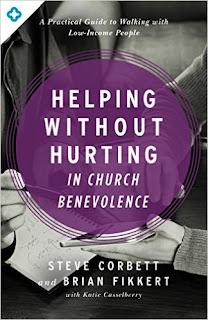
"Helping Without Hurting in Church Benevolence" (Steve Corbett and Brian Fikkert)

TITLE: Helping Without Hurting in Church Benevolence: A Practical Guide to Walking with Low-Income People
AUTHOR: Steve Corbett and Brian Fikkert
PUBLISHER: Chicago, IL: Moody Publishers, 2015, (160 pages).

What do we do when a jobless man enters our church doors asking for help to pay his rent? How would our church respond when a woman walks into our offices asking if we could help her family pay her utility bills? While we would like to help, how do we differentiate the tricksters from the most needy? Do we have a set of guidelines on how to deal with such situations? Written primarily for churches in the United States and Canada, this book provides some simple principles and concepts to assist Church leaders in setting a benevolence policy. At the same time, the authors are aware that any help must not disempower the ones being helped. The authors are both professors at Covenant College who are keen on helping the needy without hurting them. As a follow up to their previous book, "When Helping Hurts," they seek to remind readers that poverty is a complex problem with no simple solutions. While reminding us not to disempower the needy by mere handouts or doing things for them, Corbett and Fikkert are eager to encourage churches to do more to help the poor and the marginalized. Central to their thought is this: How do we help the lost, the last, and the least without hurting their dignity?


Friday, September 18, 2015

"Don't Call it Love" (Gregory L. Jantz and Tim Clinton)

TITLE: Don't Call It Love: Breaking the Cycle of Relationship Dependency
AUTHOR: Gregory L. Jantz and Tim Clinton
PUBLISHER: Grand Rapids, MI: Revell, 2015, (224 pages).

Relationships are necessary. They are crucial for the proper functioning in society. They form the glue for many. Without them, we are like robots. Relationships are also important. The trouble comes when we misunderstand the proper place of relationships and to over-emphasize its importance. One such problem is codependency. In the words of two medical doctors, it is simply "relationship dependency" that comes about when a person simply cannot function in life without them. Such a person "has difficulty loving or trusting self and needs relationships to provide validation and value."

Right from the start, the five diagnostic questions had me probing things about myself. When talking about ourselves, how difficult can it be to come up with ten words? How many of these words are positive and how many are negative? According to the authors' research, they find that lots of people have way too negative views about themselves. They show us at least twenty "dependent personality traits," such as needing constant reassurance; validation from others; unable to disagree or assert ourselves; jumping to another relationship when one ends; and so on. They guide readers toward a deeper level of understanding of such traits through the recognition of patterns of dependency. Using an "addictive cycle" model, eight phases are identified.

  1. Search: A frantic lookout for someone to grab on to.
  2. Attraction: Believing one can only be secure by clinging on someone, one is drawn to another so as to fill one's emptiness.
  3. Relief: Immediate relief comes when a person is found
  4. Anxiety: Fears start to appear the moment the person does not seem to meet one's expectations
  5. Denial: Adopting all kinds of behaviour just to prove one is not insecure despite the evidence
  6. Escalation: Panic steps in when one sees the relationship waning, resulting in escalation of steps to protect and to cement the relationship
  7. Switching: A move from a I-want-You to a You-Owe-Me. 
  8. Withdrawal: An emotional downward spiral when a relationship is lost. 
Jantz is the founder of the Center for Counseling and Health Resources based in Washington while Clinton is President of the American Association of Christian Counselors. Together they help to clear the decks of addiction and to discover the unhealthy dependency traits. Just like alchoholic addiction, the road to recovery begins with a recognition that such dependency is likened to being addicted to poison, not promise. In the words of Jantz and Clinton, we cannot call it "love." We must take the fears of unhealthy dependency by the horns and face them head on with courage. Boldly face the fears of exposure, emptiness, abandonment, insignificance, rejection, and so on. They point out the link between one's emotional abuse and relationship dependency. They look at how spiritual abuse can also contribute toward such unhealthy dependencies Both physical and spiritual abuse include patterns of manipulation. They also look at the scientific reasons on brain chemistry. After all these essential groundwork, they provide us three steps forward in breaking the relationship dependency cycle.

The first step is to learn about attachment styles to help us move from unhealthy to healthy relationships. The fundamental attachment style is that of a parent-child relationship. The "secure attachment style" is about feeling safe, feeling loved, and being able to trust others. They are secure in who they are. The "ambivalent attachment style" experience inconsistent love at childhood. They are distrusting of others and often seek verification. Constantly on a lookout for love and affection, they may even manipulate others in order to get the love that they want. The "avoidant attachment style" on the other hand wants intimacy but cannot find someone suitable to cling on to. They then adopt the avoidance and the abandonment method. Not only are they unable to find someone to connect with, they grow in being unwilling to do anything about it, and to go solo. The "disorganized attachment style" has no consistent pattern except that they are none of the earlier three styles. They are the catch-all type when they do not fit any of the above. In order to know ourselves better, it is good to see where we fit into these.

The second step is to recognize that the core of healthy relationship dependency is to cultivate the inner man. Loved people love people. We need God. We may fool others but God is not fooled. When we are disillusioned with God, we invariably become disillusioned with people and the things of this world. When the root relationship is mended and reconciled, it sparks the road to recovery. Just being a Christian does not exempt one from unhealthy dependencies on one another. For such relationships is essentially idolatry. We idolize others as the solution to our needs. We idolize ourselves into thinking that the world owe us. In the love of God, we grow out of this spiritual security toward a healthy attachment that loves others and oneself.

The third step is to put everything into practice. With the step of faith, we learn to be honest with ourselves. We begin with our broken selves and to take a snapshot of who we are. We then acknowledge that we cannot help ourselves and to let God rescue us. The "Twelve Weeks to Wellness" plan helps us do just that. I like that list.
  • A weekly prayer list
  • A weekly Scripture passage to illustrate the love and grace of God
  • A weekly statement to affirm our dependency on God
  • A weekly action plan and a "radar of faith"
  • A weekly gratitude list
This book is a reminder that we are not as strong as we may think. Neither are we as weak as we may presume. All of us carry wounds and a past with various states of brokenness. Even our relationships are not perfect. Some of our friends and loved ones no longer want to connect with us. Others cling on to us like glue. With the diagnostic questions in this book, not only can we discover more about ourselves now, we can use it as an opportunity to do periodic flashbacks on our past. Just because we do not feel a certain way now does not mean we will never do so in the future. We are all vulnerable. For people who are desperate for someone to cling onto right now, this book is the life buoy to keep us afloat enough so that we do not drown the one we desire to cling on to. For people who encounter those with manipulative tendencies, it may give them strategies to guard themselves from becoming victims. At the same time, it enables them to understand why certain people behave that way. I would caution anyone from being too quick to jump to conclusion about other people's attachment styles. If needed, seek a professional counselor. Relationships can be very complicated and no Do-It-Yourself book or manual can solve it. Those who feel like they can be a blessing and a healing agent to those in emotional need will do best to ensure they stand on firm foundations in the first place. My prayer is that believers in Christ will find their safety and security in Christ alone. From that position, extend a hand of friendship, with the backing of the Word of God, and the practical strategies available in this book. Who knows, when we recognize the signs of dependency in others, we can become a bridge for God to heal relationships, if necessary, through us.

Rating: 4.5 stars of 5.

conrade

This book is provided to me courtesy of Revell Publishers and Graf-Martin Communications in exchange for an honest review. All opinions offered above are mine unless otherwise stated or implied.

Wednesday, September 16, 2015

"Counterfeit Christianity" (Roger E. Olson)

TITLE: Counterfeit Christianity: The Persistence of Errors in the Church
AUTHOR: Roger E. Olson
PUBLISHER: Nashville, TN: Abingdon Press, 2015, (184 pages).

Where there is truth, there will also be falsehood lurking around. Like the early encounter with the deceiving serpent, Adam and Eve faced trickery right from the start. The only problem is that they succumbed to the temptation and disobeyed God. Since then, heresies, half-truths, and lies have burdened the human race with grief and pain. Some Christians prefer not to talk about heresies, believing that as long as truth is studied, they will be alright. Begging to differ, Roger E. Olson, a Foy Valentine Professor of Christian Theology of Ethics at George W. Truett Theological Seminary of Baylor University asserts that both heresies and truths need to be studied. That is why he devotes a chapter each to describe what heresies are and what orthodoxy means. We need to study heresies because of 1) Heresy exists; 2) It is important for discernment; 3) It helps us learn what ways they twist or deny orthodoxy; 4) It is important for Christian discipleship that helps us defend the truth; 5) It protects the Church; 6) It enables us to understand and appreciate sound doctrine. On criticisms at the title of this book, Olson defends it by saying that it exists, which is why discernment is needed. Like the existence of truth. If truth exists, heresy will also come about. If there is no truth, heresies will self-destruct as it has nothing to bend or corrupt. In Olson's words, "heresy depends on orthodoxy." Heresies covered in this book include not only the historical ones that go against the great tenets of Christian faith, but also the more subtle postmodern ones. Olson references heresy as the "mother of orthodoxy" because it was due to the existence of heresies that forces the Early Christian leaders to write clear statements of orthodox faith through the creeds and defenses of the truth. With the explicit statements of faith, heresies are shunted away as errors to beware of.


Monday, September 14, 2015

"Change of Heart" (Jeanne Bishop)

TITLE: Change of Heart: Justice, Mercy, and Making Peace with My Sister's Killer
AUTHOR: Jeanne Bishop
PUBLISHER: Louisville, KY: Westminster John Knox Press, 2015, (208 pages).

It is very easy to say goodbye to a distant relationship. It is also very easy to apologize for small matters. What if forgiveness is more than the word "sorry?" What if it comes with a huge cost? What if the someone before you have brutally taken away someone very dear to you? Worse, what if that someone had cruelly murdered one's younger sister, her husband, and their unborn child 23 years ago? How can one practice forgiveness amid a climate of deep evil?

If one does not know what is evil, think about a man pulling a trigger on a husband pleading for his life. Think of a pregnant woman receiving not just one but two bullets to her body: One for her and one for her unborn baby. Think of a young family who had so much future for them only to be senselessly taken away by a deranged killer. Why didn't God prevent the murders?


Friday, September 11, 2015

"Stronger" (Clayton King)

TITLE: Stronger: How Hard Times Reveal God's Greatest Power
AUTHOR: Clayton King
PUBLISHER: Grand Rapids, MI: Baker Books, 2015, (240 pages).

One of my favourite songs is "Give Thanks." When it comes to the chorus, there is a sense of deep comfort to sing: "And now, let the weak say I am strong; let the poor say I am rich; because of what the Lord has done... Give thanks."

When the tough times comes, the tough gets going. Hard times can beat us down, but they can also reveal God's strength in us. This is the essence of this book, written by founder and president of Clayton King Ministries. Also a teaching pastor at NewSpring Church, King lives through really difficult times. One such time is having to deal with nine deaths in his family, and him giving a eulogy for every one of them. He believes in what Tozer said that it takes one who had been deeply wounded to be able to be used by God in demonstrating the deep love of God and the wide extent of grace. For King, hard times may make him unhappy, but in God's grace, they can make him holy. If there is no death, there is no resurrection. If there is no cross, there is no empty tomb. If there is no crisis, there is a lack of opportunity to demonstrate God's power over all. This is not to say that crisis is a tool for God's ends. It is to say that regardless of what happens to us, it is the Lord who always holds up his end of the bargain, even when we feel down and out. Things that break him are the very things that God uses to draw the suffering closer to himself. Ten chapters demonstrate what strength in God means for the author.


Wednesday, September 9, 2015

"This Strange and Sacred Scripture" (Matthew Richard Schlimm)

TITLE: This Strange and Sacred Scripture: Wrestling with the Old Testament and Its Oddities
AUTHOR: Matthew Richard Schlimm
PUBLISHER: Grand Rapids, MI: Baker Academic, 2015, (272 pages).

Some people call it the "Hebrew Bible." Others call it the "First Testament." Unfortunately, both usages have problems. Not all the books were written in Hebrew because there were some whose origins were Aramaic. Calling it the "First" testament is also incorrect as it may cause confusions about origins among many. In order to avoid calling it anything that would place it under the same category of the Book of Mormons, author and Associate Professor of Old Testament at the University of Dubuque Theological Seminary chooses to keep the title "Old Testament" and to help us explore and to wrestle with issues. Issues like how modern minds can interact with odd events in the OT. How do we make of:
  • A Talking snake?
  • Abraham having multiple wives?
  • Lot's incest relationships with his daughters?
  • Why is the eating of pork forbidden?
  • Violence and warfare?
  • Why God judges Israel and also loves the Jewish people?
  • Harsh judgments and killings in the Old Testament?
  • Difficult ethical issues?

Monday, September 7, 2015

"The Atheist Who Didn't Exist" (Andy Bannister)

TITLE: The Atheist Who Didn't Exist: Or the Dreadful Consequences of Bad Arguments
AUTHOR: Andy Bannister
PUBLISHER: Grand Rapids, MI: Kregel Publications, 2015, (240 pages).

Why is atheism increasingly being portrayed as something “scientific, contemporary, and for those with brains” while Christians being see as “stuffy, outmoded, and irrational?” Why do people buy into the arguments of New Atheists lock, stock, and barrel? Are they right in their assessment? Are they fair in their dismissive stances? Have they become victims of bad argumentation by the New Atheists? These questions motivated Andy Bannister to action not only to join the famous apologist organization, RZIM, but also to write this book that puts the arguments in proper perspective. He deals with each bad argument and shows readers exactly why they are bad and frivolous.

First, he argues that we need to question the sound bites atheists put forth, such as: “There’s probably no God. Now stop worrying and enjoy your life.” On what basis do people assert that? He points out that the alternative secular, atheistic, and socialist models have also proven fatal, like the Pol Pots, the Mao Zedongs, and the Stanlins. Bannister tries to prove that atheism must be sustained by rational and appropriate arguments. Don’t let the bus of New Atheism drive you away with their simplistic arguments that looks catchy on the outside but hollow on the inside. Second, he asserts that atheism is actually a belief system as not taking a position of religion is actually a position in itself. Bannister points out that atheism “looks like a belief, and behaves like a belief” and that a “simple disbelief in God does not make one non-religious.”

Friday, September 4, 2015

"The Sky Is Falling, the Church is Dying, and Other False Alarms" (Ted A. Campbell)

TITLE: The Sky Is Falling, the Church Is Dying, and Other False Alarms
AUTHOR: Ted A. Campbell
PUBLISHER: Nashville, TN: Abingdon Press, 2015, (116 pages).

There is a reason why people keep saying: "No news is good news." Just open up the daily newspapers or the headline news and you should find out a few more reasons. Simply put, there is so much bad news reporting out there, that not hearing anything about it is in itself a good news already. Ironically, while the Church is not of this world, it often seems like doomsday prophecies and bad news continue to plague the state of the Church. Even among Christians, it is common to hear the following bad news:
  • The Church is dying
  • The numbers are dwindling
  • The spiritual vitality of churches are deteriorating
  • Many Christians are discouraged, down, and disillusioned
  • ..
On and on, it seems so ironical that the very Church that is supposed to preach the good news is herself swimming in the pools of bad news. Ted A. Campbell bucks this trend by suggesting that all these bad news statements are simply false alarms. They are based on old paradigms. They rely on past expectations that are projected unwittingly into the future unrealistically. While the Church is not the same institution it once was, that does not mean the Church is going to go away anytime soon. It is not a deteriorating kind of growth. It is simply a different kind of growth. It is not about Christianity declining in the West. It is about new forms of Christianity rising in other parts of the world. The West simply needs to catch the wave. Rather than to say people are disinterested in religion or Church, it is more accurate to acknowledge that people are still interested in faith matters, just not in the old ways we used to work. 


Wednesday, September 2, 2015

"True Worshipers" (Bob Kauflin)

TITLE: True Worshipers: Seeking What Matters to God
AUTHOR: Bob Kauflin
PUBLISHER: Wheaton, IL: Crossway, 2015 (176 pages).

If you attend a Church regularly, you will be familiar with the overall pattern of a Sunday Church service. There is a welcome or a call to worship. Then there is the singing, sometimes called worship, other times called singspiration. This is followed by a congregational prayer, announcements, or presentations before the sermon. The benediction or the closing song occur at the end of the service. For people who think worship is just about going to Church, or singing songs, or performing rituals and acts of religious devotions, think again. Worship is more than all of that combined. According to author Bob Kauflin, worship is about seeking after God and what matters to God. We worship God because God is worthy of our worship.

Kauflin is worship leader and Church planter, who desires to play a role in equipping leaders in the worship arena. He has previously served with a contemporary Christian band called GLAD before leaving to join the Sovereign Grace Ministries. He is songwriter, speaker, and also a worshiper. In this book, he shares from his heart his experience and heart for leading people into deeper and more meaningful worship. He traces back to his early years and observes how worship has become "a movement, a phenomenon, and in many places, an industry." The trouble is, worship is much more than that. Our chief end in life is worshiping God. He lists down some of the problems with modern day worship:
  • How do we worship when our daily experiences do not reflect God's goodness?
  • What do we do when our Sunday worship does not seem to bring life?
  • What happens when there are conflicts over worship styles despite everyone saying they honour God?
  • Why is it that worship does not seem to be relevant to our daily lives?

Monday, August 31, 2015

"Into the Fray" (Matt Mikalatos)

TITLE: Into the Fray: How Jesus's Followers Turn the World Upside Down
AUTHOR: Matt Mikalatos
PUBLISHER: Grand Rapids, MI: Baker Books, 2015, (224 pages).

The Bible is often referred to as the Living Word. For centuries, believers have testified the power of the gospel and the way God's Word speaks to us so profoundly with timeless principles and timely reminders. With the help of theologians, language experts, and scholars, the Bible has been translated in various ways. The more conservative quarters typically prefer literal word for word translations. The more liberal ones throw their weight behind paraphrases and modern ways of narrating the Word of God. A sizeable group adopts dynamic equivalent or balanced approaches. With changing cultural preferences, there have been several initiatives to update the way we read the Bible: Drama and story telling. This method is increasingly the approach taken by recent writers like Ruth Tucker's retelling of selected stories through "Dynamic Women of the Bible," or the new Bible translation, THE VOICE. This book is another addition to this genre of storytelling. Using the book of Acts as the source, Oregon author Matt Mikalatos tells the story of the Early Church, how it spreads from Jerusalem to the outermost parts of the earth, to tell the ancient story using modern language, cultural adaptations, and everyday symbols. It is a fresh re-telling of Acts filled with imagination, combined with allegory and dramatization that brings the modern reader back to the first century. In sharing the story of Acts in this manner, it is hoped that readers will be able to learn how to tell the story of the gospel in kind. Each chapter begins with a modern scenario to parallel a significant event in Acts. Fire is used as a metaphor for the Holy Spirit coming at Pentecost Day. The "earthquake weather" is a metephor to describe the urgency of sharing the gospel as experienced by the disciples being scattered by persecution. The author even has a chapter on the effeminate foreigner that talks about Philip the Eunuch, and how through the Holy Spirit was able to come into fellowship with the community of faith. The second half of the book deals with the lives of Peter and Paul, just like the Book of Acts in the Bible.


Friday, August 28, 2015

"The Message of the General Epistles in the History of Redemption" (Brandon D. Crowe)

TITLE: The Message of the General Epistles in the History of Redemption: Wisdom from James, Peter, John, and Jude
AUTHOR: Brandon D. Crowe
PUBLISHER: Phillipsburg, NJ: P and R Publishing, 2015, (240 pages).

Many people study the New Testament more than the Old Testament. They regularly go through the gospels. They like the theological depth in the Pauline epistles. They appreciate the story of the Early Church in Acts. They even talk a lot about the end times in Revelation. Relatively speaking, the general epistles are not studied as much. Sometimes called the "catholic epistles," these letters are noted for being addressed to a general audience rather than a specific one like Paul to the Romans, Corinthians, or Ephesians. Four apostles wrote the seven general epistles. Each of them carry common themes with unique emphases. According to Brandon Crowe, Assistant Professor of New Testament at Westminster Theological Seminary (Philadelphia), the General Epistles are more relevant to us today than most of us would have thought. It calls us toward holiness. It urges us to hold fast to the importance of doctrine. It affirms the moral behaviour so essential in a world that seems to throw the baby of morality out with the bathwater of undesirable religion. The General Epistles confront challenges head on without lengthy treatises. Crowe claims that there are difficult parts of the letters that make it particularly difficult to study. James's teachings on works and faith created lots of disagreements among theologians on whether the letter ought to be in the canon or not. 1 Peter 3:19-20 contains a mysterious revelation of Christ preaching to the spirits in prison. John points out the strange argument that if we are in Christ, we cannot sin. How is it that we will not sin? Another common theme is salvation and redemption in Christ.  If the gospel is distorted, redemption is also distorted. That is why many of these letters attack the heresies and false prophets. Using an "indicative-imperative" structure to explain the relevance of these letters, Crowe states simply that the "indicative" deals with the saving work of Christ while the "imperative" details what we need to do as a result of being redeemed. More importantly, the indicative must come first, followed by the imperative. Moreover, both the indicative and the imperative must be held together, just like theory and practice must work together. The way the author deals with each of the General Epistles is interesting. Crowe uses the alliterative terms: Scallywags, Scoffers, and Schisms to organize the book.


Wednesday, August 26, 2015

"Encountering God in the Tyrannical Texts" (Frances Taylor Gench)

TITLE: Encountering God in Tyrannical Texts: Reflections on Paul, Women, and the Authority of Scripture
AUTHOR: Frances Taylor Gerich
PUBLISHER: Louisville, KY: Westminster John Knox Press, 2015, (212 pages).

The Bible is Truth. The Truth shall set us free. If that is so, why are there still passages in the Bible that appear to "oppress" or create controversies? Why is it that while there are passages on love, and the equal treatment of one another, there are also passages that seem to prefer one gender over the other, especially on the subject of women? Called "tyrannical texts," there are passages that stump and confuse rather than liberate and clarify, asserts author Frances Taylor Gench. As a Herbert Worth and Annie H. Jackson Professor of Biblical Interpretation at Union Presbyterian Seminary, Gench is particularly interested in the gospels, women in the biblical world, and interpretation of the ancient texts with an awareness of the contexts of today. The following key questions sum up her purpose for writing this book.
  1. How can one honour the authority of Scripture without rejecting the teachings in the "tyrannical texts?"
  2. What kind of alternative interpretations can one make?
  3. How can the ancient Scriptures bring us closer toward an encounter with God?

Monday, August 24, 2015

"Prayers for New Brides" (Jennifer O. White)

TITLE: Prayers for New Brides: Putting on God's Armor After the Wedding Dress
AUTHOR: Jennifer O. White
PUBLISHER: Green Forest, AR: New Leaf Press, 2014, (240 pages).

The fairy tales say it all. Many of them conclude with the handsome prince marrying the beautiful princess, and that famous phrase: "And they live happily ever after." Fact or fiction? Fiction of course, one may say. Why? Just look at the divorce statistics and a deteriorating respect for the marriage institution. There are threats not only to the institution of marriage but also to those already married, or contemplating getting married. How do we deal with the fears of marital conflicts? What are the pitfalls to be aware of? What about the prevention of divorces? What if couples can begin strong and their marriages remain intact throughout? Instead of waiting for the threats to come, this book arms readers, in particular brides, with the weapons of prayer, to fight all kinds of obstacles to a healthy marriage. Right from the start, author and speaker, Jennifer White launches with a call to battle. Marriage is not for sissies. It is for warriors in prayer. It is love on bended knees to God. It is also a book written with painful experiences. The author's first marriage collapsed. In wanting to protect her second marriage, she arms herself to the teeth with prayer, convinced that marriage is a battle worth fighting for. Learning from her failed first marriage, she enters her second with a determination not to let down her guard. The naiveness of Adam and Eve could have been avoided if they had not underestimated the power of temptation.

The book is written in two parts. The first part is before the wedding and the second part is after the wedding. In Part One, we read of the nine steps to prepare for battle and to be ready to defend the marriage. First, recognize the significance of marriage as not something "ever after" but earnestly sought after. It is that determination to honour God whatever it takes to elevate God's Name and Glory. Second, we are loved for who we are, not what we touch ourselves up to be. Third, every marriage has an enemy: the tempter, the deceiver, the destroyer. See the bigger picture so as not to fall prey to the devil. Fourth, begin with victory and continue with that spiritual stance in Christ. Let God be the Provider and the Protector. Fifth, fight for the prize of truth. Use the spiritual weapons provided by God. Sixth, expose the enemy with the help of the Word of God. Seventh, remember that God fights for us. Eighth, plan for the victory celebration when entering the wedding day. Be determined to let the faith in Christ lead the way. Ninth, show up as a soldier for Christ ready to defend the marriage and to attack the evil one. Then, like preparing the dress, White leads us through the Armour of God passage to dress ourselves in preparing for battle. Together with the posture of courage and faith, supplemented by prayer, we will be ready.

Part Two prepares for victory via basic training, partnering with God, and guarding the marriage. White shows readers the basics of what it means to be a "forever bride."  She provides many tips on how to be trained to honour the marriage and spouse; to see the marriage relationship from the eyes of God. It means learning to respect the husband. She shows us how to partner with God to defend with love for the husband and becoming the best spouse possible. Other aspects of protecting the marriage include being constantly nourished in the Word of God; being peaceable at home; learning emotional truths of each other; learning to pray; and many more. Toward the end, there is a chapter on abuse in marriage, where White gives some advice on what to do about it.

Written by a wife for women, this collection of prayers help brides arm their marriages with prayer. Honestly, there is a strong overture of warfare and aggressive battle language that emanates throughout the book. It makes one wonder if it has been overdone. Marriage is precious and delicate. I suspect the intensity of the language of warfare is tied to the author's determination to learn from the missteps of her first marriage and apply the lessons to her second. While the descriptions in each chapter may be too overwhelming in terms of fighting and battling, I find the "prayer prompts" particularly helpful. That explains the title of the book. The prayers are the highlights, not the battle cries. For in prayer, we let God do the fighting for us, while we ready ourselves to respond to the promptings of God. The book cover is captivating as it summarizes in one picture what the book is about: Defending our marriages, in particularly, for the wife to declare her determination to protect the marriage with the tools as shown in Scripture.

The danger for many of us is that we are not urgent enough about protecting our marriages. We may not believe in fairy-tale endings, but our lack of attention to the vulnerability of marriages be become our Achilles's heel. With this book, we are reminded once again that marriage is not to be taken for granted. If this book can stir a desire to protect and to be ready to defend our marriages against the temptations of evil, it would have worth every cent.

Rating: 4 stars of 5.

conrade

This book is provided to me courtesy of New Leaf Press and Cross-Focused-Reviews in exchange for an honest review. All opinions offered above are mine unless otherwise stated or implied.

Friday, August 21, 2015

"Understanding Prophecy" (Alan S. Bandy and Benjamin L. Merkle)

TITLE: Understanding Prophecy: A Biblical-Theological Approach
AUTHOR: Alan S. Bandy and Benjamin L. Merkle
PUBLISHER: Grand Rapids, MI: Kregel Academic, 2015, (272 pages).

What is prophecy? Is it only something limited to the biblical prophets? Do prophets still exist today? What do we make of the unconditional, conditional, and unfulfilled prophecies in the Bible? How do we understand prophecy in the first place? In this book, two authors, one holding a Premillennial disposition and another an Amillennial perspective come together to describe the common themes in interpreting biblical prophecy. At the same time, their diverse background allows them to interact constructively without necessarily compromise their respective theological stands. Alan Bandy is Professor of New Testament at Oklahoman Baptist University while Benjamin Merkle is Professor of New Testament and Greek at Southeastern Baptist Theological Seminary.

Arranged in three parts, the book covers the basics and keys of understanding biblical prophecy (Part 1); followed by an application on Old Testament prophecies (Part 2); and the same for the New Testament (Part 3).  Closely related to prophecy is the word "eschatology" which is often perceived as foretelling the future. Readers will learn how the word can be nuanced in at least seven ways: Individual; Historical; Consistent; Realized; Existential; Comprehensive; and Teleological. For the authors, they use "eschatology" as an all-encompassing term to denote the "cosmic, spiritual, and historical realities" fulfilled in the Person of Jesus Christ. Prophecy needs to be understood within the confines of the Bible and the redemptive narrative. It is to be understood in terms of Gospel-Centric and Christo-Centric.  Most important is the need to read prophecy with "contextual sensitivity to the history, literature, and theology of an individual writer, book, and passage." This is then interpreted in line with the larger biblical narrative. Prophecy is also understood as "progressive revelation" where certain things were partially revealed to the people in the old Testament, and fully realized in the future. One use is to see the New Testament as fulfillment of the Old Testament prophecies. Readers are cautioned not to use the Bible as proof texts of some precise prediction, just like the Left Behind series of books and film. Others avoid prophecy totally and lose sight of the role of prophecy altogether. With a biblical, theological, and christological approach, we will be able to approach biblical prophecies with expectancy and much encouragement of God's purpose for us.