About This Blog

Thursday, November 26, 2020

"Sanctuary" (Heidi B. Neumark)

TITLE: Sanctuary: Being Christian in the Wake of Trump
AUTHOR: Heidi B. Neumark
PUBLISHER: Grand Rapids, MI: William B Eerdmans, 2020, (240 pages).

No matter where we go or what we read, one thing is for sure. The current President of the United States cuts a controversial figure. Just mentioning his name could easily stoke all kinds of emotions. It is common knowledge that Trump's rise to the top post in American politics is credited largely to the white evangelical support. If Trump is truly Christian, and if his support base is what they claim to be, surely, our society would be better off from a biblical standpoint, right? Hard to say. In fact, it could be worse. In this no-holds-barred critique of the POTUS, and how the age of Trump is making society worse, author and pastor Heidi Neumark speaks out boldly against the ills of power politics. She talks about how the age of Trump resembles the age of Herod in terms of fear instilled by the powers on common citizens. In a sharp rebuke of one of Trump's most controversial policies, she writes: "Jesus welcomes children and Trump locks them in cages." This was with reference to the forced removal of children from their parents during the "zero tolerance" immigration policy in 2018. Neumark was appalled at the arrogance of Trump who boasted about himself being a "great Christian." This boasts happen even as many low-income people suffer with livelihood issues. Big businesses are preferred to small time shops. Trump's "great relationship with the blacks" is contrasted with his apparent refusal to distance himself from white supremacy groups. With a whole list of dissatisfaction with the current POTUS, Neumark critiques his policies (and his tweets!) from the perspectives of the vulnerable and marginalized groups in America. Fortunately, this is not the only thing she does. At the end of each chapter, she offers up a plea to be heard, and for the disenfranchised to be heard. People need a sanctuary from all the injustice and hurts happening around society at large. Even if problems have no immediate solution, at least show some empathy and understanding. 

Friday, November 20, 2020

"Charitable Writing" (Richard Hughes Gibson and James Edward Beitler III)

TITLE: Charitable Writing: Cultivating Virtue Through Our Words
AUTHOR: Richard Hughes Gibson and James Edward Beitler III
PUBLISHER: Downers Grove, IL: InterVarsity Press, 2020, (248 pages).

We have been told that love is the greatest. The Bible says so. Our culture also asserts that. We all believe so. We are taught to love our neighbour. We all want love but the truth is, love is often more easily said than done. This applies equally to the field of writing. Authors Richard Gibson and James Beitler helps us understand what it means to apply the expression of love in our writings, via charitable writing. Being a Christian is not just about speaking or living out the good news in public. It is also in how we write and express our love in writing. It is also a way of spiritual formation. It is discipleship. It is using our writing to paint the art of love. The central theme of this book is that "charitable writers listen humbly, argue lovingly, and keep the time of writing hopefully." Without going into the details of how to write or not to write, the focus is on the "big picture," to imagine, to relate, to respond, and how to express our neighbourliness in our writing. In other words, we write not for the sake of writing but for the purpose of showing we care and we love. These can be done through applying "spiritual threshold concepts," which are concepts to help integrate academic disciplines, including the discipline of writing. They engage the wisdom of ancient as well as modern writers to help us along. Through imitation, we learn from the practitioners in the past. Through practice, we apply the process over and over again to solidify the habit. This dual rhythm of imitation and practice are incorporated into the three key parts of the book. I appreciate how the authors remind us once again that writing is not only social and spiritual, it is also communal. The best way to integrate all of these is to begin with humility. Using art and images to supplement this manual about writing charitably, the authors show us the significance of our humble words. It begins with "humble listening." This is most appropriate because charity begins with humility. Being charitable needs to begin with us receiving charity from others. We are reminded that while most writers would write alone, there are wise companions that we can tap upon. Nicolas Frances calls writing a social activity. We cite others. We build upon the works of others. There is also the spiritual component to it when writers pray before writing. 

Thursday, November 19, 2020

"Dwell" (Dexterity Books Editorial)

TITLE: Dwell: Celebrating the Arrival of Advent at Home
AUTHOR: Dexterity Books Editorial
PUBLISHER: Nashville, TN: Dexterity Press, 2020, (100 pages).

The year 2020 has been spectacularly dampened by the coronavirus.  This pandemic has affected international trade and many activities that we have come to take for granted. With lockdowns, quarantines, and restricted movement controls implemented in many countries, many of us are pretty much stuck at home, practicing social distancing and non-contact measures. Churches across the nation are also in a state of flux, not knowing when congregations could return to their buildings for a regular Church service. This is especially so for the Advent season, a traditionally busy time for Christians and Church programs. This makes celebrating the Advent at home particularly poignant, both symbolically and literally. The editors of Dexterity Books have come together to expand on the meaning of home through various rooms familiar to us. There is the Living Room where most of the family would be gathering in. There is the Dining Room where we share a meal together. There is the Kitchen where food is being prepared and served. There is the Activity Room for fun and leisure. Finally, there is the open-ended Christmas Space where we can simply share about what it means to have that room for Jesus. Regardless of which room we are in, there are five basic postures that we can take. In Anticipation of the arrival of Jesus, we could go back to the Bible to reflect on how the ancients of old anticipate the coming of the Messiah, a Saviour, a Deliverer, the LORD Himself. There are many references to the ARRIVAL of the Saviour to point us to the coming once again. While anticipation is about preparing the heart emotionally, the arrival could be construed as preparing for action. Then there is the AWAKENING posture where we express gratitude for people around us. We become more conscious of those living together under one roof. ANOINTING is about sharing. It is about learning the meaning of calling and to be set apart for a particular purpose. We learn once again the reason why Jesus came to us in the first place. Finally, the ADORATION celebrates Christmas Day, where we would encourage everyone to come let us adore Him. In each of the five Advent Weeks, we get to celebrate and practice one particular aspect of the 5As of Advent@Home. This common cycle gives us a grasp of the essence of the Advent, and we get to practice all of them in every room of the house. Written like a devotional, each days starts off with a biblical thought, a reflection of the meaning of the room, and how Jesus comes to us where we live. The chapter closes with a brief prayer and a follow-up activity sheet for the family. 

Thursday, November 12, 2020

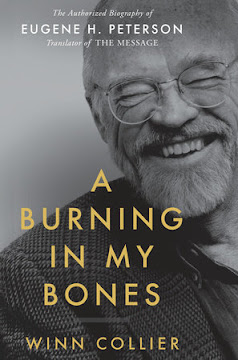
"A Burning in My Bones" (Winn Collier)

TITLE: A Burning in My Bones: The Authorized Biography of Eugene Peterson, Translator of The Message
AUTHOR: Winn Collier
PUBLISHER: New York, NY: Waterbrook, 2020, (368 pages).

This is a biography of one of evangelicalism's best known authors, Eugene Peterson. For his beloved Church, he will always be their beloved pastor. For Regent College students, he will be remembered as a quiet, patient, and wise teacher. In the literature world, he is respected for his ability to weave words into meaning and nuance the words into spectrum of meanings. For many leaders and professors, he is an authority in spiritual theology. For the rest of the world, he is the translator of the popular paraphrase of the Bible: THE MESSAGE. Before his death in 2018, author Winn Collier was given permission to write an authorized biography about Eugene Peterson. Given free access to Peterson's journals, papers, letters, manuscripts, as well as personal interviews, Collier had unprecedented insight into the personal life of Eugene. Most of all, it was the way that he knew God so personally that we would want to learn about. 

The book is written in three parts. Part One describes the early years of Eugene's Norwegian grandparents, Andre and Juditta Odegard Hoiland moving to America in 1902. Flathead Valley in Montana was where they eventually moved to. It was where Eugene was born to Evelyn and Don. His creativity and imagination were credit to his mother. If Eugene had learned about creativity and contemplation from his mother, he learned about companionship and community from his father. He experienced what it meant to lose a family member at a tender young age when his 2-year old sister Lois died of pneumonia. Knowing the deeper connections to Eugene's family helps us appreciate his background and how it shapes his spirituality. Then there was his time in Seattle Pacific University where he rubbed shoulders with people of different denominational backgrounds. He learned the importance of manageable size from his early experience as President of a student body. Hence, he developed this principle of not pastoring a church larger than 300 people. He refuses to put himself up on a pedestal, but chooses the humble path by identifying himself with the rest of us, that he too like many have lived haphazard lives of discovery rather than a clearly defined path. Sometimes, the discovery has to do with what one does not want to do instead of one wants to do. This was Eugene's posture when he opts for ministry instead of getting involved in the Korean war. He shares about what it meant to be a butcher's son and subsequently a butcher's life. It was not to be as his direction shifts again after much rejection from existing Church denominations. He went to Bible School hoping to do some teaching after that. Gradually, the Bible became less of a book to be studied but an invitation to a conversation with God. He learned ministry from George Buttrick, philosophy from Soren Kierkegaard, prayer from his Pentecostal roots, and theology from Karl Barth. He eventually became ordained in the Presbyterian Church USA. He studied at New York Theological Seminary and continued with a doctoral program at John Hopkins University, focusing on semitic languages. He was blessed to study under the supervision of Bill Albright. However, he did not complete his dissertation as he decided to go into full time pastoral work instead. 

Tuesday, November 10, 2020

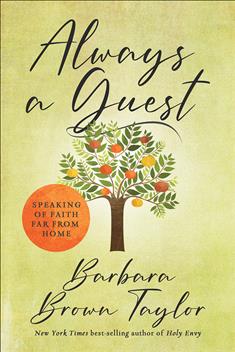
"Always a Guest" (Barbara Brown Taylor)

TITLE: Always a Guest: Speaking of Faith Far from Home
AUTHOR: Barbara Brown Taylor
PUBLISHER: Louisville, KY: Westminster John Knox Press, 2020, (256 pages).

Many churches invite guest preachers to their Sunday pulpit time for different reasons. It could be giving the regular pastor a break. It could also be due to a specialized topic that the congregation needed to hear in a specific moment of time. Sometimes, a famous preacher might be in town also available. Many churches would pounce on the opportunity to listen to experienced clergy and well-known preachers. Barbara Brown Taylor is one such person that I find churches should not miss out. As an Episcopal priest who had stepped down from her Church in order to teach, while she may not be preaching at her regular Church, she has been guest preaching in other places like seminaries, colleges, community groups, as well as churches from different denominations. In this book, Taylor shares her thoughts and experiences about what it means to be doing guest preaching and hones her literary creativity in a constantly changing congregational environment. This collection of sermons is a gift to the rest of the world. Not only does Taylor stay faithful to the Scripture, she expounds it in a way that is very much herself. On her website, she calls herself as one who dares to say things that most of us are not "supposed to say." Things like learning to see the ordinary as beautiful. The world famously glorifies the pretty aesthetics but fails to see from God's perspective, that all of God's creation is good. Our problem is sin, which has marred the way we see the world. She looks at political anxiety in society and carefully redirects the problem back to the nature of human unneighborliness.

Tuesday, November 3, 2020

"Gospel-Centered Marriage Counseling" (Robert W. Kellemen)

TITLE: Gospel-Centered Marriage Counseling
AUTHOR: Robert W. Kellemen
PUBLISHER: Grand Rapids, MI: Baker Books, 2020, (272 pages).

For many people, marriage is about love between two persons. For Christians, marriage is indeed about love, but with an additional belief, that marriage is about being united before God. What is marriage from God's perspective? Why must we treat marriage counseling as based on the gospel of grace? Theologically and practically, what does it mean? Unlike books that dish out advice for married couples, this book is about equipping marriage counselors to help married couples. For author and pastor Robert Kellemen, marriage counseling is about helping couples "see their marriage from a larger set of eyes." In fact, he insists that for Christians, it is a no-brainer that marriages are essentially meant to be gospel-centered. So, the author gives us 22 "counseling relational competencies." He suggests that the book be used in a "small group lab setting." For couples, focus not on "solutions" but on "soul-utions." The emphasis is about forming the inner soul. A marriage with transformed inner selves will be gospel-centered. Kellemen tells us the three common approaches to marriage counseling: Family systems; narrative therapy; and solution-focused therapy. All of them have in common the need to understand people; to diagnose the problem; and then to identify the solution needed. Kellemen aims to go a step further than all of these by pointing us to "gospel connection." This is done through facilitating "gospel conversations." 

Friday, October 30, 2020

"Communicating with Grace and Virtue" (Quentin J Schultze)

TITLE: Communicating with Grace and Virtue: Learning to Listen, Speak, Text, and Interact as a Christian
AUTHOR: Quentin J Schultze
PUBLISHER: Grand Rapids, MI: Baker Academic, 2020, (144 pages).


Communications seem to be an evergreen topic for discussion. Many schools and universities continue to offer courses that specialize in both the art and science of communications. Books continue to be written about the ways and means to communicate even as we deal with cultural and technological changes. Yet, one thing is to be expected. It is only a matter of time before we encounter difficulties in communications. In other words, there is no way we can separate life from conflicts. Being people from different backgrounds essentially mean that we have to deal with differences sooner or later. Even the best types of relationships require a fair bit of knowledge about conflict management. These include marriages, relationships with office colleagues, social circles, Church communities, online correspondences, and increasingly on social media. Enters the call toward "servant communication" which author and professor Quentin Schultze defines as "a way of using God’s gift of communication to love God and our neighbors as ourselves (Mark 12:30–31)." It begins with a willingness to accept the challenge to practice such communications as a way to witness grace and love. At the heart of this virtue is the practice of gratitude. The more grateful we are, the more able we are to practice graciousness in our communications. Christians are called to honour God in all that they do. Schultze knows the challenges of doing that. Thus, he guides us through some barriers, to point out how sin has made us broken, which not only affects us, but also the way we communicate. Here, the author lays out bare his past brokenness to demonstrate that he knows personally what it means to be part of a broken relationship. 

Tuesday, October 27, 2020

"Born to Wonder" (Alister McGrath)

TITLE: Born to Wonder: Exploring Our Deepest Questions-- Why Are We Here and Why Does It Matter?
AUTHOR: Alister McGrath
PUBLISHER: Carol Stream, IL: Tyndale Momentum, 2020, (320 pages).

What is life all about?  Why are we here? These questions of life and pondering of mysteries are part of our human makeup. Indeed, we learn more about life through questions instead of answers. In this book, author and professor Alister McGrath brings us through a couple of questions to wonder about ourselves, about life, and about our future. He tackles questions like:
  • Who are we? What are we? What do we mean?
  • Why we need more than mere facts?
  • Why it is important to consider alternative perspectives?
  • Is meaning a discovery or an invention?
  • Why is there a loss in wonder in a world of disenchantment?
  • Is our existence meaningful or meaningless?
  • What's wrong with us?
  • What is the fate of humanity?
  • What does it mean to be human?
  • ...

Thursday, October 22, 2020

"God and the Pandemic" (N. T. Wright)

TITLE: God and the Pandemic: A Christian Reflection on the Coronavirus and Its Aftermath
AUTHOR: N. T. Wright
PUBLISHER: Grand Rapids, MI: Zondervan, 2020, (96 pages).

The year 2020 will be best remembered as the year of the Covid-19 pandemic. One of the earliest books reflecting on a Christian response is John Piper's "Coronavirus and Christ." In that book, Piper offers six answers; that we should remember God is still at work; that he rules; that we ought to repent while we can; and that we should not lose hope. Our hope is not in odds or in healing but in Christ alone. However, as a reader, I sense that book seems to be written in a hurry to be published at the start of a worldwide lockdown earlier this year. 

Instead of asking why, author and theologian NT Wright helps us deal with the question of what we could do. Like how Christ put his own life on the line for us, we ought to find ways to help one another as much as we could. Wright puts it very well that we ought not to be stoics just to fit into the system. Neither should we be like Epicureans who just accept the random things in life and just enjoy whatever we have left. He also cautions us against taking the platonic lifestyle that seems to elevate the afterlife over and above our present world. Worse, some people would even jump to conclusions to play the blame game. The two superpowers are famously at each other's throats with regard to assigning blame regarding the virus origins. Some would even claim the pandemic as the Armageddon. This book is to offer a Christian alternative to such philosophies that many of us practice unwittingly. Like any good biblical scholar, Wright begins with the Word of God. 

Monday, October 19, 2020

"For the Body" (Timothy C. Tennent)

TITLE: For the Body: Recovering a Theology of Gender, Sexuality, and the Human Body (Seedbed Resources)
AUTHOR: Timothy C. Tennent
PUBLISHER: Grand Rapids, MI: Zondervan, 2020, (272 pages).

The famous author, CS Lewis (GK Chesterton) was once asked by a newspaper publisher to write about: "What's wrong with the world?" Chesterton wrote back with a witty reply: "I am." In one short crisp message, he has managed to show us the real problem with the world: Sin. Fast forward to our modern age, if we were to answer the same question, what would that be? If posed to author and professor Timothy Tennent, it might be due to our failure to understand or to articulate a holistic view of the human body. In a sexualized culture, we need to recover the original purpose of what it means to be human. We cannot simply put out fires of cultural aberrations without dealing with the cause of the fires. We cannot simply try to bridge the divide between the conservatives and the progressives just by dealing with the morality and social justice matters respectively. From abortion rights to same-sex marriage; gender identities to political disputes; our world will continue to be torn apart as long as people fail to have a positive vision of the purpose of the human body. We need a proper theology of the body to help the Church lead the way in addressing a wide range of issues in our culture. Tennent shows us how to do just that in three ways. First, he describes the seven key building blocks of the theology of the body. Second, he exposes the cultural messages and environment we are in that continues to tarnish God's purpose. Finally, he offers a redemptive way forward to bring about a "discipled body." 

Monday, October 12, 2020

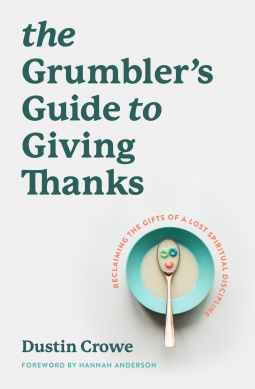
"The Grumbler's Guide to Giving Thanks" (Dustin Crowe)

TITLE: The Grumbler's Guide to Giving Thanks: Reclaiming the Gifts of a Lost Spiritual Discipline
AUTHOR: Dustin Crowe
PUBLISHER: Chicago, IL: Moody Publishers, 2020, (176 pages). 

Thanksgiving season is nearly here. For many, it is a time of busy activities surrounding shopping, gifts, family reunions, and lots of food! Such things no matter how good miss the point: Thanksgiving is gratitude from the heart. The underlying assumption of true gratitude is to know that we have all received much more than we actually gave. For instance, we owe it to our parents who brought us up. We were young and helpless as babies, and our parents fed us, nourished us, and nurtured us. Of course, there are exceptions, but generally speaking, parental love for their children is pretty universal. In spite of idiosyncrasies and other associated dysfunctional relationships, we are in fact recipients of much giving and loving. For Christians, nothing beats the love of God in Christ Jesus, who not only gave, He gave His life for us at the Cross. We all need to be reminded regularly that thanksgiving is at the heart of society, especially the Christian Life. As a former pessimist, Author Crowe had four key motivations in writing this book. 1) He needs it personally; 2) He notices a lack of books on "giving biblically"; 3) his desire to know God more fully; 4) To grow spiritually. We need an alternative to all the complaining, griping, and sarcasm in our society. So, Crowe's objective is simply to do his part to help the grumbler in us become grateful instead. 

Friday, October 9, 2020

"The Beautiful Community" (Irwyn L. Ince Jr)

TITLE: The Beautiful Community: Unity, Diversity, and the Church at Its Best
AUTHOR: Irwyn L. Ince Jr
PUBLISHER: Downers Grove, IL: IVP, 2020, (176 pages).

Is beauty really in the eyes of the beholder? That is another way of saying that beauty is deep in the pool of subjectivity.  Before jumping to that conclusion, what about from God's point of view? What God had created good, just because it has been marred by sin, can we really claim it is no longer good? In a book that casts positive light on the potential of God's community, we have a book that describes the attributes of God being made manifest among the people of God. Author Irwyn Ince Jr writes with conviction: "The ministry of reconciliation demonstrated in the local church by the gathering of people from diverse backgrounds, cultures, and ethnicities is the natural outworking of a rich covenantal theological commitment." The reason why we persevere in cultivating a beautiful community is simply because our Lord God is beautiful. He begins with God, the beautiful God. We learn of what it means to see and know our beautiful Lord. That means seeing God as He reveals Himself to us, primarily through loving fellowship with Him. This is essentially the "fellowship of knowing." Through His grace, we learn that God is community. God is perfection, proportion, and pleasure. All of these highlight the simplicity of God's love to us. This beauty in knowing God as Trinity helps us appreciate the beauty of God in us. Sadly, we are often divided among ourselves. This leads to a marring of God's beauty and dignity in us. We need to go back to God for healing and to be remade into the image of Christ, the One who came to redeem us. 

Wednesday, September 30, 2020

"The Marriage Challenge" (Art Rainer)

TITLE: The Marriage Challenge: A Finance Guide for Married Couples
AUTHOR: Art Rainer
PUBLISHER: Nashville, TN: B&H Publishing, 2020, (192 pages).

All marriages have challenges. It could be due to different upbringing. It could be conflicts that arise out of differences in personalities. It could even be due to extended family relationships. Even some of the most mundane things in life could spark a big quarrel. Other big things include breakdown in communications; lack of attention to spousal needs; unmet expectations; insensitivity; and so on. Among the most common challenges is that of finance. During economic downturns, layoffs, and financial setbacks, marriages suffer. "A financially healthy couple doesn’t start with a checking account. It starts with unity. It starts with sacrificial, selfless love. It starts with both husband and wife moving away from “me” and toward “we.” Through this the gospel is displayed, and true financial health can be pursued." So begins author and pastor Art Rainer in this book dedicated to talking about financial relationships among couples. The three key things that Rainer advocates are:
  1. Deciding to begin with unity, where "we" takes priority over "me."
  2. Desiring after God's design via 8 Money Milestones;
  3. Destroying the Four Marriage Dividers.

Thursday, September 24, 2020

"40 Questions about Typology and Allegory" (Mitchell L. Chase)

TITLE: 40 Questions About Typology and Allegory (40 Questions Series)
AUTHOR: Mitchell L. Chase
PUBLISHER: Grand Rapids, MI: Kregel Academic, 2020, (320 pages).

The general agreement among Christians is that they believe the Bible is Truth, and that they would want to know the Bible more. Many study it and read books about it. They desire to know how to interpret and to apply God's Word into their lives. With the diversity of theological backgrounds, there is also a diversity of interpretations and hermeneutics. This ought to be seen more of a blessing because the greater the amount of tools and discoveries, the richer our collection of resources to help us grow closer to the Truth. For God's Word is infinitely rich, and our finite minds could only approach that wealth of knowledge over time and experience. Author and Professor Mitchell L Chase's key purpose in writing this book is to enable readers to "be more faithful readers of Scripture." He does this by presenting 40 questions for us to appreciate, ponder, and discover things that many of us normally would not have known how to ask. It is a kind of "seeing" via the lens of typology and allegory. In order to improve the way we see the Bible, we need to start with the big picture, which is exactly what the author has done: Re-read and re-read into a deeper experience. Before entering into the questions, Chase asks a question that all of us ought to ask: "What Story is the Bible Telling?" He then answers it in three ways: "Slowly but Surely"; "Leaning Forward and Looking Ahead"; "Promise and Fulfillment." The first is about seeing the Bible as being revealed over time. The second is the overarching themes from Genesis to Revelation, themes that reflect God's character and consistent messages throughout time, especially the Old Testament. The third is about the fulfilment of the promises made, and more specifically, Christ. With these, by linking historical and organic developments, and using Scripture to interpret Scripture, the author equips us by describing the different words used in the study; such as:

Friday, September 18, 2020

"9 Lies That Will Destroy Your Marriage" (Greg Smalley and Bob Paul)

TITLE: 9 Lies That Will Destroy Your Marriage: And the Truths That Will Save It and Set It Free
AUTHOR: Greg Smalley and Bob Paul
PUBLISHER: Carol Stream, IL: Tyndale House Publishers, 2020, (288 pages).


Jesus says that one shall know the Truth and the Truth shall make one free. Many Christians believe that. Some even preach it wide. The main question is: Do we live it? With regard to marriage, how many couples actually practice that? Perhaps, the reality is that a lot of marriages are filled with half-truths. Why? Answer: Lack of trust in telling the truth. Using their work from seven thousand couples over the past 20 years, authors Paul and Smalley share nine of their best insights with a catchy title, that basically says that these lies are the marriage destroyers. Some of the falsehoods come from erroneous teachings, especially those that people want to believe. Things like "marriages are meant to have a happily ever after" or "your love is driving me crazy" ending. Worse, many couples would rather lie to protect their idealistic purposes instead of accepting the truth for what it is. When something is covered up, it usually means more covering up. Rather than building foundations on lies and half-truths, the authors show us Original Truth: Scripture. Recognize the original deceiver: the devil. Remember that the enemy is the devil that is always seeking to destroy relationships, especially marriages. 

Thursday, September 17, 2020

"The Mr Rogers Effect" (Dr. Anita Knight Kuhnley)

TITLE: The Mister Rogers Effect: 7 Secrets to Bringing Out the Best in Yourself and Others from America's Beloved Neighbor
AUTHOR: Dr. Anita Knight Kuhnley
PUBLISHER: Grand Rapids, MI: Baker Books, 2020, (208 pages).

He has been called "America's Hero." Others call him a brilliant educator. In this book, he is called "America's Beloved Neighbour." He is best known for his children's TV program called "Mister Rogers' Neighborhood." His life has also inspired the making of a 2019 movie played by Tom Hanks, "A Beautiful Day in the Neighborhood." What spurred the author to write this book was Rogers's ability to connect with people. She marvels at how Rogers minister to an inner-city kid dealing with anger issues, and lamenting about how they need a Mr Rogers in their neighbourhood. She examines Rogers's careful words to reach out to a young boy on a wheelchair extending care beyond the boy to the doctors and nurses who cared for him. What was more amazing was that 18 years later, they still reconnected with much warmth and love. This and many more are highlights of Mr Rogers amazing life. There is much to learn from Rogers's life. Author Anita Kuhnley contributes to this by going on a quest to discover how to translate Mr Roger's positive influence into some helpful tools and strategies that we can use in our daily lives. Thanks to her training in psychology and qualitative research skills, she combs the resources about the legendary Fred McFeely Rogers, and how his influence had impacted lives both young and old. The key trademark is how Mr Rogers spoke to those of us feeling neglected and lonely. That is because he cares. Using television as a way to reach out to people, Rogers also learns from psychologists and relational experts to hone his skills in communicating care. Rogers credits Dr McFarland for that. Kuhnley gives us an overview of the four types of relational approaches: Secure; Preoccupied; Dismissive; and Unresolved. Apart from the secure child-parent relationship, the other three categories would produce different levels of insecurity in a child. Learning to connect with children and people in these categories is the purpose of Mr Rogers's ministry. Kuhnley does the hard work of digging through the materials and available resources about Mr Rogers and offers up seven "secrets" of Mr Rogers's unique ability to connect with people. The seven secrets mentioned are seven characteristics of what a good neighbour ought to be. These are:

Tuesday, September 8, 2020

"Dangerous Virtues" (John Koessler)

TITLE: Dangerous Virtues: How to Follow Jesus When Evil Masquerades as Good
AUTHOR: John Koessler
PUBLISHER: Chicago, IL: Moody Publishers, 2020, (208 pages).

What is virtuous? How can virtues ever be dangerous? After all, the way we counter vices is to incorporate virtues into our lives. Not exactly. The saying, "A wolf in sheep's clothing" is a warning for us to beware of what's on the inside, and not to be deceived by what we see on the outside. This is what this book is about: Beware of the dangerous vices disguised as virtues. In short, be careful of dangerous virtues. Using the classic seven deadly virtues as a framework for the book, author John Koessler attempts to warn us not to be too comfortable with sin, especially those vices that masquerade as respectable sounding virtues. Going back to the desert fathers, one of the key purposes of these ancient saints is not about becoming more holy but to be more aware of their sinfulness. By understanding the characteristics and behaviours of these sins, they would be better equipped to deal with these impediments on the path to holiness. This means we do not just rest at calling something as sin. We need to recognize and remove their roots. One of these roots is the insidious way in which sins have become too comfortable in our daily lives. Fornication has been replaced by a generic "making love" where the superficial use of love covers the multitudes of sensuality. Greed has been replaced by ambition. All these subtle degradation of the flesh needs to be dealt with firmly and if needed, forcefully. This means diligent and deliberate perseverance toward sanctification. The author notes that while Christian living implies the "being" before the "doing," it does not mean we remain passive. Instead, we make a conscious choice to eradicate sin as a way to establish our virtues. Focusing on eradicating sin is a step forward to a virtuous life. 

Saturday, August 29, 2020

"The Loss of a Grandparent to Covid-19" (Marion Donon)

TITLE: The loss of a grandparent to Covid-19, Gramps.: A short story to read to your children to help them through this difficult moment.
AUTHOR: Marion Donon
PUBLISHER: Give Me A Hug Collection, 2020, (21 pages).

This is a fictional story of a conversation between a mother and her son, who has just lost his grandfather. Written at the start of the pandemic, it was meant to support those going through emotional grief and physical strain, especially those affected directly by Covid-19. Due to time constraints, pictures and illustrations were pulled in order to facilitate a quick completion of the book. As the author says, the book is not about grief or bereavement. It is written like a story to reach out to children and parents on how best to talk about Covid-19 and the meaning of death and dying. 

It is never easy to talk to kids about "adult" topics such as death and dying. They are too young to understand what it means to leave this world. At the same time, death could impact anybody at any time. If we wait until it is too late, we would have missed out teaching moments or precious opportunities to show children early that life is not all play and fun. Life is hard and the earlier we prepare ourselves for it, the better. Covid-19 has impacted all parts of society. From the daily news updates about the pandemic to the continued wide media coverage about the coronavirus statistics, children in this generation would have heard of all these terms. Even if we try to avoid letting them know, they might be curious enough to ask and then to wonder about how it impacts them and their families. One of the best tried-and-tested methods is to use the power of stories. This way to communications help us be honest with our own feelings in an indirect manner. Stories give us words to share our thoughts and feelings in a non-threatening manner. They enable readers, and in this case, parents and their children to be on the same page as they openly discuss and talk about the meaning of loss. Some of the questions include:
  • Why couldn't I go and see him in the hospital, Mommy?
  • Why was the coffin already closed?
  • Do you miss him?
  • Mommy, why are you crying?
  • Was he afraid?
  • Where do you think he is now?
  • Am I going to die too, Mommy?
  • ....
The questions could have been more, but the way the author puts it makes it simple enough for parents to raise additional questions with their children and easy enough for children to follow along. Parents would think: "Hey, I could do that too!" Children would be free to ask their own set of questions as well. As I ponder on this book, I am glad that someone has written something to address children and how the prolonged coronavirus pandemic would impact them one way or another, sooner or later, directly or indirectly.

A former actress and director, with a masters in clinical psychology, Marion Donon now devotes her energy to children’s literature, while raising two small children of her own. She divides her time between France and the United States. 

Rating: 4 stars of 5.

conrade

This book has been provided courtesy of Marion Donon and NetGalley without requiring a positive review. All opinions offered above are mine unless otherwise stated or implied.